
PFAS in Wastewater: Risks, Treatment, and US Solutions
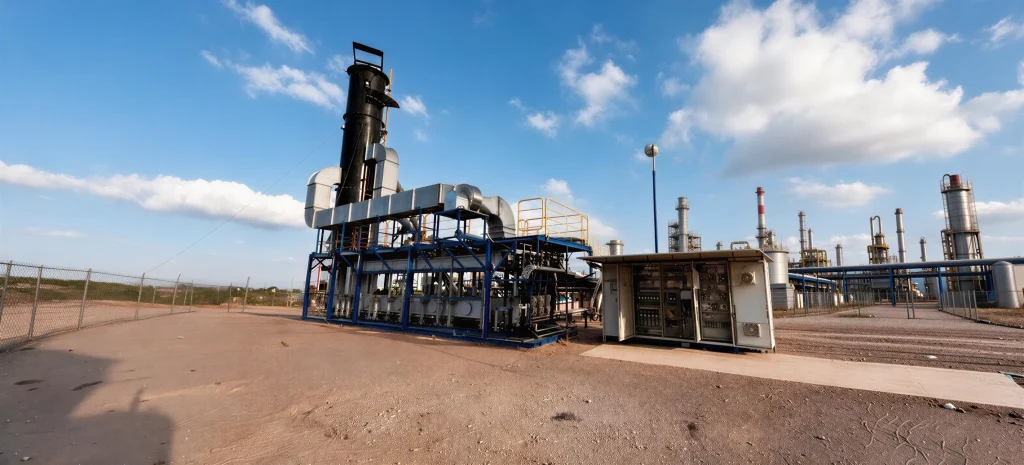
Summary: PFAS can pass through conventional wastewater treatment and move into effluent and biosolids. Effective management therefore combines source control, sampling, mass-balance accounting, validated treatment, and careful residuals planning. For US utilities and industrial dischargers, early characterization reduces uncertainty before discharge, reuse, or thermal conversion decisions.
A wastewater plant can produce visibly clear water while PFAS in wastewater remains a difficult control problem. If your project includes biosolids, our our biosolids management perspective begins with a practical principle: understand where PFAS enters, where it moves, and which treatment steps change its concentration.
PFAS management is not simply a matter of adding one filter to the end of a treatment train. These persistent compounds can arrive from households, industrial facilities, landfills, firefighting activities, and contaminated sites. A responsible response must consider influent, effluent, sludge, biosolids, air emissions, energy use, and final disposal or reuse.
Why PFAS in wastewater matters to treatment plants
What happens when PFAS reaches a wastewater treatment plant? The plant receives these compounds through its collection system, but conventional treatment is not designed to destroy the full PFAS family.
Industrial discharges may contribute concentrated loads, while household products create a more diffuse background. Potential sources include fluorinated manufacturing chemicals, stain-resistant products, food packaging, nonstick materials, firefighting foams, landfill leachate, and contaminated industrial sites.
In the United States, regulators are still building a stronger national evidence base for wastewater sources. The Environmental Protection Agency stated in 2026 that its POTW Influent PFAS Study would involve approximately 400 publicly owned treatment works. The program is intended to characterize the types and quantities of PFAS entering municipal systems from industrial discharges through EPA’s 2026 study.
For operators, the key question is not only whether PFAS is present. You also need to know which compounds are present, whether concentrations vary by industry or season, and whether treatment transfers PFAS into another stream.
Why conventional treatment may not close the loop
Consider a plant that removes organic matter, nutrients, and suspended solids successfully. That performance does not automatically demonstrate effective PFAS control.
Many municipal treatment processes are optimized for biodegradable pollutants and solids separation. PFAS compounds can behave differently because their chemical structures resist biological breakdown. Some compounds remain dissolved, while others associate with suspended solids or sludge.
A 2026 review examined data from more than 86 peer-reviewed studies and 717 wastewater treatment plants worldwide. It found that conventional treatment was generally ineffective at removing PFAS across influent, effluent, and residual streams. The findings appear in this 2026 meta-analysis.
There is also a difference between removal and destruction. A compound that leaves the water phase may still exist in sludge or biosolids. A precursor may also transform into a more measurable PFAS during treatment. Therefore, a lower concentration in effluent does not necessarily mean that the total PFAS burden has been eliminated.
This distinction affects technology selection. Adsorption, ion exchange, membranes, oxidation, and thermal processes may address different parts of the problem. Each option can produce concentrated residuals, require energy, create replacement media, or demand additional verification.

PFAS management is a mass-balance problem
What does a complete PFAS assessment look like? It follows the contaminant through every relevant process stream rather than focusing on one sample point.
A global review published in 2026 compiled information from 402 wastewater treatment plants across 17 countries and evaluated 45 PFAS compounds. Reported removal ranged from negative values to complete apparent removal, which shows how strongly results can vary by compound, plant, sampling design, and treatment conditions. The study is summarized in this global review.
Negative apparent removal does not mean a plant is manufacturing PFAS. It can indicate concentration effects, precursor transformation, changing flow conditions, or analytical differences between influent and effluent samples. This interpretation is an important caution when you compare treatment performance.
A useful mass balance should examine at least four questions:
- How much PFAS enters through industrial, commercial, residential, and external sources?
- How much leaves in treated effluent, sludge, biosolids, air emissions, or other residuals?
- Which compounds change during biological, chemical, or thermal treatment?
- What controls can reduce the load before it reaches the central treatment process?
This approach prevents a common planning error. A project may appear successful because effluent concentrations decline, while the remaining PFAS becomes concentrated in a residual stream that carries its own regulatory and disposal risks.
How to build a practical monitoring and source-control plan
Suppose your facility has limited historical data. You can still create a structured program that supports better decisions.
- Map potential sources. Review industrial users, pretreatment permits, product inventories, landfill connections, firefighting activities, contaminated sites, and known historical operations.
- Define sampling locations. Consider influent, major industrial contributors, effluent, primary and secondary solids, dewatered material, and final biosolids or ash.
- Use consistent analytical methods. Compare laboratories, reporting limits, target analytes, quality controls, and sampling frequencies before interpreting trends.
- Investigate precursors. Targeted PFAS analysis may not capture every relevant precursor. Additional testing can help explain why some compounds increase during treatment.
- Prioritize source reduction. Product substitution, chemical inventory controls, spill prevention, industrial pretreatment, and supplier declarations can reduce the load upstream.
- Document uncertainty. Record non-detects, sampling limitations, changing flows, and analytical differences. These details influence risk decisions and future permitting.
Source control is especially important for industrial facilities. A wastewater plant should not be expected to solve a concentrated PFAS discharge that could have been prevented through process changes or proper chemical management.
Industries can ask suppliers for PFAS-free alternatives, review safety data sheets, identify historic uses, and prevent disposal through drains. Utilities can support these efforts through outreach, inspections, sampling requirements, and clear communication with industrial users.
What biosolids management requires before reuse or disposal
Why do biosolids require separate attention? PFAS can move from wastewater into solids during treatment, creating a residual stream that may later be land-applied, landfilled, incinerated, or processed through another technology.
In 2026, the EPA reported that it was continuing research and regulatory work on PFAS in sewage sludge. The agency also described a planned National Sewage Sludge Survey intended to obtain current national concentration data. Its July 1, 2026 draft guidance addressed risk reduction for PFOA and PFOS in biosolids, as described on the EPA biosolids page.
These developments do not create a universal answer for every biosolids program. Concentrations, land use, feedstock history, treatment conditions, state requirements, and end-use decisions all matter. You should evaluate testing and regulatory requirements before selecting a disposal or beneficial-use pathway.
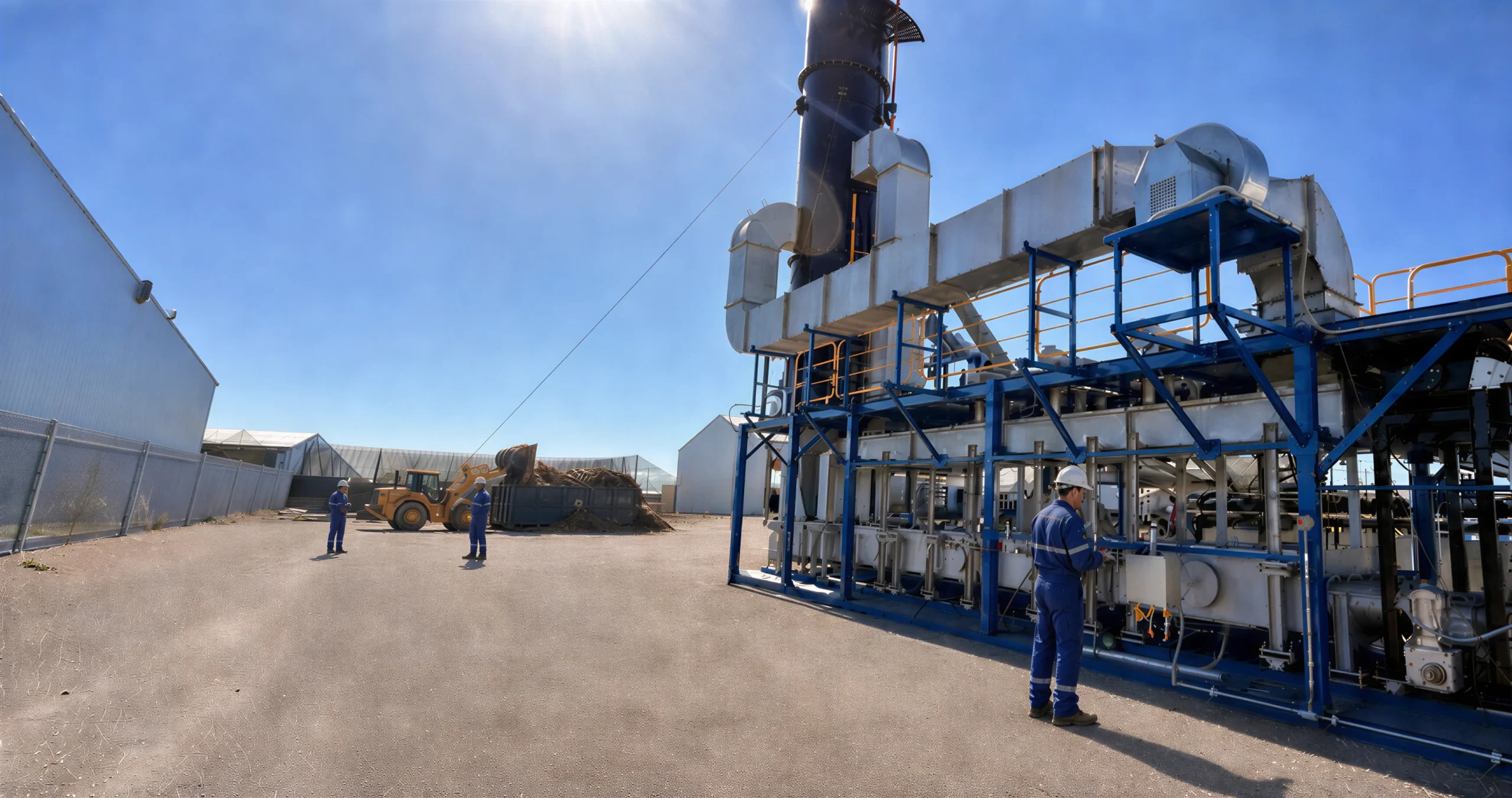
Thermal conversion may be considered where a project needs to manage biosolids, recover energy, and produce a carbon-rich material. However, PFAS claims must be validated for the specific feedstock, reactor conditions, residence time, temperature profile, emissions controls, and resulting solids.
For projects evaluating thermal conversion, our our biochar technology can support a broader feedstock and process assessment. It should complement PFAS testing, emissions evaluation, and regulatory review rather than replace them.
How to compare treatment and conversion options
Which option is appropriate depends on the objective. A utility seeking lower effluent concentrations may require a different system from an operator seeking residuals management, energy recovery, or long-term biosolids diversion.
Begin with the problem definition. Establish whether the primary concern is an industrial source, municipal background, drinking water protection, surface water discharge, biosolids reuse, landfill disposal, or a combination of these issues.
Then compare options using consistent criteria:
- Contaminant scope: Determine whether the process addresses selected PFAS, precursors, or a broader chemical profile.
- Destruction versus transfer: Identify whether PFAS is destroyed, concentrated, captured, transformed, or moved into another residual.
- Operating conditions: Review flow rate, solids content, moisture, temperature, contact time, pressure, energy demand, and maintenance needs.
- Residual handling: Plan for spent media, concentrates, sludge, ash, emissions, and final products.
- Verification: Define sampling, analytical methods, performance benchmarks, chain of custody, and reporting responsibilities.
- Economics: Include capital costs, operating costs, replacement materials, energy recovery, labor, compliance, and disposal.
- Scale-up evidence: Use controlled trials before committing to a full-scale system where feedstock or process behavior remains uncertain.
For biochar or pyrolysis projects, feedstock characterization is essential. Moisture, particle size, ash content, organic composition, flow behavior, and contamination history influence system design and product quality.
Our our biochar research and development work can help evaluate feedstock behavior, process conditions, laboratory results, product requirements, and scale-up questions. The right outcome is a documented technical basis for the project, not an unsupported assumption about PFAS destruction.
What local monitoring can reveal about downstream movement
A single facility study cannot represent every US treatment plant, but local data can reveal how PFAS behaves in a specific watershed.
A 2026 USGS assessment of the Passaic River Basin included municipal wastewater influent and effluent records from 2021 through 2024. In the reported Pompton River data, median PFOA increased from 15.0 nanograms per liter in influent to 16.8 nanograms per liter in effluent. Median PFOS declined from 10.0 to 6.80 nanograms per liter. These results are site-specific, and the USGS basin study should not be treated as a national average.
The example illustrates why compound-by-compound results matter. Total PFAS values can conceal different behaviors among long-chain compounds, short-chain compounds, precursors, and emerging alternatives.
It also shows why downstream monitoring may be necessary. If treated wastewater is discharged to surface water, used for irrigation, or connected to groundwater recharge, the receiving environment can become part of the assessment. Crop uptake, sediment interaction, groundwater movement, and aquatic exposure may require separate evaluation.
Reuse decisions should therefore combine treatment data with land-use information, water chemistry, soil characteristics, crop selection, and local regulatory expectations. A reuse pathway may provide resource benefits, but those benefits do not remove the need for PFAS-specific evidence.
Build PFAS decisions around evidence
PFAS in wastewater requires a systems approach. Source control, representative sampling, mass-balance accounting, treatment validation, and responsible residuals management should be planned together. Conventional treatment may reduce other pollutants while leaving PFAS in effluent or solids, so apparent removal must be interpreted carefully.
Before you invest in new equipment or change a biosolids pathway, define the contaminants, process objectives, verification plan, and end-use requirements. Site-specific trials and independent laboratory data can help you distinguish genuine destruction from transfer, concentration, or transformation.
Take action with Pyronexus
PFAS concerns often overlap with broader challenges involving biosolids, feedstock uncertainty, energy recovery, and long-term resource management. A technically sound project begins by connecting sampling results with process design, operating conditions, residuals planning, and the intended end market.
We help organizations evaluate biomass and biosolids projects through engineering, research, trials, reactor systems, operations support, and commercialization planning. If you are assessing a site-specific pathway, explore our biochar solutions and discuss the technical requirements with our team.
Frequently Asked Questions
What is PFAS in wastewater?
PFAS in wastewater refers to per- and polyfluoroalkyl substances present in influent, treated effluent, sludge, or biosolids. These compounds can enter through residential, commercial, industrial, landfill, and firefighting-related sources.
Can conventional wastewater treatment remove PFAS?
Conventional treatment may reduce some pollutants while leaving many PFAS compounds in water or solids. You need compound-specific testing and a full process assessment to determine whether a treatment train is reducing, transferring, or transforming PFAS.
Why can PFAS appear in biosolids?
Some PFAS compounds associate with solids during wastewater treatment. As a result, they may become concentrated in sludge or biosolids even when the liquid stream shows a lower measured concentration.
Should biosolids be converted through pyrolysis?
Pyrolysis may be evaluated for biosolids management, energy recovery, and carbon-rich product generation. The decision requires feedstock testing, validated operating conditions, emissions assessment, product analysis, and review of applicable regulations.
How can a utility begin addressing PFAS?
Start by mapping potential sources and establishing representative sampling points across influent, effluent, solids, and biosolids. Then use the results to prioritize source control, treatment pilots, residuals planning, and long-term monitoring.
