
Biochar Production for Carbon Sequestration in the US
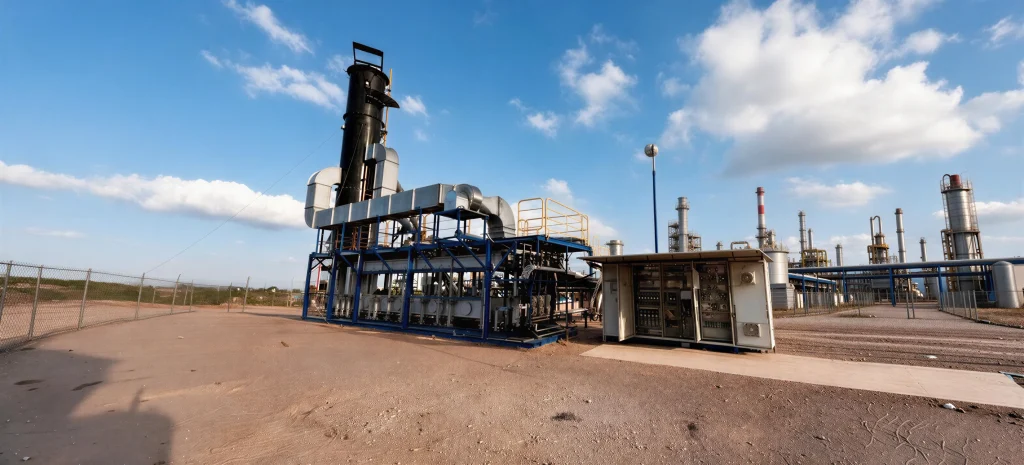
Summary: Biochar production for carbon sequestration converts suitable biomass into a stable carbon material through controlled pyrolysis. The climate value depends on sustainable feedstock, efficient processing, measurable durability, complete lifecycle accounting, and a credible end use. For US projects, technical testing and careful system design are essential before scaling production or pursuing carbon credits.
Biochar production for carbon sequestration can turn agricultural, forestry, organic, and certain waste residues into a durable carbon product instead of allowing their carbon to return rapidly to the atmosphere through decomposition or uncontrolled combustion. To move from concept to a bankable project, you need a system designed around feedstock behavior, process control, energy recovery, product quality, and long-term storage. Our turnkey biochar solutions connect these decisions across the project lifecycle.
The central principle is straightforward, but the execution is not. Plants remove carbon dioxide during growth, and pyrolysis converts part of that biological carbon into a more resistant solid form. A 2023 global assessment found that sustainable residue constraints reduced the theoretical potential substantially, with approximately 1.3 billion tonnes of carbon dioxide equivalent potentially remaining stored after 100 years under its constrained scenario, rather than treating all residues as available.
What makes biochar production a carbon sequestration pathway?
Imagine two uses for the same crop residue. In the first, the residue decomposes, is burned in the open, or enters a short carbon cycle. In the second, it is dried, prepared, and heated in a controlled low-oxygen reactor. The second pathway can retain part of the biomass carbon in biochar while also producing combustible gases that may support process heat.
Pyrolysis conditions determine how biomass separates into solid, liquid, and gaseous products. Temperature, heating rate, residence time, particle size, moisture, and feedstock chemistry all influence the amount and properties of the resulting biochar. A higher temperature may increase carbon stability, but it can also change yield, energy demand, ash behavior, and the suitability of the product for a specific application.
Sequestration does not occur simply because a facility produces black carbon. The project must demonstrate that the feedstock is eligible and sustainably sourced, that production emissions are accounted for, and that the biochar is stored or used in a way that limits re-emission. Storage in soil is one pathway, while durable materials and other controlled applications may provide additional options.
Durability is also more nuanced than a single permanence number. Laboratory tests can reveal resistance to decomposition, but real-world behavior depends on soil, climate, moisture, oxygen exposure, microbial activity, and the physical placement of the material. This is why responsible carbon accounting should communicate uncertainty rather than present every biochar product as permanently stable.
Which feedstocks and process conditions support better results?
Consider a facility receiving wet agricultural residue, woody material, or organic waste from several suppliers. Each feedstock may have different moisture, ash, mineral, nitrogen, contaminant, and flow characteristics. A reactor that performs well with one material may require substantial preparation or different operating parameters for another.
A European Commission project assessment published for the 2010 to 2050 period illustrates why resource planning matters. Its EU-28 scenarios estimated annual char production potential ranging from 13 to 37 million tonnes in 2010 and from 22 to 61 million tonnes in 2050, depending on feedstock availability, technology mix, and conversion assumptions. The report also emphasized that only a portion of residues may be available because agriculture, livestock, soil protection, energy, and other industries compete for biomass.
For a US project, feedstock characterization should precede equipment selection. Useful measurements may include moisture content, bulk density, particle size, ash, volatile matter, fixed carbon, elemental composition, contaminants, and flow behavior. You should also assess seasonal availability, transportation distance, storage requirements, competing uses, and the cost of preparing the material for continuous operation.
Preparation is often as important as the reactor itself. Drying can reduce the energy required to evaporate water during pyrolysis. Grinding or screening can improve feed consistency and prevent blockages. Material-handling equipment must also account for bridging, dust, abrasion, and changes in bulk density. These factors affect uptime, safety, throughput, and the cost per tonne of finished biochar.
Feedstock selection should follow the intended product pathway. Clean woody residues may suit soil amendments or industrial products, while nutrient-rich residues may offer different agronomic characteristics. Biosolids and other complex materials require additional testing because contaminants, ash chemistry, nitrogen compounds, and regulatory requirements can affect both process design and end use.
How should you design a sequestration-ready production system?
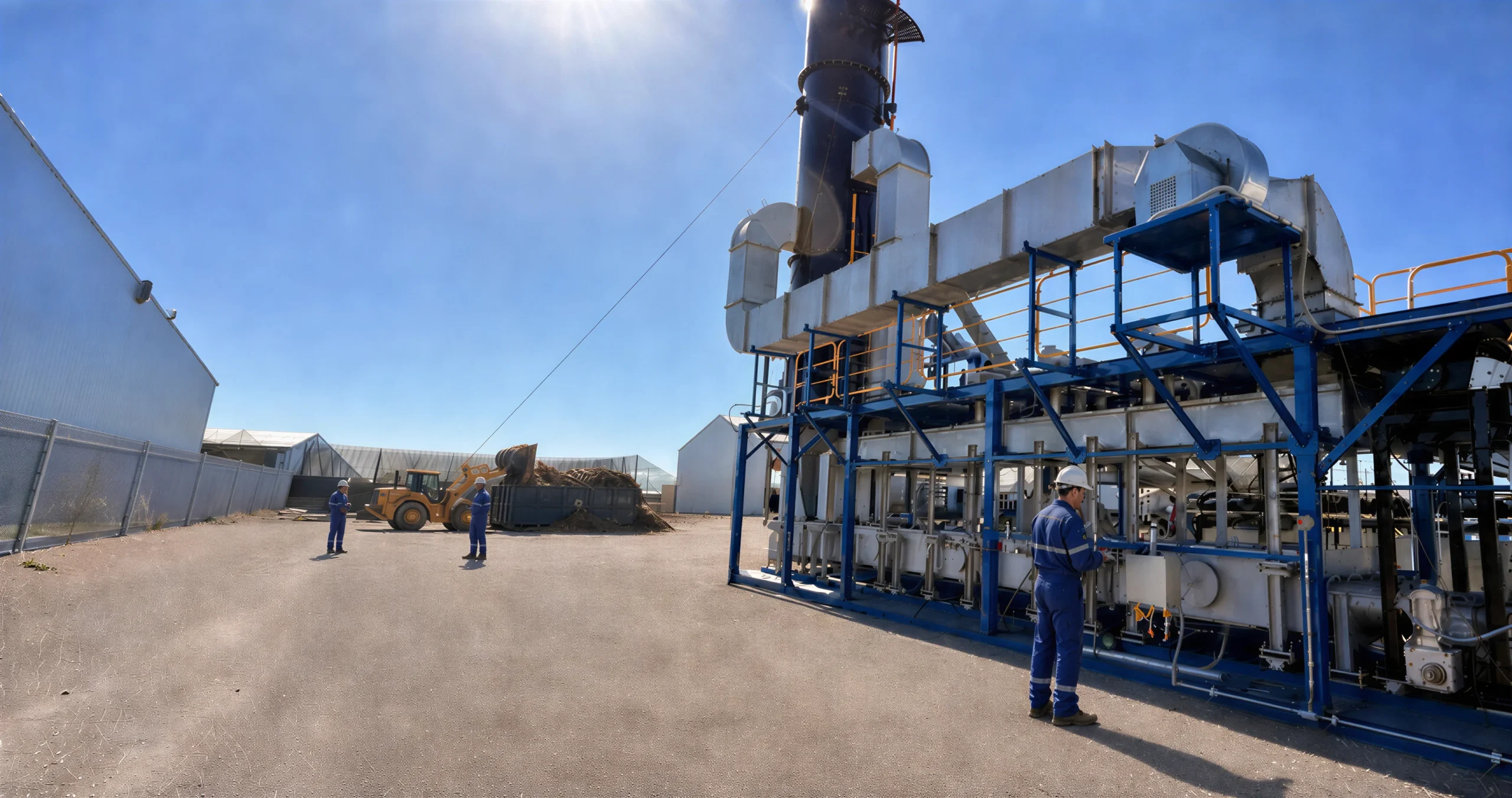
A sequestration-ready facility begins with a mass and energy balance, not a reactor brochure. You need to understand how much material enters the system, how much water must be removed, how much biochar is produced, how process gases are managed, and where useful heat can be recovered.
System integration typically includes feedstock receiving, storage, grinding, drying, metering, pyrolysis, gas handling, cooling, biochar collection, emissions management, automation, and packaging. Each subsystem influences carbon performance. For example, excessive electricity use, fossil fuel consumption, transport emissions, or avoidable flaring can reduce the net removal benefit.
Controlled combustion of process gases may provide heat for drying or reactor operation. This can improve energy efficiency when the gas composition and reactor design support stable operation. However, energy recovery does not eliminate the need for emissions monitoring, maintenance, operator training, and appropriate permitting.
Project scale should match the available feedstock and the intended operating model. A smaller decentralized system may reduce transport distances and support local residue management. A larger commercial facility may provide more consistent monitoring, automation, and product handling, but it may require greater feedstock density, stronger logistics, and more extensive infrastructure.
At this stage, our biochar project development support can help connect feasibility work, site planning, engineering, equipment configuration, commissioning, and operational requirements. This approach is useful when you need to evaluate the entire pathway rather than purchase a reactor without confirming how it will operate within the site.
A strong design also defines the intended biochar application early. Soil amendment, filtration media, industrial additives, composites, and carbon-credit storage may require different properties. Product specifications can influence pyrolysis temperature, residence time, cooling, screening, storage, testing, and packaging requirements.
How can you verify carbon durability and net removal?
Verification starts before the first batch is produced. You need a documented chain from feedstock origin to final storage or use. The record should identify the biomass source, sustainability criteria, transport, moisture, processing conditions, biochar yield, carbon content, emissions, energy inputs, product testing, and final destination.
Carbon accounting should distinguish gross carbon retained in biochar from net carbon removal. A project may produce a carbon-rich product while still creating significant emissions through transport, drying fuel, electricity, construction, leakage, or end-of-life losses. A lifecycle assessment can reveal whether the project delivers a meaningful climate benefit under its actual operating conditions.
The US Biochar Initiative identifies carbon sequestration methodologies and biochar characterization as important areas for project planning. Its technical resources can help frame the relationship between production measurements, biochar properties, and carbon storage claims, although the appropriate methodology depends on the project, feedstock, application, and verification pathway.
Biochar analysis may include organic and inorganic carbon, hydrogen-to-organic-carbon ratio, ash, pH, electrical conductivity, polycyclic aromatic hydrocarbons, heavy metals, surface area, pore structure, and nutrient content. The correct test panel depends on the proposed market. A material intended for soil use does not necessarily require the same evidence as one developed for filtration or composite manufacturing.
Durability models should be treated as estimates supported by evidence. Short-term incubation studies can show relative differences between materials, but they do not directly observe centuries of storage. Field studies, conservative decay assumptions, stable storage conditions, and transparent uncertainty treatment can strengthen a carbon removal claim.
Our biochar research and development services can support feedstock testing, controlled trials, laboratory analysis, process optimization, lifecycle assessment, and techno-economic analysis. Testing before commercialization gives you a clearer basis for selecting operating conditions and defining a credible product or carbon pathway.
What does the available carbon sequestration potential show?
The headline potential for biochar is large, but theoretical availability should not be confused with deployable capacity. A 2023 study in a global residue assessment estimated that crop residues generated approximately 2.4 petagrams of carbon annually. If all those residues were used, the technical biochar potential was estimated at about 3.7 billion tonnes of carbon dioxide equivalent per year.
A 2023 study applied constraints for sustainable residue harvesting and competing livestock uses. Under that more limited scenario, estimated biochar production potential fell to approximately 1.9 billion tonnes of carbon dioxide equivalent per year, with about 1.3 billion tonnes remaining sequestered after 100 years.
These figures are global estimates rather than forecasts for every country or facility. They demonstrate the importance of available biomass, but they do not guarantee that a specific US region has sufficient feedstock, suitable logistics, acceptable economics, or a qualifying carbon pathway.
Local density is often more important than national totals. A facility may have access to abundant biomass across a state, yet still face high costs if residues are dispersed, wet, seasonal, contaminated, or already committed to another use. A practical feasibility study should map suppliers, transport routes, storage sites, competing demand, and potential off-takers before finalizing capacity.
Carbon sequestration potential also depends on biochar yield and carbon concentration. Two facilities processing the same tonnage can produce different removal outcomes because of feedstock composition, moisture, process temperature, residence time, energy use, and the proportion of carbon retained in the final product.
Which applications can create durable value beyond soil?
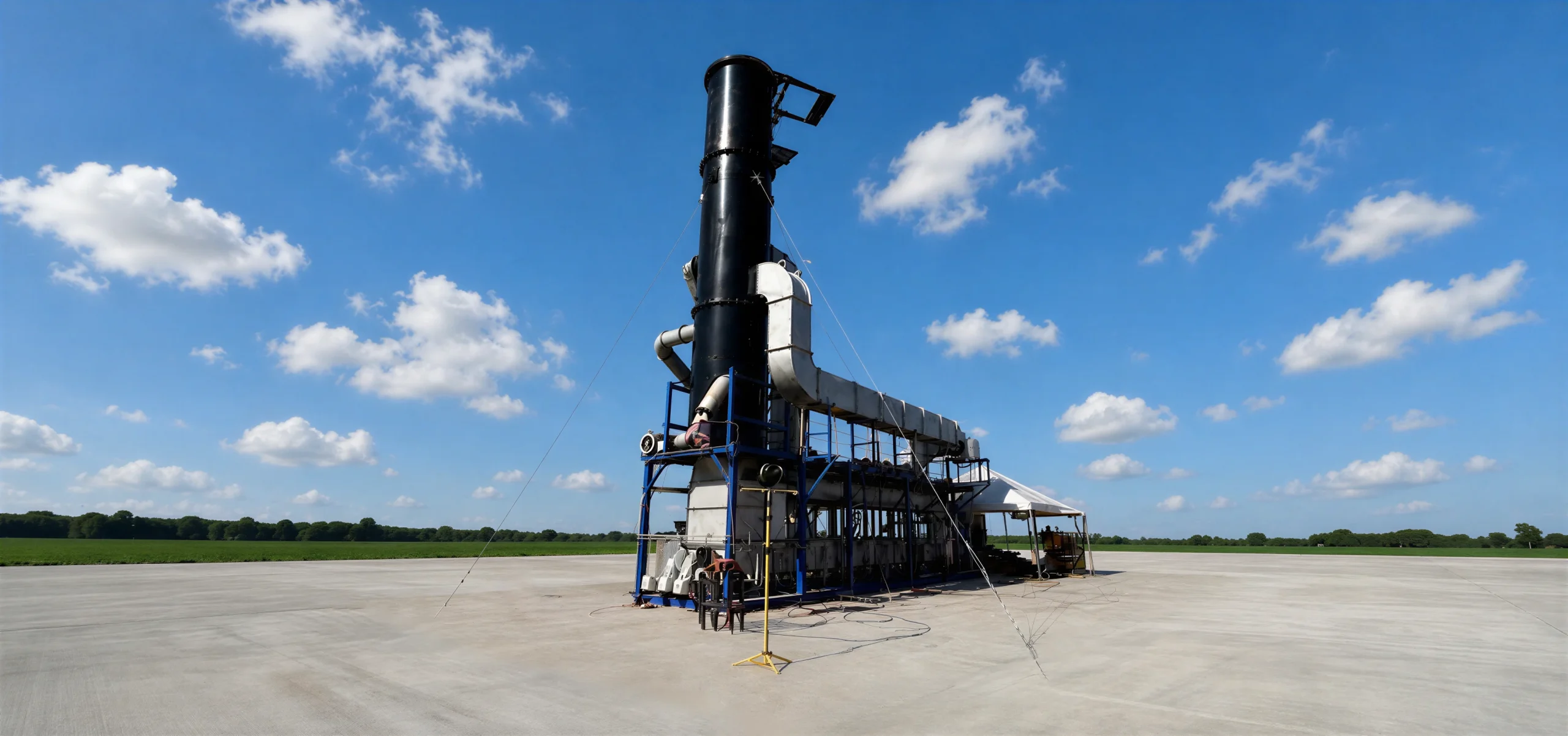
Soil application remains a major pathway, but it is not the only possible destination for biochar. Product development may target filtration, industrial additives, composite materials, construction products, asphalt, or other applications where the carbon can remain embedded in a managed material.
A 2026 evidence assessment from ClimateXChange reviewed biochar deployment, carbon sequestration, soil outcomes, feedstock availability, and barriers to implementation. It reported results from a limited Scottish pilot in which co-application of biochar with organic fertilizer was associated with yield increases of 16 to 18 percent in grassland and 34 percent in arable systems between 2023 and 2025. These findings are context-specific and should not be treated as a universal yield guarantee.
Application-specific testing is essential because the same properties that benefit one market may create limitations in another. High surface area may support adsorption, while ash or mineral content may affect filtration performance. Alkalinity can influence soil chemistry, while electrical conductivity or contaminants may restrict certain agricultural uses.
Storage conditions matter as well. Biochar should be protected from uncontrolled combustion, excessive dust generation, contamination, and moisture-related handling problems. If it is sold into a product market, you also need documentation showing how the material is incorporated, where it remains, and whether that use satisfies the selected carbon methodology.
For US buyers and project developers, the most practical application is often the one that combines a clear performance requirement with a traceable storage pathway. Soil projects may benefit from agronomic testing and field monitoring. Industrial products may require formulation trials, durability testing, and customer validation. Carbon-credit projects require additional documentation and verification.
When does a biochar project make operational and financial sense?
A project becomes more credible when it has several value streams rather than relying on one uncertain income source. Possible revenues may include biochar sales, avoided disposal costs, recovered heat, electricity or fuel value, product development partnerships, and verified carbon credits. The relative importance of each stream depends on feedstock, location, system scale, market demand, and operating performance.
Disposal economics can be important for residues that otherwise require hauling, landfill placement, treatment, or long-term storage. However, avoided cost should be verified rather than assumed. You need to confirm the current disposal route, contract terms, tipping fees, contaminant requirements, and whether the residue has an existing buyer or alternative use.
Carbon credits should be treated as a documentation-intensive product, not an automatic premium. The project must demonstrate eligible feedstock, additionality where required, accurate carbon accounting, production data, storage or application, verification, and chain of custody. Credit quantity and value can change with methodology, permanence assumptions, market demand, and project-specific risks.
Our carbon credits for biochar support can help connect production records, testing, digital monitoring, certification workflows, audits, and market preparation. This is most useful when carbon-market requirements are considered during project design, rather than added after the facility is already operating.
A disciplined feasibility process should compare several configurations. Evaluate feedstock preparation, reactor capacity, uptime, labor, maintenance, energy balance, emissions controls, biochar yield, product quality, transport, capital cost, operating cost, and sensitivity to feedstock or credit-price changes. The preferred option should remain viable under conservative assumptions.
What should you measure before scaling production?
Small-scale trials can answer questions that spreadsheets cannot. They can reveal how a feedstock reacts at different temperatures, whether it forms problematic tar or ash, how much biochar it produces, and whether the resulting material meets the intended quality requirements.
Large-scale trials add another layer of evidence. They help assess continuous feeding, reactor stability, heat integration, material handling, emissions behavior, production rates, operator requirements, and maintenance needs. Trial durations should be long enough to capture changing feedstock conditions and normal operating variability.
Measurement, reporting, and verification should be designed into the system. Automated controls can record temperatures, feed rates, residence times, gas conditions, energy use, and production volumes. These records support operational improvement, maintenance planning, product specifications, and carbon documentation.
Before committing to a commercial system, define success criteria in measurable terms. These may include tonnes processed per day, biochar yield, moisture range, uptime, energy consumption, emissions results, product quality, delivered cost, and verified tonnes of carbon dioxide equivalent removed.
The strongest projects treat research, engineering, operations, product development, and carbon accounting as connected workstreams. That approach reduces the risk of selecting equipment before understanding the feedstock, producing material before defining the market, or pursuing credits without adequate records.
Conclusion: Build for measurable carbon integrity
Biochar production for carbon sequestration can provide a practical route for converting suitable biomass into a stable carbon product while recovering value from waste streams. Its climate benefit depends on the full system, including feedstock sustainability, preparation, pyrolysis conditions, energy use, emissions, biochar quality, storage, and verification. For a US project, begin with characterization and trials, then compare integrated designs against conservative technical and economic assumptions. A measurable, application-specific pathway is more valuable than a broad claim of permanence or potential.
Take action with Pyronexus
Moving from a carbon removal concept to an operating facility requires decisions about feedstock, site integration, reactor configuration, product quality, energy recovery, and documentation. Pyronexus can help you connect these requirements into a practical development pathway based on your project objectives and operating conditions.
When you are ready to evaluate equipment, our biochar reactor sales service can support a configuration aligned with your biomass, production scale, material handling needs, and intended application. Contact our team to discuss the technical information required for a responsible next step.
Frequently Asked Questions
How does biochar production sequester carbon?
Pyrolysis converts part of the carbon captured by growing biomass into a more resistant solid material. When that biochar is stored in soil or another durable application, the carbon can remain outside the atmosphere for an extended period.
Which biomass can be used to produce biochar?
Potential feedstocks include agricultural residues, forestry residues, clean organic waste, and selected biosolids. Suitability depends on moisture, particle size, ash, contaminants, availability, competing uses, and the requirements of the intended end market.
Does higher pyrolysis temperature always improve carbon sequestration?
No. Higher temperature can influence carbon stability and product properties, but it may also reduce biochar yield or increase energy requirements. The preferred operating condition depends on the feedstock, reactor design, energy balance, product objective, and carbon methodology.
What testing is needed before commercial biochar production?
Testing may cover feedstock moisture, composition, flow behavior, ash, contaminants, and thermal response. Biochar testing can include carbon content, stability indicators, pH, electrical conductivity, nutrients, surface area, pore structure, and application-specific contaminants.
Can biochar production generate carbon credits?
It may qualify when the project meets the requirements of a recognized methodology and provides traceable evidence for feedstock, production, emissions, biochar quality, storage, and monitoring. Eligibility, credit quantity, and market value depend on the specific project and verification pathway.
