
Biochar Production Equipment: A Practical Buyer’s Guide
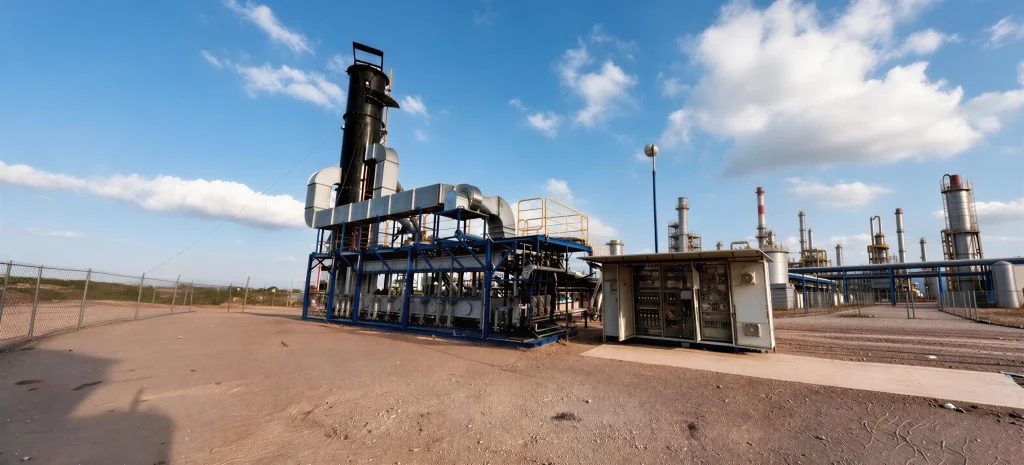
Summary: Biochar production equipment should be selected around feedstock behavior, target throughput, product requirements, energy use, safety, and the support your project needs. A complete system can include preparation, drying, reactor, cooling, emissions management, automation, and product handling. The right configuration reduces scale-up risk and supports reliable commercial operation.
What should you look for when converting biomass into consistent, marketable biochar? The answer extends beyond the reactor itself. You need to evaluate feedstock preparation, thermal control, material movement, safety systems, product cooling, and long-term operating support. For a project that requires dependable integration, our biochar reactor systems can be configured around your production objectives, biomass characteristics, and site requirements.
The global industry is moving toward larger and more organized production. The International Biochar Initiative reported estimated global production of 520,810 metric tonnes in 2025, compared with 180,150 metric tonnes in 2023, based on survey responses from 930 stakeholders across 96 countries in its IBI market report. That growth makes equipment selection a strategic decision involving economics, quality, compliance, and market access.
What does biochar production equipment include?
A commercial biochar line is usually a connected process rather than a standalone machine. The equipment may begin with receiving and storage, followed by screening, grinding, drying, conveying, pyrolysis, cooling, sizing, packaging, and data collection. Each stage affects the next one, so a weak material-handling step can reduce reactor uptime even when the thermal system performs as intended.
The pyrolysis reactor is the central component. It heats biomass in an oxygen-limited environment, producing biochar and combustible gases. Depending on the design, those gases may support process heating or enable additional energy recovery. The system may also include emissions-related components, temperature monitoring, pressure controls, automated feed systems, and emergency shutdown functions.
Dryers are important when incoming biomass contains too much moisture. Grinding and screening equipment help create a more consistent particle size. Conveyors, hoppers, feeders, and discharge systems reduce manual handling and help maintain a controlled flow through the line. Cooling and quenching equipment protect product quality and reduce the risk of hot char creating a fire hazard after discharge.
For a complete project, you should request a process-flow diagram that shows every major step. It should identify where feedstock enters, where moisture is removed, how gases are managed, how biochar is cooled, and how finished material is collected. This approach helps you compare the actual system scope instead of comparing reactor specifications in isolation.
How should feedstock shape the system?
Imagine two projects with identical production targets. One receives dry wood chips, while the other processes wet agricultural residues or biosolids. Their equipment requirements will differ because moisture, particle size, ash content, bulk density, and flow behavior affect drying, feeding, heat transfer, and char quality.
Feedstock preparation should therefore be defined before equipment selection. Pyronexus describes a reactor feedstock requirement of particles smaller than one inch and moisture below 20 percent. Those conditions are not universal rules for every technology, but they illustrate why preparation equipment must be matched to the selected reactor.
Ask for a feedstock characterization plan before committing to a commercial system. Useful testing may include moisture, particle size, ash content, volatile matter, fixed carbon, elemental composition, contaminants, and flowability. The results can clarify whether you need a grinder, screen, dryer, metering hopper, magnetic separator, or additional storage capacity.
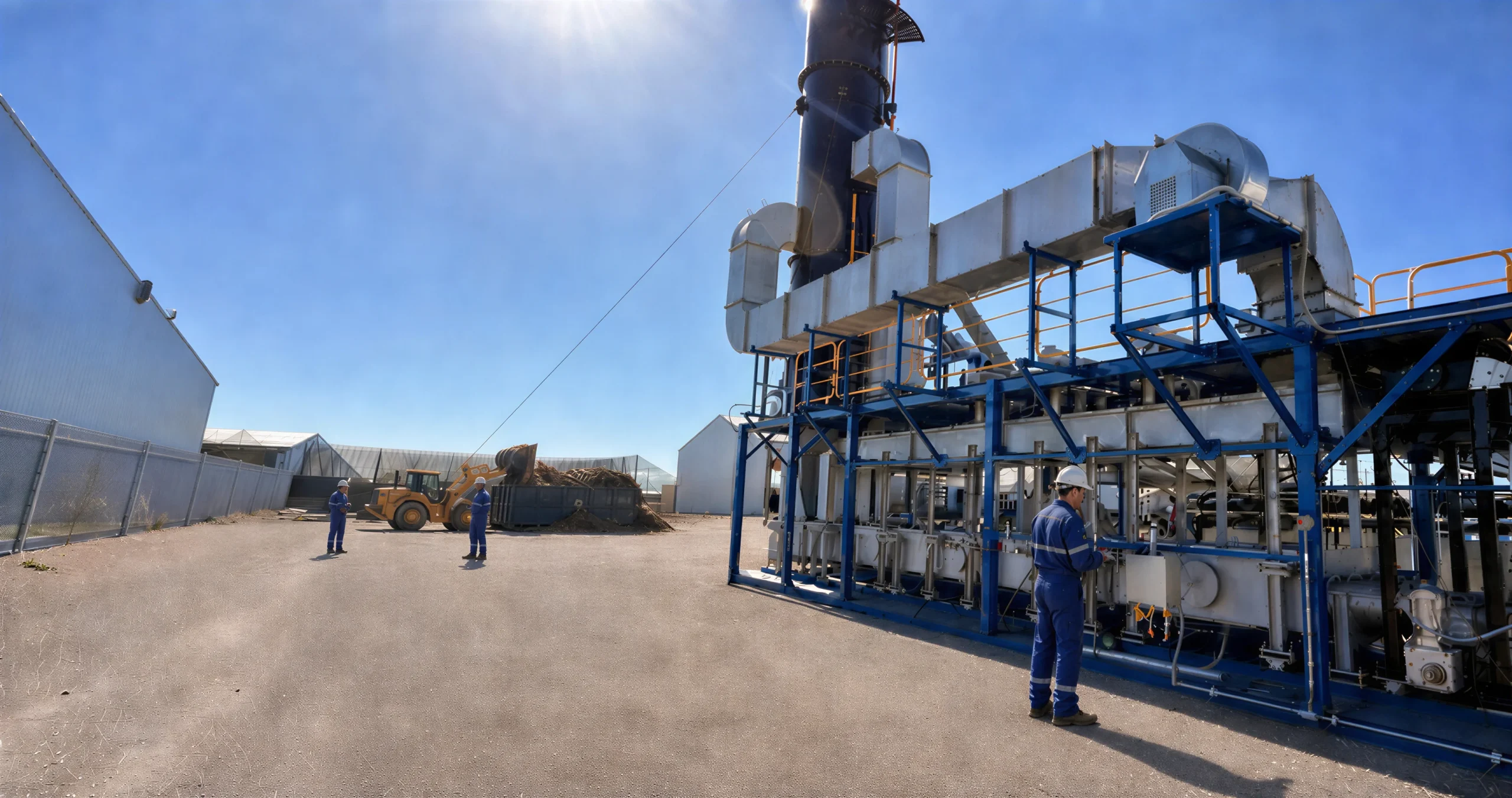
Seasonal variation also matters. Forestry residues may become more available after harvesting or storm events. Agricultural residues may arrive during a limited collection window. If feedstock supply changes throughout the year, you may need storage, blending, or a flexible operating strategy. Our biochar plants can be planned around the expected feedstock mix, production scale, and intended end use.
Do not assume that a system suitable for clean woody biomass will automatically process every organic material. Contaminants, high ash content, excessive moisture, and inconsistent particle size can affect equipment wear, emissions performance, biochar chemistry, and operating costs. Testing reduces uncertainty before the project reaches full scale.
Which equipment scale fits your project?
A 2026 study of farmer-scale kilns compared three low-cost architectures and reported average biochar yields of 22.3 percent, 31.5 percent, and 46.5 percent across the designs. The same 2026 kiln study reported fabrication costs from approximately 360 to 1,280 US dollars for those specific systems.
These figures do not represent the purchase price or performance of an industrial production line. They do show an important principle: equipment architecture affects yield, repeatability, labor requirements, and economics. A low-capital kiln may suit decentralized, on-farm use, while a commercial facility may require continuous feeding, automated controls, emissions management, cooling, storage, and product handling.
Commercial buyers should define the required scale in operational terms. Consider tonnes of incoming feedstock per day, operating hours, expected moisture, target biochar output, available labor, and the number of operating days per year. A nominal reactor capacity is less useful when it does not account for drying, downtime, loading, cooling, and maintenance.
Mobile systems can make sense when transporting bulky biomass is expensive or impractical. Stationary systems may be more suitable when feedstock arrives at a central waste-management, agricultural, forestry, or industrial site. Multi-train configurations can provide expansion flexibility, but they also introduce additional controls, maintenance points, and capital requirements.
For a US project, local infrastructure should be part of the scale decision. Review electrical service, road access, water availability, fire protection, storage space, permitting requirements, and the distance to biochar buyers. A smaller system with reliable feedstock access may outperform a larger system that depends on costly transportation or complicated site logistics.
Why do drying, handling, controls, and safety matter?
Many production problems begin before biomass reaches the reactor. A poorly designed hopper can bridge. A conveyor can receive material at an uneven rate. A dryer can consume excessive energy. A cooling system can create hot spots. These issues can interrupt production even when the core thermal process is stable.
Material handling should maintain a predictable flow from receiving through finished-biochar collection. Ask how the system manages dust, bridging, oversized pieces, foreign objects, and changes in bulk density. The answer should include inspection points and maintenance access, not only a list of conveyor types.
Process monitoring is equally important. Temperature, residence time, feed rate, pressure, oxygen conditions, gas flow, and moisture influence reactor behavior and product properties. Automated controls can help operators maintain repeatable conditions, identify abnormal readings, and document production data for later analysis.
Safety planning should address combustible dust, hot surfaces, carbon monoxide, fire detection, emergency shutdowns, confined spaces, pressure changes, and the safe handling of freshly produced char. The site design should also define operator training, inspection routines, lockout procedures, and access around moving equipment.
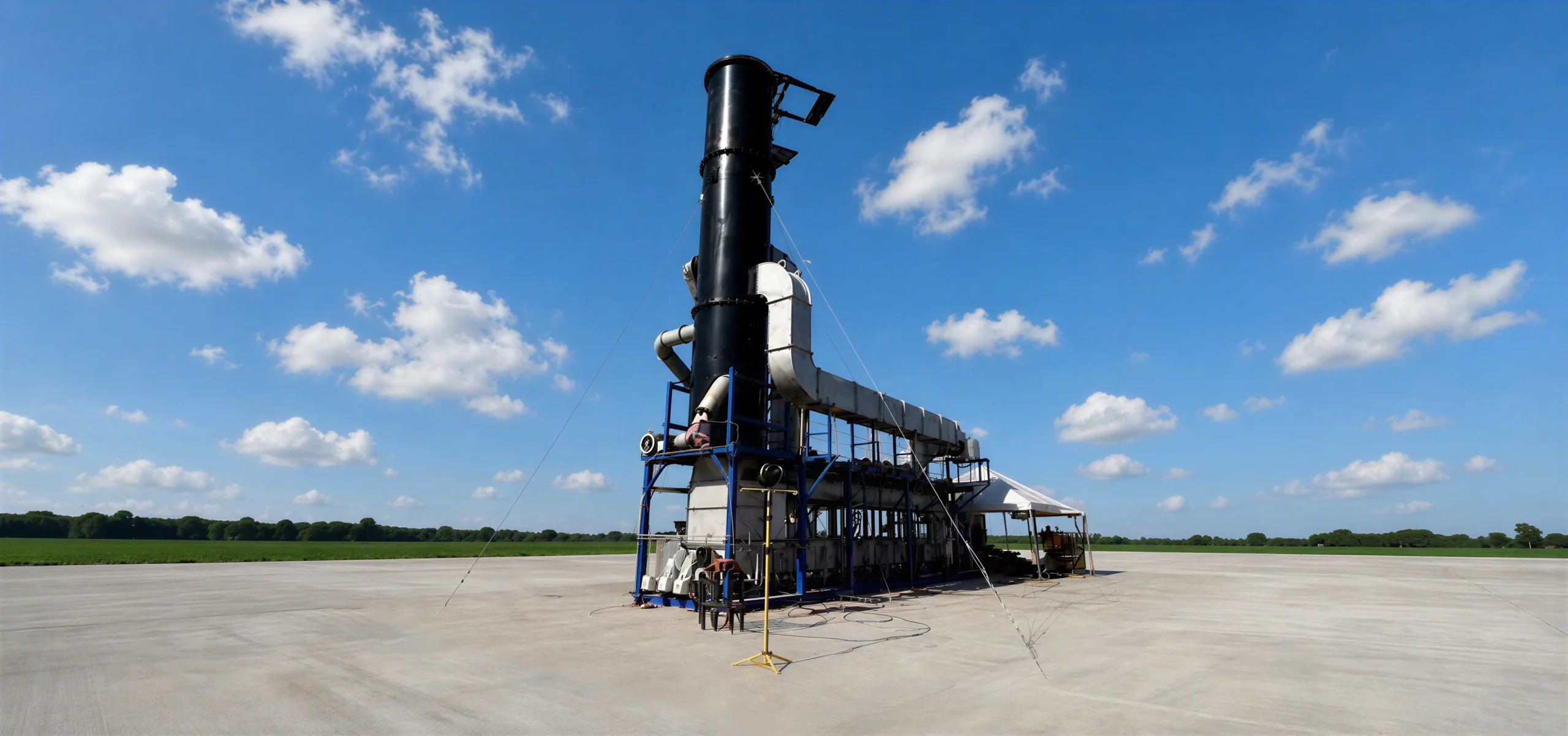
Energy integration can improve the overall operating model. Pyrolysis gases may support process heat, while excess heat may serve drying, hot-water production, or other site needs. However, energy recovery adds equipment and controls, so it should be evaluated through a site-specific mass and energy balance rather than treated as an automatic revenue source.
What quality and carbon data should you require?
Biochar is not a single standardized material. Its properties depend on feedstock, temperature, residence time, moisture, ash content, cooling, and post-processing. A product intended for soil amendment may require a different specification from one developed for filtration, composites, industrial additives, or water treatment.
Product quality testing may include proximate and ultimate analysis, pH, electrical conductivity, ash, carbon content, stability indicators, contaminants, polycyclic aromatic hydrocarbons, surface area, and cation exchange capacity. The appropriate test package depends on the target application and the requirements of prospective buyers.
Your equipment supplier should explain how operating data connects to product testing. A laboratory report is more useful when it can be traced to a known feedstock batch, reactor condition, production date, and finished-char lot. This information supports quality control and gives buyers greater confidence in the material.
Carbon-credit projects require an additional layer of documentation. You may need records covering sustainable feedstock, transport, production, energy use, biochar testing, application or storage, monitoring, reporting, verification, and chain of custody. Credit eligibility depends on the selected methodology and project evidence, not simply on owning a pyrolysis reactor.
The American Biochar Institute released its 2025 United States Biochar Market Report in July 2026. The report benchmarks US production, revenue, and sector expansion across agriculture, water filtration, carbon sequestration, and other markets, according to the US market report. This range of end markets reinforces the need to design equipment around the intended product pathway.
How can you compare suppliers before purchasing?
Consider a project developer choosing between an equipment-only purchase and a broader implementation pathway. The first option may appear simpler, but the buyer remains responsible for feedstock testing, site integration, commissioning, operator training, maintenance planning, product development, and market access.
Compare suppliers using the following questions:
- Can the supplier test your actual feedstock before final equipment selection?
- Does the proposed system include drying, grinding, feeding, cooling, storage, and packaging?
- What production assumptions support the stated throughput?
- How are emissions, combustible gases, dust, and fire risks managed?
- Which controls and data outputs are included?
- What maintenance, spare-parts, training, and commissioning support are available?
- Can the supplier support product testing and application development?
- How will the project document feedstock, production, quality, and carbon data?
- What happens if the feedstock changes after commissioning?
- Which services are included in the initial scope, and which require separate contracts?
A supplier that supports only reactor delivery may not address the full commercial risk. You should evaluate the complete operating model, including feedstock access, site preparation, staffing, energy use, product specifications, offtake, maintenance, and potential carbon-market participation.
Our turnkey biochar solutions connect project development, equipment configuration, trials, operations support, product development, commercialization, and carbon-credit assistance. That integrated approach can be useful when you want one project pathway instead of coordinating several unrelated vendors.
Before signing a purchase agreement, request a written scope, performance assumptions, exclusions, acceptance criteria, commissioning plan, warranty terms, support response expectations, and estimated utility requirements. Clear documentation makes competing proposals easier to assess and reduces misunderstandings during construction and startup.
Choose equipment for the whole operating model
The right biochar production equipment is determined by more than reactor size. Feedstock preparation, thermal control, material handling, safety, energy recovery, product quality, and carbon traceability must work together. Begin with testing and a realistic process flow, then compare suppliers according to total project scope, lifecycle support, and the requirements of your intended market.
Take action with Pyronexus
When you are evaluating a biochar project, equipment decisions often connect directly to feedstock preparation, site integration, product quality, and long-term operations. A structured conversation can help you identify the right technical questions before you select a configuration or commit capital.
Pyronexus supports project development, reactor configuration, research and trials, operations and maintenance, product development, and carbon-credit pathways. To discuss a system aligned with your biomass and production objectives, explore our biochar reactor sales options with the Pyronexus team.
Frequently Asked Questions
What is included in biochar production equipment?
A complete system may include feedstock receiving, grinding, screening, drying, conveying, feeding, pyrolysis, cooling, emissions management, automation, storage, and packaging. The exact scope depends on feedstock condition, production scale, site layout, and product requirements.
How do I know whether my biomass is suitable?
You should characterize moisture, particle size, ash, contaminants, composition, and flow behavior before selecting equipment. Controlled trials can show whether preparation changes are needed and how the material behaves under different operating conditions.
Is a mobile system better than a stationary plant?
A mobile system may be useful when biomass is dispersed or difficult to transport. A stationary plant may provide stronger integration with centralized feedstock supply, utilities, storage, energy recovery, and established biochar buyers.
Can biochar equipment support carbon-credit projects?
Equipment can generate the production data needed for documentation, but credits also require traceable feedstock, quality testing, accounting, verification, and compliance with an applicable methodology. You should define these requirements before commissioning the system.
Can Pyronexus help test feedstock before a purchase?
Yes, our Research and Development services include feedstock characterization, small-scale and large-scale trials, laboratory analysis, technical reporting, and process evaluation. Trial results can help inform equipment configuration and commercial scale-up decisions.
