
How to Choose a Biochar Kiln for US Projects in 2026
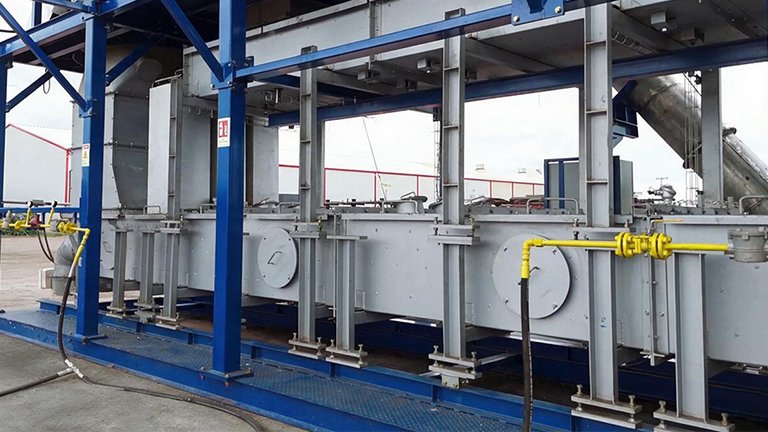
Summary: A biochar kiln converts prepared biomass into stable carbon through controlled heating with limited oxygen. The right system depends on your feedstock, required output, labor capacity, safety controls, energy goals, and intended biochar use. Small batch kilns suit gardens and farms, while commercial projects need integrated reactors, material handling, emissions management, and reliable operating data.
A biochar kiln is not simply a metal container for burning wood. It is a thermal conversion system that must control oxygen, heat, residence time, smoke, and quenching to preserve carbon rather than reduce it to ash. If you are evaluating equipment for a farm, biomass operation, or commercial facility, begin with the project requirements rather than the advertised kiln size. Our biochar kiln for sale options are evaluated around the feedstock, production scale, and operating objectives that determine practical fit.
The selection matters because kiln architecture can influence yield, repeatability, labor, and project economics. A system that works for occasional garden waste may be unsuitable for a US operation processing consistent biomass volumes every week. The most reliable decision separates household and small-farm equipment from portable batch units and integrated commercial pyrolysis systems.
What does a biochar kiln actually do?
Pyrolysis heats organic biomass in a low-oxygen environment. Instead of allowing the material to burn completely, the process drives off volatile compounds and leaves a carbon-rich solid. The released gases may be combusted to sustain heat, support drying, or provide useful energy, depending on the equipment design.
A kiln therefore has several functional requirements. It must accept the intended feedstock, maintain suitable temperatures, prevent excessive oxygen from reaching the char, manage combustible gases, and allow the finished material to be cooled safely. These requirements apply whether you are using a small flame-cap kiln or a fully automated commercial reactor.
Fresh biochar also requires appropriate post-processing. The material may need crushing, screening, drying, blending, packaging, or charging with nutrients before application. Those steps affect labor and site design, so they should be included in the equipment plan rather than treated as minor tasks after installation.
Which kiln class matches your production scale?
Consider the following categories before comparing individual machines:
- Garden and household kilns: These are designed for small quantities of dry woody material. They can be practical for soil amendment projects, demonstrations, and occasional management of branches or garden residues.
- Portable batch kilns: These systems can process larger biomass piles and may be moved between farms, forestry sites, or community projects. They usually require active loading, supervision, and quenching after each cycle.
- Pilot and decentralized reactors: These units support repeatable production at a project site while allowing operators to test feedstocks, operating temperatures, and biochar applications before committing to a larger plant.
- Commercial continuous systems: These systems integrate feeding, drying, pyrolysis, cooling, automation, and material handling. They are appropriate when output consistency, labor efficiency, data collection, and long operating hours are central requirements.
Small equipment can have a lower purchase price, but its labor requirement may be high. Commercial systems require greater planning, utilities, installation, and maintenance, yet they can provide more consistent operation and better integration with energy recovery or carbon documentation.
A September 2026 study evaluated 60 batch trials across three farmer-scale kiln architectures. Mean dry-basis biochar yield ranged from 22.3% to 46.5%, while kiln architecture explained about 92% of yield variation in that experiment. The result demonstrates why equipment design deserves careful attention, although the figures apply to the tested kilns and feedstocks rather than every machine on the market. Read the 2026 kiln study for the full experimental scope.
How should you evaluate feedstock compatibility?
Feedstock is one of the first constraints to define. Wood chips, forestry residues, agricultural stalks, husks, manure, and biosolids differ in moisture, particle size, ash content, density, flow behavior, and energy value. A kiln that handles clean woody material may require substantial modification before it can process a wet or fine-textured residue.
Feedstock preparation commonly includes sorting, contaminant removal, grinding, drying, and controlled storage. For our reactor feedstock operating rule, particles must be smaller than 1 inch and moisture must remain below 20%. These thresholds apply to that reactor configuration, not to every biochar kiln design, so you should confirm the requirements for the specific system under consideration.
Moisture is particularly important because water consumes thermal energy before the biomass can carbonize. Wet material can slow the process, increase smoke, reduce throughput, and create unstable operating conditions. A dryer may therefore be more valuable than a larger reactor if the available biomass varies significantly throughout the year.
For uncertain feedstocks, testing can reduce the risk of an expensive mismatch. Our research and development work includes feedstock characterization, small-scale trials, large-scale trials, laboratory analysis, process-flow assessment, and technical reporting. Trial costs are project-specific, and 100% of those costs can be applied toward a commercial system when the project proceeds under the stated program terms.
Choose the desired end product before finalizing the kiln. Biochar for soil amendment may require different properties from material intended for filtration, industrial additives, composite products, or carbon removal. Important characteristics can include fixed carbon, ash, pH, surface area, particle size, nutrient content, contaminants, and stability.
Why do batch and continuous systems produce different results?
Batch kilns process a defined load, then require unloading and often cooling before the next cycle. This arrangement can be simple and portable, but production depends heavily on loading practice, operator attention, fuel geometry, weather, and quenching discipline.
Continuous systems feed biomass steadily through a reactor. They can support more consistent residence time and temperature control, but they also require more complex material handling, instrumentation, controls, maintenance, and site integration. A continuous machine is not automatically the right choice if your biomass supply is irregular or your labor and utilities are limited.
Research on reactor technologies has identified different strengths across designs. A 2026 reactor review describes rotary and fluidized-bed reactors as options suited to larger operations, while also noting that reactor selection depends on feedstock properties, process objectives, and operating requirements.
Ask manufacturers to clarify whether capacity is measured by wet or dry input, whether the figure represents a peak rate or sustained production, and how many operating hours are assumed. You should also request the expected char yield, temperature range, residence time, start-up procedure, shutdown procedure, and maintenance intervals.
When portability matters, compare trailer-mounted, containerized, modular, and fixed installations. A mobile kiln can reduce the transport of bulky residues, while a fixed plant may support better utilities, storage, automation, and product handling. The best location is determined by the relationship between biomass supply, energy demand, labor, land, and biochar buyers.
What safety and emissions controls should be included?
Every kiln requires a documented operating procedure. The plan should cover site preparation, fire control, feedstock storage, loading, startup, operation, shutdown, quenching, unloading, char storage, and emergency response. Open flame systems also require attention to wind, sparks, nearby vegetation, water availability, and local burning restrictions.
Flame control is central to cleaner operation. Poor oxygen management can create smoke, carbon monoxide, methane, particulates, and other products of incomplete combustion. Enclosed equipment may reduce exposure to uncontrolled flames, but it still requires pressure management, gas monitoring, ventilation, thermal protection, and trained operators.
Quenching is not optional. Hot biochar can continue oxidizing after the visible flame disappears, reducing yield and creating a fire risk during transport or storage. Your site plan should identify the water supply, quench equipment, drainage method, and safe location for cooling and handling the finished material.
For commercial projects, evaluate the full emissions system rather than focusing only on whether a brochure uses the phrase clean burning. Review combustion chambers, thermal oxidizers, cyclones, filters, condensers, stack monitoring, negative pressure controls, and maintenance access. Local permits and requirements vary across the United States, so environmental and fire compliance should be reviewed before equipment procurement.
How do cost, labor, and energy recovery affect the decision?
The purchase price is only one part of kiln economics. You should also account for feedstock preparation, conveyors, dryers, foundations, electrical work, installation, commissioning, water systems, emissions equipment, storage, laboratory testing, spare parts, operator training, and ongoing maintenance.
Labor can be a major difference between systems. A simple batch kiln may require people to load material, maintain the flame, monitor conditions, and quench each cycle. An automated reactor may reduce manual handling while increasing the need for trained operators, instrumentation support, and planned maintenance.
A US Corn Belt techno-economic study published on August 28, 2026 modeled capital costs, labor, utilities, maintenance, production costs, and financial outcomes across three farmer-scale kiln architectures. The analysis used experimental data from a Midwest field season, so its results should be treated as a regional model rather than a universal price guide. See the U.S. analysis for its defined assumptions.
Energy recovery can improve the overall project design. Pyrolysis gas and process heat may support feedstock drying, hot water, space heating, or other site needs. However, the value depends on the equipment configuration, operating schedule, feedstock moisture, and distance between the kiln and the energy user.
Our systems can be configured with dryers, material-handling equipment, automation, cooling, packaging, and energy recovery options. If your project requires more than a standalone kiln, our biochar production equipment can be evaluated as part of a broader process design.
When does carbon-market readiness matter?
A kiln can produce biochar without being ready for carbon-credit documentation. Carbon projects require more than a quantity of finished char. They may require traceable feedstock, production records, laboratory testing, lifecycle information, monitoring, verification, certification, audits, and chain-of-custody records.
MRV readiness should therefore be considered during equipment selection. Ask what temperature, operating time, feed rate, energy use, emissions, production volume, and char quality data the system records. Also confirm how the data are stored, exported, reviewed, and connected to the methodology used by the project.
The International Biochar Initiative reported in July 2026 that its 2025 Global Biochar Market Report showed accelerating production, expanding revenues, and increasing participation in carbon markets. The broader market context makes traceability more important, but market growth does not guarantee that an individual project will qualify for credits. Review the IBI report for the stated market findings.
Our carbon-credit support includes documentation, product testing, digital monitoring and reporting connectivity, certification support, audit preparation, and chain-of-custody processes. These services can help organize the evidence required for a potential credit pathway, but eligibility and issuance remain dependent on the project feedstock, methodology, verification, and market conditions.
For a complete overview of how feedstock preparation, pyrolysis, cooling, and product handling connect, review our biochar production process. A process view often reveals equipment gaps that are not obvious when comparing reactor prices alone.
What should you request before purchasing?
Before selecting a kiln, prepare a written specification that answers the following questions:
- What biomass is available, and how much is available per day, week, and year?
- What are the typical moisture, particle size, ash, density, and contamination levels?
- Will the system operate seasonally, intermittently, or continuously?
- How much biochar must be produced, and what properties must it have?
- What products will be made from the pyrolysis gas, heat, or condensates?
- What labor, electrical power, water, storage, and maintenance resources are available?
- What emissions controls, permits, safety measures, and monitoring systems are required?
- Will the project need carbon-credit documentation or third-party certification?
- Which equipment is included, and which components require separate procurement?
- What technical support is available during commissioning and long-term operation?
Our approach begins with the feedstock, intended application, and project scale. From our Fort Worth, Texas base, we support feasibility work, engineering, reactor configuration, trials, commissioning, operations, maintenance, product development, and commercialization. This integrated pathway can be useful when the project requires more than a standalone piece of equipment.
Choose the kiln around the complete process
The most suitable biochar production system is the one that fits your biomass, operating conditions, output requirements, safety plan, and end market. A small batch kiln may be appropriate for local woody residues, while a commercial reactor may be necessary for consistent throughput, automated controls, energy recovery, and carbon documentation. Define the feedstock and product requirements first, then compare equipment against the complete process rather than the reactor alone.
Plan Your Commercial Biochar Project
When your project involves uncertain feedstock, multiple process stages, or a need to scale beyond small batch production, technical planning can reduce avoidable design changes. Our team can help connect trials, equipment selection, engineering, operations, product development, and market considerations.
Explore our commercial biochar kiln for sale options and discuss the configuration that fits your biomass, production objectives, and site requirements.
Frequently Asked Questions
What is the difference between a biochar kiln and a pyrolysis reactor?
A kiln is a broad term for equipment that converts biomass into char through controlled heating. A pyrolysis reactor usually refers to a more engineered system with defined feeding, temperature control, gas handling, cooling, and automation.
Can one kiln process every type of biomass?
No. Biomass varies in moisture, particle size, ash, density, and flow behavior. The equipment must be matched to the feedstock, and preparation may be necessary before processing.
Is a continuous system always better than a batch kiln?
No. Continuous systems can support higher consistency and longer operating schedules, but they also require more infrastructure, controls, utilities, and maintenance. Batch equipment may be more practical for intermittent or mobile projects.
Can biochar production generate carbon credits?
It can support a potential carbon-credit project when the feedstock, production process, biochar use, documentation, testing, and verification meet the selected methodology. Equipment alone does not guarantee credit eligibility or issuance.
Can Pyronexus help test biomass before a commercial purchase?
Yes. Pyronexus provides feedstock characterization, small-scale and large-scale trials, laboratory analysis, technical reporting, and process evaluation. Trial costs are project-specific, and eligible trial costs can be applied toward a commercial system under the stated program terms.
