
Biochar Process Explained: From Biomass to Valuable Carbon
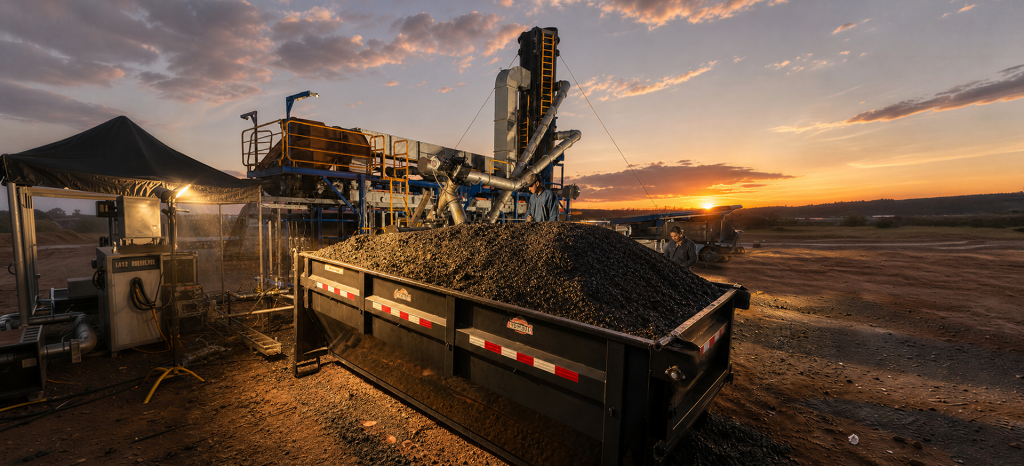
Summary: The biochar process converts prepared biomass into a stable carbon-rich material through controlled, oxygen-limited pyrolysis. Its results depend on feedstock quality, moisture, particle size, temperature, residence time, reactor design, and product testing. A well-designed process can also recover heat and produce gases that support efficient, commercially focused operations.
The biochar process transforms agricultural, forestry, organic, and certain waste streams into a useful carbon material. To align equipment with your feedstock and production goals, you can review our biochar technology before selecting a process configuration.
Industry activity is expanding, but scale does not remove the need for careful engineering. The IBI market report estimated global biochar production at 520,810 metric tonnes in 2025, compared with 180,150 metric tonnes in 2023. That growth makes process consistency, quality control, and responsible feedstock management increasingly important for US projects.
What is the biochar process?
At its core, the process is controlled thermal decomposition. Biomass is heated in an oxygen-limited environment, which prevents the material from burning completely. Instead of converting all available carbon into carbon dioxide, the process separates the biomass into solid, liquid, and gaseous outputs.
The solid output is biochar, a carbon-rich material with physical and chemical properties shaped by its feedstock and production conditions. The gaseous output may include combustible pyrolysis gases, while the liquid fraction can include condensable vapors and bio-oil. Heat released during processing may also support drying, internal reactor operation, or other site requirements.
This differs from combustion, where oxygen supports rapid oxidation and produces heat as the primary objective. It also differs from gasification, which introduces a controlled amount of oxygen and generally prioritizes combustible gas production. A pyrolysis system is designed to balance biochar yield, energy recovery, emissions management, and product quality.
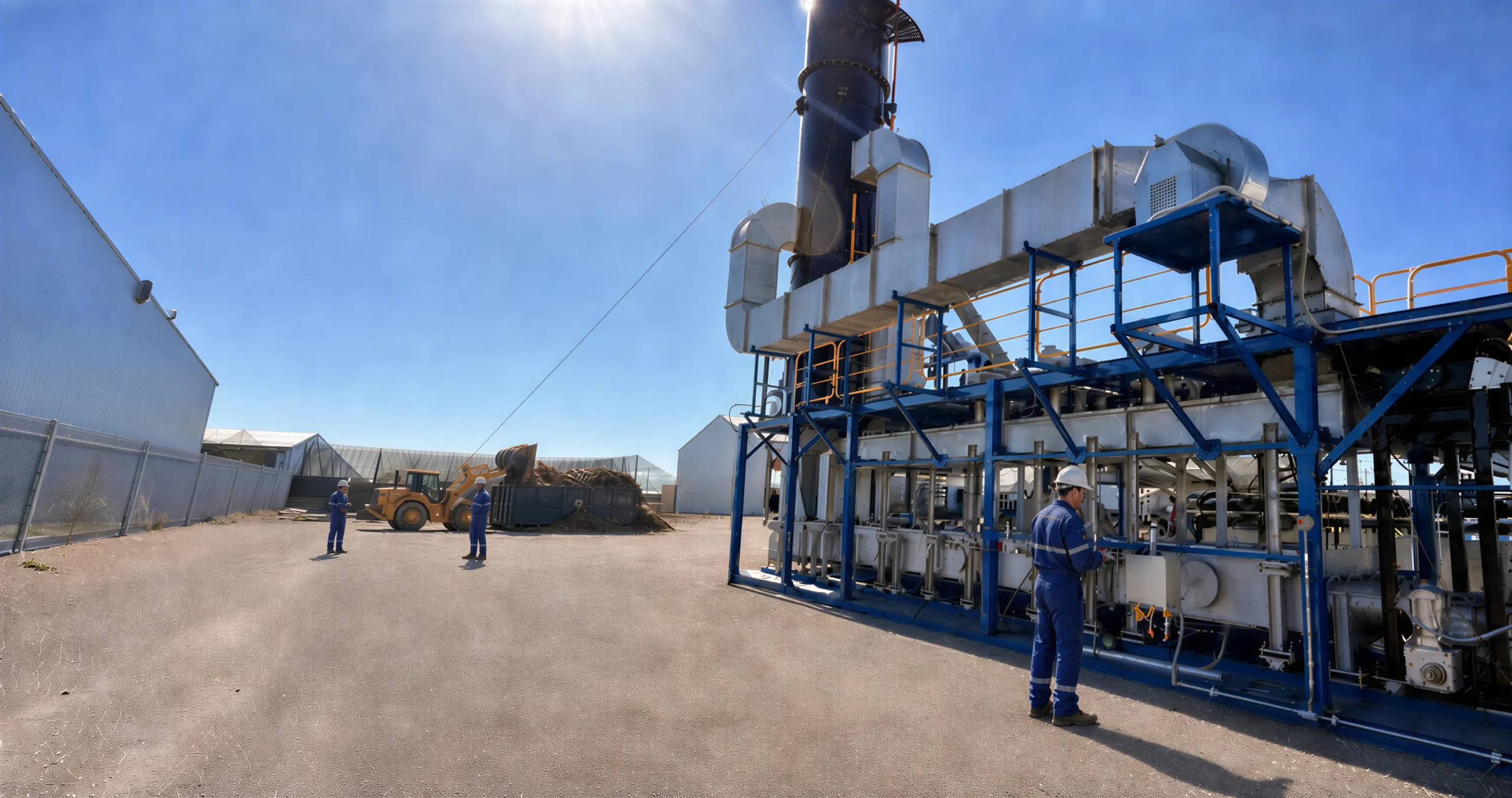
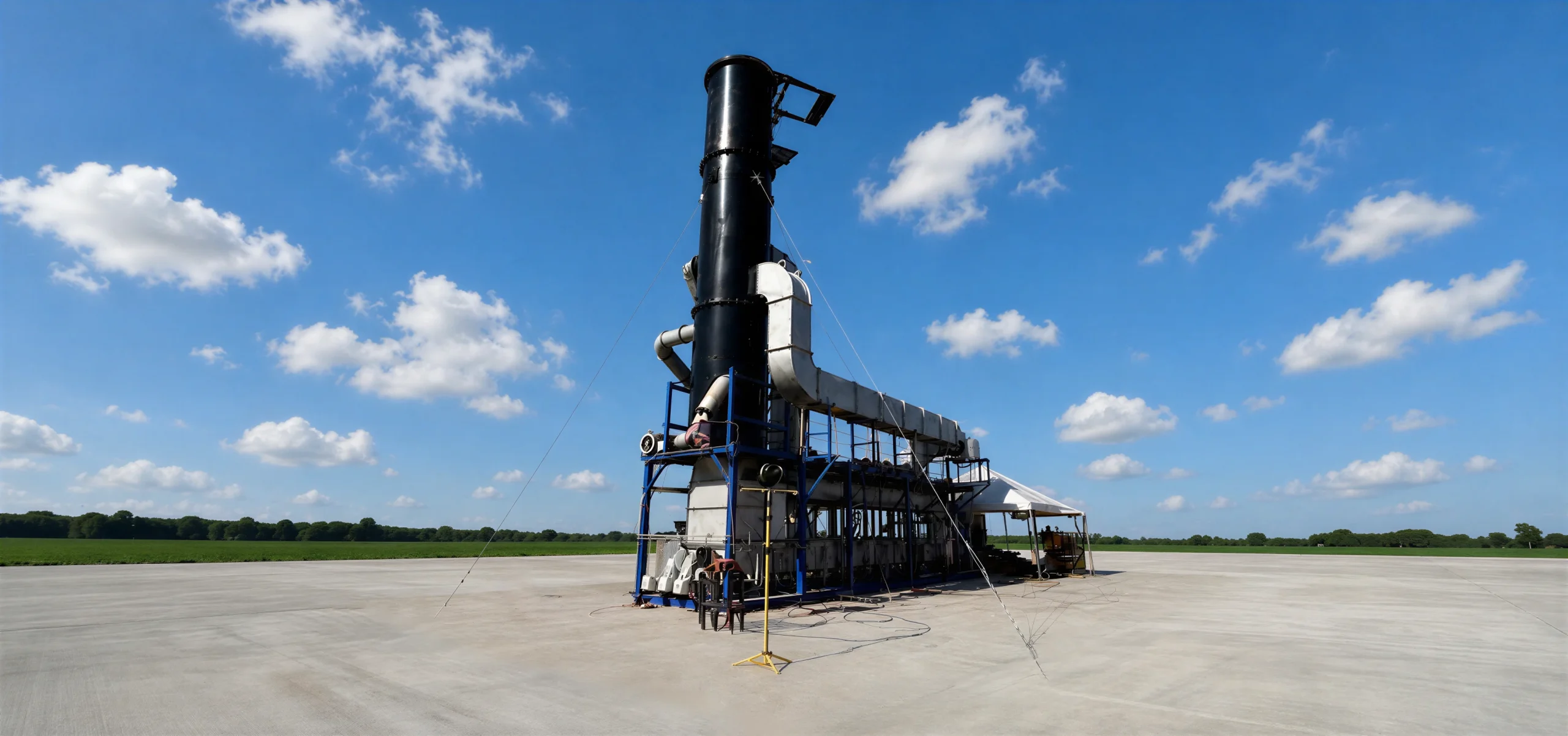
The process can be simple at small scale or highly integrated at industrial scale. Commercial equipment may combine feedstock handling, grinding, drying, pyrolysis, gas management, cooling, emissions control, automation, and finished-biochar collection. Each component affects the stability, efficiency, and economics of the full operation.
How does biomass become biochar?
Consider the process as a sequence of connected decisions rather than a single heating step. Each stage establishes the conditions required for the next one.
- Feedstock reception: Biomass is received, inspected, and separated from unsuitable materials. Operators consider contamination, composition, density, ash content, and expected end use.
- Preparation: Material is reduced to a consistent particle size and dried to an appropriate moisture level. For the reactor configurations described by Pyronexus, feedstock preparation targets particles below one inch and moisture below 20 percent.
- Controlled feeding: Prepared biomass enters the reactor at a regulated rate. Consistent feeding helps maintain stable temperature, residence time, and gas flow.
- Thermal conversion: The biomass is heated in an oxygen-limited environment. Volatile compounds leave the solid structure, while a more stable carbon matrix remains.
- Energy and vapor management: Combustible gases and process heat may be directed toward internal energy needs or other recovery applications. This reduces the amount of useful energy lost from the system.
- Cooling and collection: Biochar is cooled under controlled conditions before handling, storage, screening, or packaging. Cooling also helps reduce the risk of unwanted oxidation.
- Testing and application: The finished material is tested against its intended use. Agricultural, filtration, industrial, and composite applications may require different specifications.
Feedstock preparation is especially important because wet or inconsistent biomass can reduce throughput and create unstable operating conditions. Drying requires energy, but insufficient drying can increase process variation. A practical design therefore treats moisture control and material handling as core parts of the reactor system.
For projects that require coordinated equipment and site integration, our turnkey biochar solutions connect process equipment with engineering, commissioning, operations, and long-term technical support.
Which variables control biochar quality and yield?
A 2026 pilot study provides a useful example of the scale-up challenge. Researchers processing cotton gin waste reported average biochar yields of 37.1 percent in a laboratory furnace and 25.8 percent in a pilot rotary kiln, as described in the 2026 cotton gin study.
The difference does not mean that pilot equipment is ineffective. It shows that laboratory conditions often provide tighter control over heating, mixing, residence time, and atmosphere. Industrial systems must process more material continuously, manage heat transfer across larger volumes, and accommodate real-world feedstock variation.
Several variables influence the result:
- Temperature: Higher temperatures can change carbon structure, surface properties, ash concentration, and the balance between solid and gaseous products.
- Residence time: The time biomass remains under thermal conditions affects conversion completeness and product characteristics.
- Heating rate: Fast heating can favor volatile release, while slower heating may support greater solid-char formation.
- Moisture: Excess water increases drying demand and can disturb reactor temperature if preparation is inconsistent.
- Particle size: Uniform particles improve heat transfer and support more predictable conversion.
- Feedstock chemistry: Lignin, cellulose, minerals, ash, and contaminants influence yield and the final biochar profile.
- Oxygen control: Air infiltration can reduce char yield, increase oxidation, and affect emissions performance.
Small-scale trials can help identify how a particular biomass behaves at several temperature scenarios. Pyronexus describes controlled trials at 400°C, 550°C, and 700°C, followed by feedstock assessment, biochar analysis, and technical reporting.
Quality therefore cannot be judged by appearance alone. Two black, porous materials may perform differently because they have different pH, ash content, volatile matter, surface area, carbon stability, or contaminant profiles. The desired application should guide both the process settings and the laboratory testing plan.
How should you match feedstock to reactor design?
Imagine processing clean wood chips, crop residues, manure, and biosolids in the same equipment without changing preparation or operating conditions. That approach would create unnecessary technical and commercial risk.
Different feedstocks vary in moisture, density, particle shape, ash content, mineral composition, and flow behavior. Woody biomass may require different handling from fibrous agricultural residues. Biosolids usually require dewatering and careful contaminant assessment before thermal processing.
Reactor selection should therefore follow feedstock characterization. Important questions include:
- What volume of biomass is available throughout the year?
- How consistent are moisture and particle size?
- Does the material bridge, clump, flow, or settle during handling?
- What ash and mineral content should the system expect?
- Are contaminants present that could restrict the final application?
- What biochar properties does the intended market require?
- Will the project prioritize char, energy recovery, emissions performance, or a balanced product mix?
A 2026 comparative assessment indexed by the USDA Forest Service research database examined biochar reactor technologies in relation to design, performance, and application suitability. Its central relevance is practical: technology choice influences the final environmental and commercial use of the biochar.
For US operators, logistics also matter. A centralized facility may process larger volumes efficiently, but transportation can increase costs and emissions. A decentralized or mobile system may reduce transport distances, yet it can require more flexible operations and local maintenance. The right answer depends on feedstock density, site access, market distance, and production objectives.
What products and energy can the process create?
The main product is biochar, but a complete process may generate several value streams. These include combustible gases, condensable vapors, recoverable heat, and, in some configurations, usable energy for the facility.
Biochar can be developed for soil improvement, composting, filtration, industrial additives, composite materials, and environmental applications. Each use requires different performance criteria. A soil amendment may require careful evaluation of pH, nutrient interactions, and contaminants. A filtration product may require higher surface area or activation. A composite additive may need predictable particle size and chemical compatibility.
Pyrolysis gases can be combusted to provide process heat. Heat recovery can support feedstock drying or reduce dependence on external energy. The value of this integration depends on the reactor design, moisture load, operating schedule, local energy prices, and the amount of heat available at a useful temperature.
A 2026 environmental and economic assessment in Biochar journal research evaluated an integrated system with separate processing lines for straw and manure while optimizing internal energy use. The example reinforces the importance of designing around feedstock differences instead of forcing every material through one operating model.
Energy recovery does not automatically make a project viable. Operators must still account for feedstock preparation, equipment uptime, labor, maintenance, emissions controls, product testing, storage, transportation, and market development. A technically sound process must also produce material that buyers can use consistently.
How do you evaluate a process before commercial scale?
Before purchasing equipment or committing to a full facility, you should establish whether the feedstock, reactor, product, and business case align. Testing reduces uncertainty and helps define the process conditions required for scale-up.
A structured evaluation may include feedstock sampling, moisture analysis, particle-size assessment, proximate and ultimate analysis, ash testing, and flowability review. Small-scale trials can compare temperature scenarios and identify initial biochar properties. Larger trials can assess continuous operation, throughput, operating stability, and daily production expectations.
Product testing should reflect the intended market. Depending on the project, this may include pH, electrical conductivity, fixed carbon, volatile matter, ash, nutrient content, surface area, cation exchange capacity, polycyclic aromatic hydrocarbons, heavy metals, and other application-specific measurements.
Economic and environmental analysis also belongs in the early process. Mass and energy balances show how much feedstock becomes char, gas, liquid, moisture, and ash. A life-cycle assessment can examine emissions and energy inputs. A techno-economic analysis can test capital costs, operating costs, revenue assumptions, and sensitivity to feedstock or product prices.
Our biochar research and process development supports this type of staged evaluation through feedstock characterization, trials, laboratory analysis, technical reporting, product development, and process optimization.
Trial results can also inform carbon-credit planning. Projects may need traceable feedstock records, production data, product testing, monitoring, reporting, certification, audits, and chain-of-custody documentation. Carbon value should be treated as a project outcome that requires verification, not as an automatic feature of every biochar system.
What are the benefits and limitations?
The process can address several needs at once. It can convert underused biomass into a stable carbon product, recover energy from process gases, reduce dependence on disposal pathways, and create materials for agricultural or industrial markets.
Biochar may also support carbon removal when the feedstock is responsibly sourced, production is controlled, and the final carbon storage pathway meets an accepted methodology. The permanence and climate value depend on the original biomass, process conditions, lifecycle emissions, biochar quality, and final application.
However, the process is not a universal solution. Contaminated feedstocks may create regulatory or product-quality concerns. Poor moisture control can reduce efficiency. Inadequate emissions management can create environmental risks. Applying unsuitable biochar to soil can also produce unwanted changes in pH, salinity, nutrient availability, or water behavior.
Commercial projects must therefore evaluate the full system rather than focusing only on reactor capacity. Site preparation, feedstock supply, material handling, energy use, product testing, permitting, operations, maintenance, market access, and carbon accounting all influence the outcome.
When the project requires support from feasibility through commissioning and operation, our biochar project development service provides a path for coordinating engineering, site integration, technology deployment, and commercial planning.
Build the biochar process around your objectives
The most effective biochar process begins with the feedstock and ends with a defined product, energy, or carbon-market objective. Consistent preparation, controlled pyrolysis, heat management, testing, and transparent documentation help reduce scale-up risk. By evaluating technical performance and commercial requirements together, you can select a system that supports reliable production rather than simply producing char.
Take action with Pyronexus
If you are assessing biomass conversion, your first priority should be understanding how feedstock conditions, production scale, site requirements, and end markets interact. A structured review can help you identify practical process requirements before equipment selection or project development begins.
We support organizations evaluating reactor configurations, feedstock preparation, energy recovery, biochar quality, and project integration. To discuss a system aligned with your objectives, explore our biochar reactor solutions and contact our team for project-specific guidance.
Frequently Asked Questions
What is the main purpose of the biochar process?
The main purpose is to convert biomass into biochar through controlled, oxygen-limited thermal decomposition. The process can also recover gases and heat for energy use, depending on system design.
Which feedstocks can be used?
Potential feedstocks include agricultural residues, forestry materials, organic waste, and some biosolids. Suitability depends on moisture, particle size, composition, contaminants, flow behavior, and the intended biochar application.
Why is feedstock preparation important?
Preparation helps create consistent particle size and moisture conditions before thermal conversion. This supports stable feeding, heat transfer, reactor control, throughput, and product quality.
Can biochar production generate carbon credits?
It can support carbon-credit pathways when the project meets applicable requirements for sustainable feedstock, traceability, production records, testing, monitoring, verification, and durable storage. Credit eligibility and value are project-specific and are not guaranteed by producing biochar alone.
How can Pyronexus support a new project?
We can support feedstock evaluation, trials, reactor selection, project development, equipment integration, operations, product development, and carbon-market preparation. Our services can be structured around a specific project stage or combined into a broader delivery pathway.
