
Biochar Ratio Guide for Soil and Compost Applications
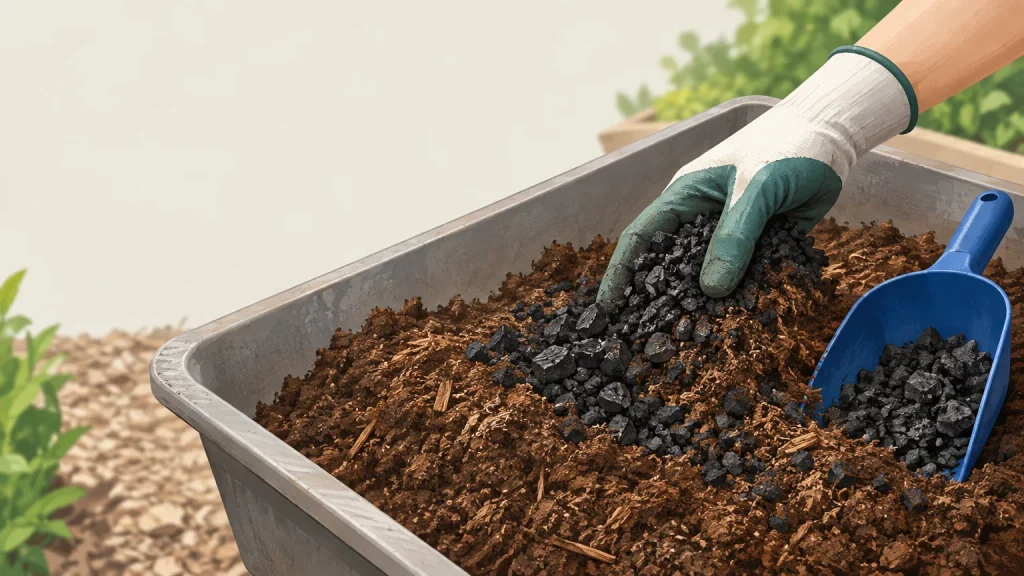
Summary: There is no universal biochar ratio for every soil or crop. Treat percentages as mixture proportions, distinguish them from field rates stated per area, and check whether a figure is by volume or weight. Start with your intended use, soil conditions, and biochar properties, then test a modest area before expanding.
The useful number is not simply how much biochar to add. It is the amount measured against a clearly defined material, area, or total blend. For practical guidance on choosing an approach, see our biochar application methods.
A biochar ratio can describe a compost mixture, a percentage of growing media, or a field application rate. Those measures are not interchangeable. Before mixing or spreading material, confirm the measurement basis, the application setting, and whether the recommendation fits your soil and crop.
What does a biochar ratio actually measure?
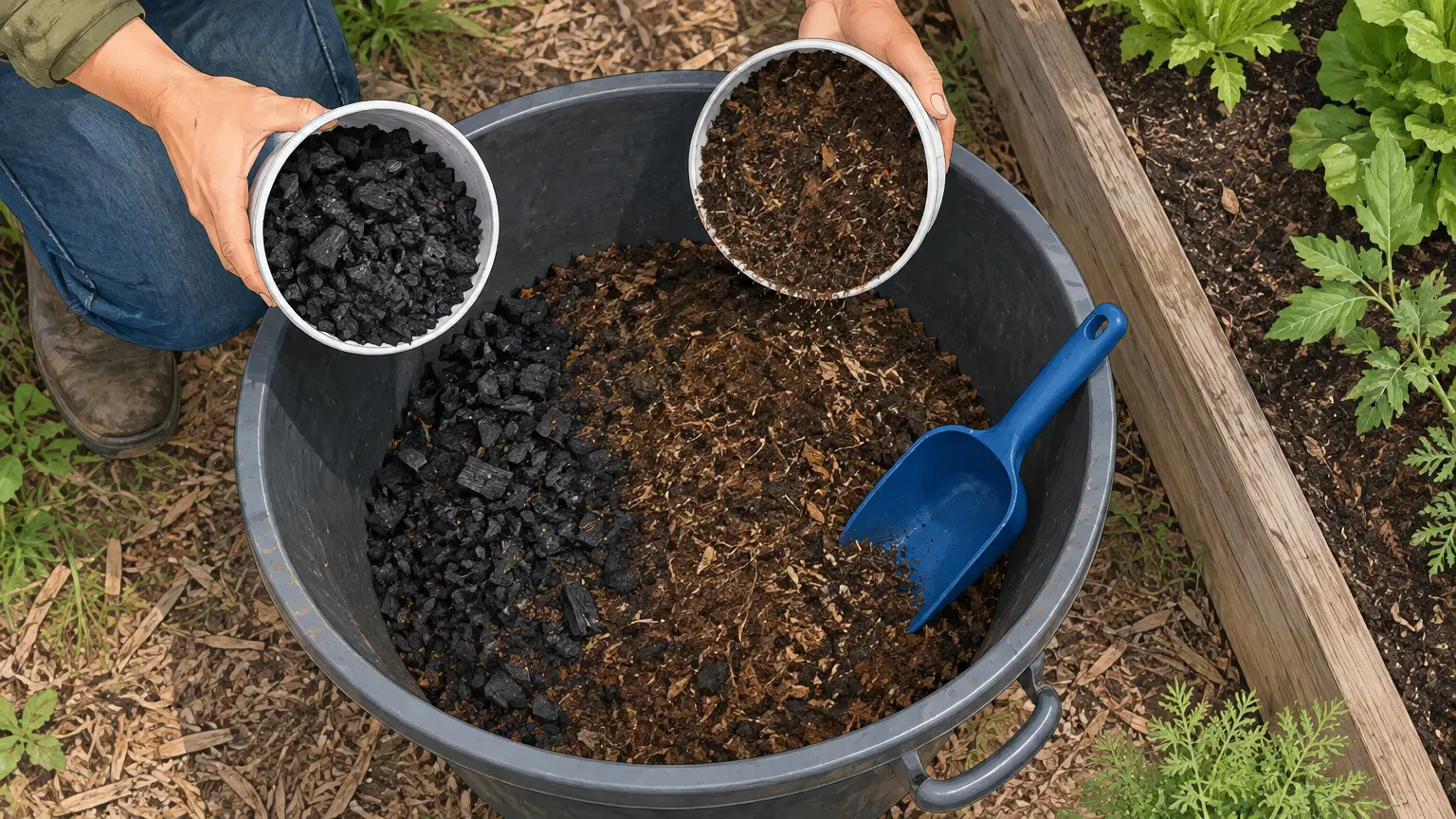
A ratio needs two named parts. In a biochar-to-compost mixture, the first number can represent biochar and the second compost. But a ratio such as 1:4 does not say whether the parts are measured by volume or weight. That detail changes how much material you add.
For example, one volume part of biochar to four volume parts of compost makes five parts in total. Biochar is therefore 20% of the finished blend by volume, not 25%. A 1:3 volume ratio makes four total parts, so biochar accounts for 25% of the blend.
A weight ratio uses mass instead. Biochar and compost have different bulk densities, so equal weights do not necessarily occupy equal space. When a product label or recommendation gives a percentage, check what the percentage is of and whether it refers to dry weight, fresh weight, or volume.
How does the ratio change between a mix and a field?
For a potting mix, raised bed, or planting hole, a recommendation may use a percentage by volume. For a field, guidance is more often stated as an amount spread over a defined area, such as tons per acre. A field rate is not a compost ratio, even if the biochar is mixed with compost before spreading.
Keep the two decisions separate: first determine the amount per area, then decide whether to blend that material with compost or another amendment. Mixing can make dry, light biochar easier to handle, but it does not change the intended field application rate.
Colorado State University’s 2024 FAQ describes field rates as site-specific. It gives 1 to 10 tons per acre as a range with positive impacts across studies, and suggests 1 or 3 tons per acre as starting points for different soil goals. For containers and tree planting holes, it gives 5% to 25% by volume as a range associated with good plant performance. These are context-dependent reference points, not one universal prescription; see the Colorado State FAQ. Our guidance on biochar for soil conditioning can also help you distinguish soil goals from a simple mixing formula.
What do field studies show about application rates?
Research rates are useful examples, but they describe the conditions tested rather than a general recipe. A field experiment published in 2026 in compost-amended urban agricultural plots in West Sacramento tested 0, 10, 20, and 30 metric tons per hectare in corn and squash plots.
In that experiment, the 10 and 20 metric ton rates improved aggregate stability, while the highest rate produced stronger responses in some microbial measures. Soil pH and cation exchange capacity did not differ significantly among the treatments. The results show why a dose should be matched to the desired outcome rather than treated as a percentage that always improves every soil measure. Read the 2026 field experiment for its methods and limits.
The study also used compost-amended plots, so its results do not establish a universal biochar-to-compost blend. If you are planning agricultural use, our information on biochar use in vegetable production provides an application-specific context to consider alongside local soil and crop needs.
Does a higher biochar percentage always work better?
No. The result depends on the material, soil, and intended use. A January 2026 mesocosm study tested wood-derived biochar and yard-waste compost in low-organic-matter soil on sloped plots. Its blend treatments included 75% compost with 25% biochar and equal parts of each amendment.
In that experiment, compost improved plant growth, while biochar alone reduced growth but also reduced nitrogen leaching compared with other treatments. The combined amendments balanced those responses under the study conditions. This is evidence that the mixture can matter as much as the percentage; it is not a recommendation to use those proportions in every garden or field. The 2026 mesocosm study describes the tested soil and treatments.
Before applying a larger amount, consider what you want the amendment to do. A rate chosen for soil structure, water management, nutrient retention, or a particular crop may not produce the same result for another goal. Soil testing and a small trial area give you more useful local evidence than increasing the percentage by default.
How should you choose a starting point?
Begin with the application, then select a measurement that suits it. For an existing field, work from an area-based rate and local soil needs. For a container or raised bed, use a clearly stated volume percentage. For a compost blend, write down both components and the measurement basis before calculating the share of biochar in the finished mix.
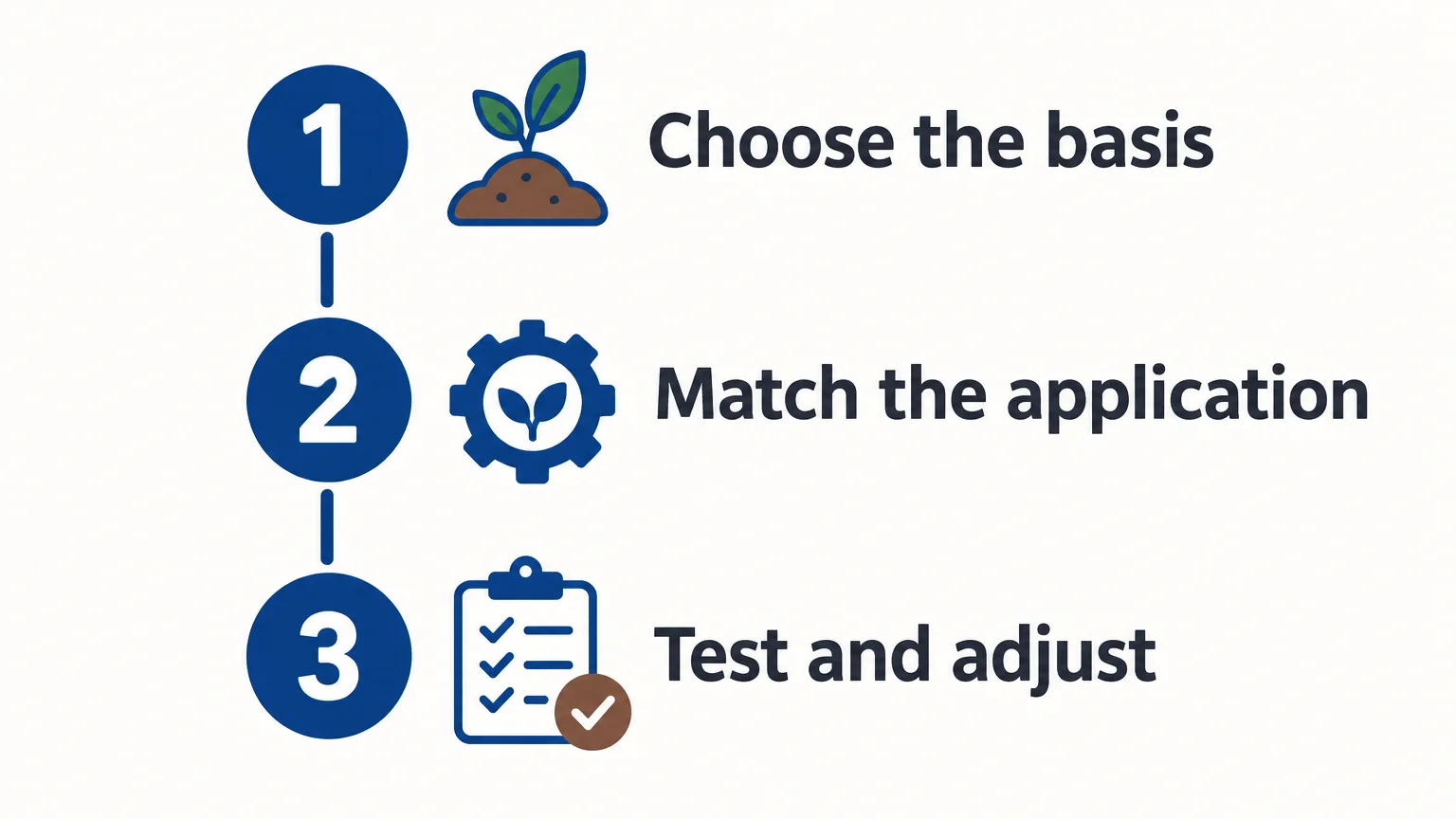
- Define the use. Identify the soil or growing medium, crop, and goal for the amendment.
- Confirm the basis. Record whether the guidance is by volume, weight, or area, and whether the figure describes biochar alone or a finished blend.
- Test and adjust. Apply a measured amount to a small area, observe the crop and soil, and review results before scaling up.
Biochar properties and handling also affect whether a chosen rate is practical. Particle size, moisture, and flow behavior influence preparation and application. For project teams assessing production or feedstock, our research work includes characterization, trials, and laboratory analysis. Review biochar particle size when checking whether material dimensions fit your intended use.
A 2026 Oregon State University Extension summary of a long-term field study reported different crop responses at different tested rates. Spring peas responded more strongly at the lowest rate tested, while the highest rate did not add yield benefits for wheat and was associated with greater year-to-year variability. The finding supports testing a rate against the crop and management plan rather than assuming more material will produce more benefit. See the Oregon State field study.
Conclusion
Choose a biochar ratio for your use case, not by copying a percentage without its context. Confirm whether the recommendation is by volume, weight, or area, account for the soil and crop, and begin with a measured trial. A clear basis and careful observation make it easier to interpret results before applying biochar more widely.
Source Biochar for Your Project
Once you know whether your application calls for a compost blend or a field rate, the next step is checking material properties and the intended use. We support biochar producers and project teams through technical work that includes feedstock characterization, trials, and product development, helping inform material and application decisions.
If you are ready to source material, use our marketplace route to buy biochar. Compare available product details with your soil plan, crop, particle-size requirements, and test results before ordering. For a field or commercial project, contact our team about testing or application questions before scaling your chosen rate.
Frequently Asked Questions
What is a common biochar-to-compost ratio?
There is no single ratio that fits every compost, soil, or purpose. State the parts by volume or weight, and check whether the recommendation refers to the whole blend or just one component.
Is a 1:4 biochar ratio the same as 25%?
Not if it means one part biochar to four parts compost. That blend contains five total parts, so biochar makes up 20% of the total by the same measurement basis.
Should field biochar be measured by percentage?
Field guidance is often expressed as an amount per area, such as tons per acre, rather than a percentage of a compost blend. Keep the field rate separate from any mixing ratio used during application.
Can you mix biochar with compost before applying it?
Yes, biochar can be blended with compost, but the useful proportion depends on the composting stage, materials, and purpose. Measure both components consistently and avoid treating a ratio from one study as a universal instruction.
Can Pyronexus help evaluate biochar for a project?
Our research and development work includes feedstock characterization, controlled trials, laboratory testing, and technical reporting. These services can help project teams evaluate material and process questions before making a scale-up decision.
