
Biochar Particle Size: A Practical Guide for Soil Use
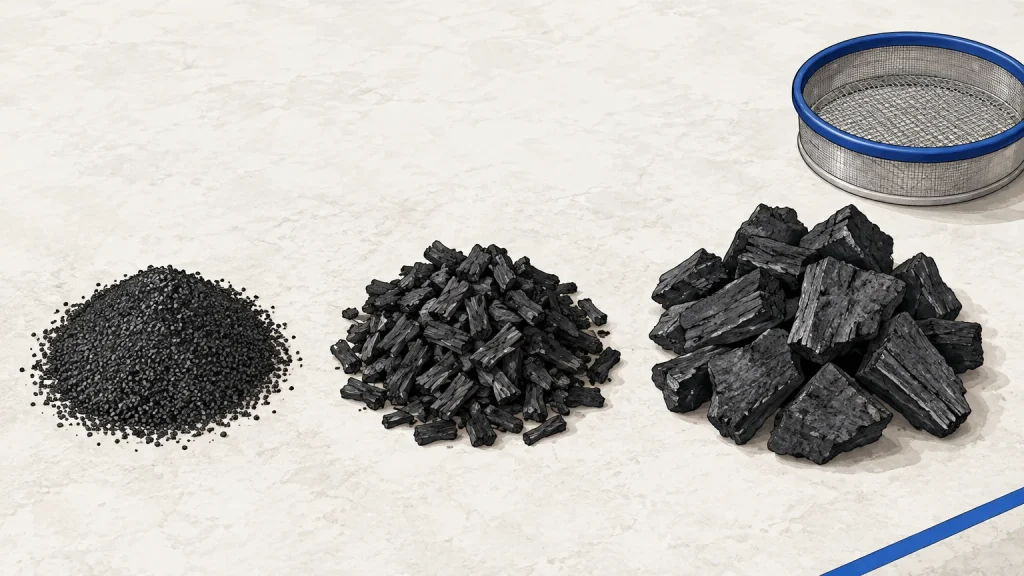
Summary: Biochar particle size is not a universal number. The useful range depends on whether you are sizing incoming biomass, finished char, or material for a specific soil or product. Report a distribution rather than relying on labels such as fine or coarse, then test it against the intended outcome.
Does smaller biochar always improve soil water retention? No. Size influences how particles pack into soil, but the outcome also depends on feedstock, pore structure, soil texture, and application rate. If you are evaluating a specific use, our overview of biochar particle size and application frames the decision around the intended end use rather than a universal target.
For US growers, soil users, and producers, distinguish incoming biomass size from finished biochar size. They affect different steps: feedstock sizing supports predictable handling and reactor operation, while char sizing influences mixing, placement, dust, and the spaces between particles. The useful specification is a measured distribution connected to a stated use, not a label such as fine or coarse.
What Does Biochar Particle Size Actually Describe?
Particle size can describe either the biomass entering a pyrolysis system or the char leaving it. These are different specifications. Feedstock size affects conveying, drying, and consistent feeding. Finished char size affects blending, placement, dust, and the pores between particles.
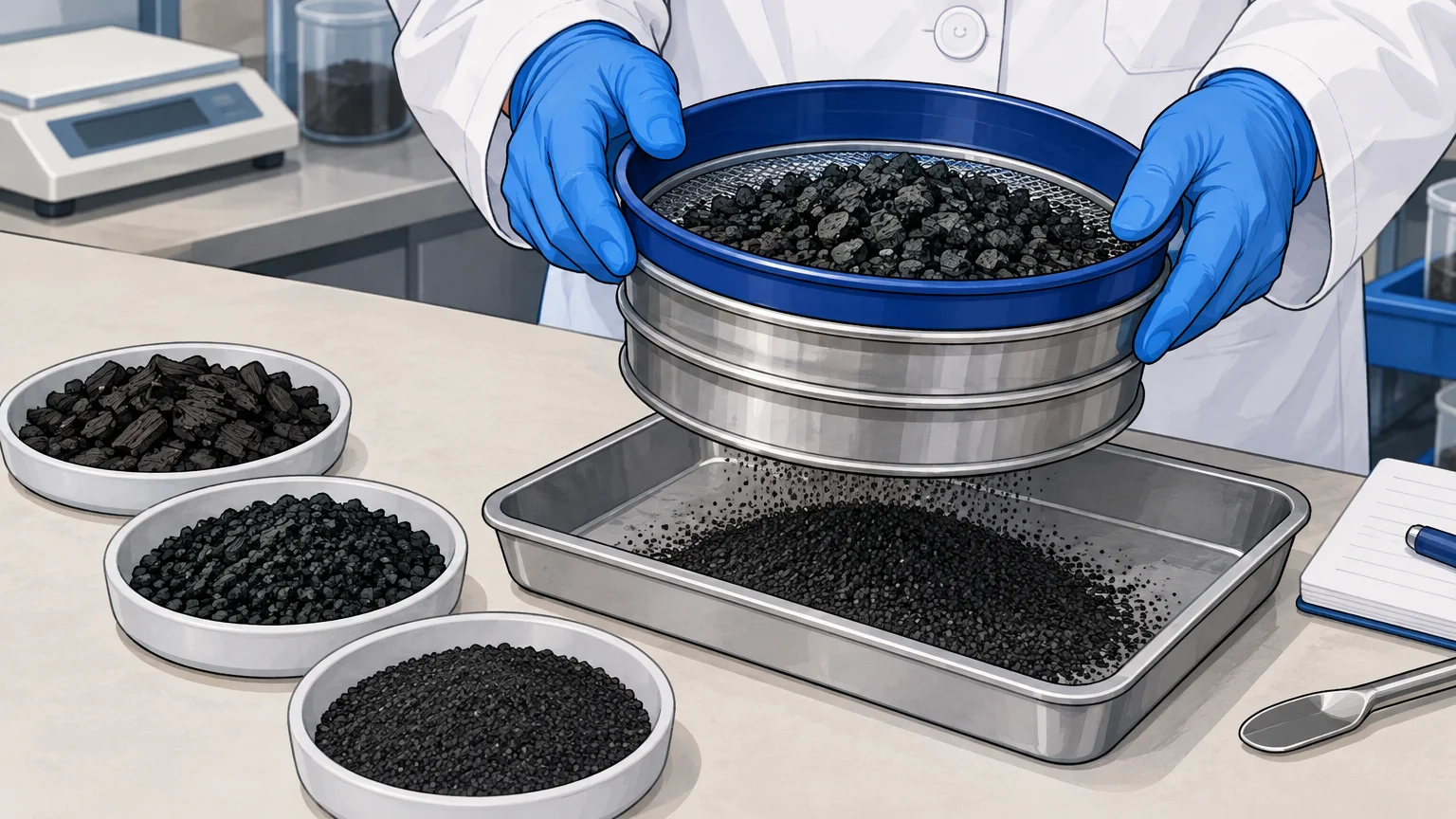
Particle-size distribution describes the share of material in different size bands. A single maximum size does not show whether most of the product is dust, granules, or larger pieces. Use a consistent measurement method, such as sieving, and report the size bands plus the proportion by mass in each band.
Also record whether the material was screened or ground and its moisture condition. Those details help you interpret comparisons. “Fine biochar” alone is too vague to guide a purchase, soil trial, or production specification.
What Changes When Particle Size Changes?
Smaller fragments can fill larger voids between soil grains and create narrower pathways that hold water. This may increase water retention, while reducing open space can also slow infiltration or limit aeration. Coarser pieces leave larger spaces between particles, which can affect drainage and placement.
Researchers tested straw biochar in coarse sandy subsoil at 1.5% and 3% by weight. In a 2023 study, particles no larger than 44 μm affected water retention and hydraulic conductivity more than larger fractions in the medium suction range. The result applies to the materials and soil tested, not every biochar or field.
If your goal is soil improvement, consider the intended crop and soil conditions alongside the material’s size. Our information on biochar for soil conditioning treats the application as a product-and-soil fit, rather than a particle-size choice alone.
Why Do Results Differ Across Soils?
Biochar size does not act independently of soil texture, particle shape, application rate, or the char’s internal pores. A size fraction that changes water movement in one soil may have a different effect in another. That is why a result from a controlled test should be read with its conditions attached.
A 2026 pot study compared four biochar fractions in Psamment soil at a 5% application rate. During a 21-day incubation, the study found increased moisture and organic matter with particles below 2 mm. Fractions below 0.5 mm also affected measured clay content.
The experiment involved one soil and a short incubation, so it does not establish a universal field prescription. For a useful comparison, keep the soil, application rate, and measurement method consistent while testing the particle fractions that match your intended use.
Which Size Fits the Intended Use?
Start with the outcome you need, then decide which size characteristics matter. Soil amendment, green roof substrates, filtration media, and engineered products have different requirements for water movement, handling, and material consistency.
A study published on October 15, 2026, examined particle size in green roof substrates. The 2026 green roof study found that fine, unprocessed biochar measuring 0.5 to 1 mm and intermediate-sized material measuring 2 to 2.8 mm increased plant-available water in its laboratory tests. Fine material was also associated with lower saturated hydraulic conductivity, which may aid water detention but can increase erosion and waterlogging concerns.
These results describe green roof substrates, not a general recommendation for agricultural soils. For soil, drainage, or product development, compare the intended function with the material’s measured distribution. For filtration or other engineered uses, match the particle dimensions to the required flow and product specifications.
How Should You Size Feedstock for Production?
Incoming feedstock particle size matters for material handling and reactor operation; it is not the same as finished biochar size. In our reactor systems, feedstock is prepared to particles smaller than 1 inch, with moisture below 20%. These are Pyronexus process requirements, not universal soil-application specifications.
Our integrated systems can include grinding and drying to prepare biomass for processing. The right setup depends on the feedstock and project requirements. Learn about the biochar production process when you need to connect material preparation with production planning.
For a production project, our feedstock characterization, process-flow assessment, trials, and laboratory analysis help evaluate material and process choices. This work supports decisions about equipment and product development without assuming that one feedstock or char specification suits every project.
How Can You Choose and Report a Size?
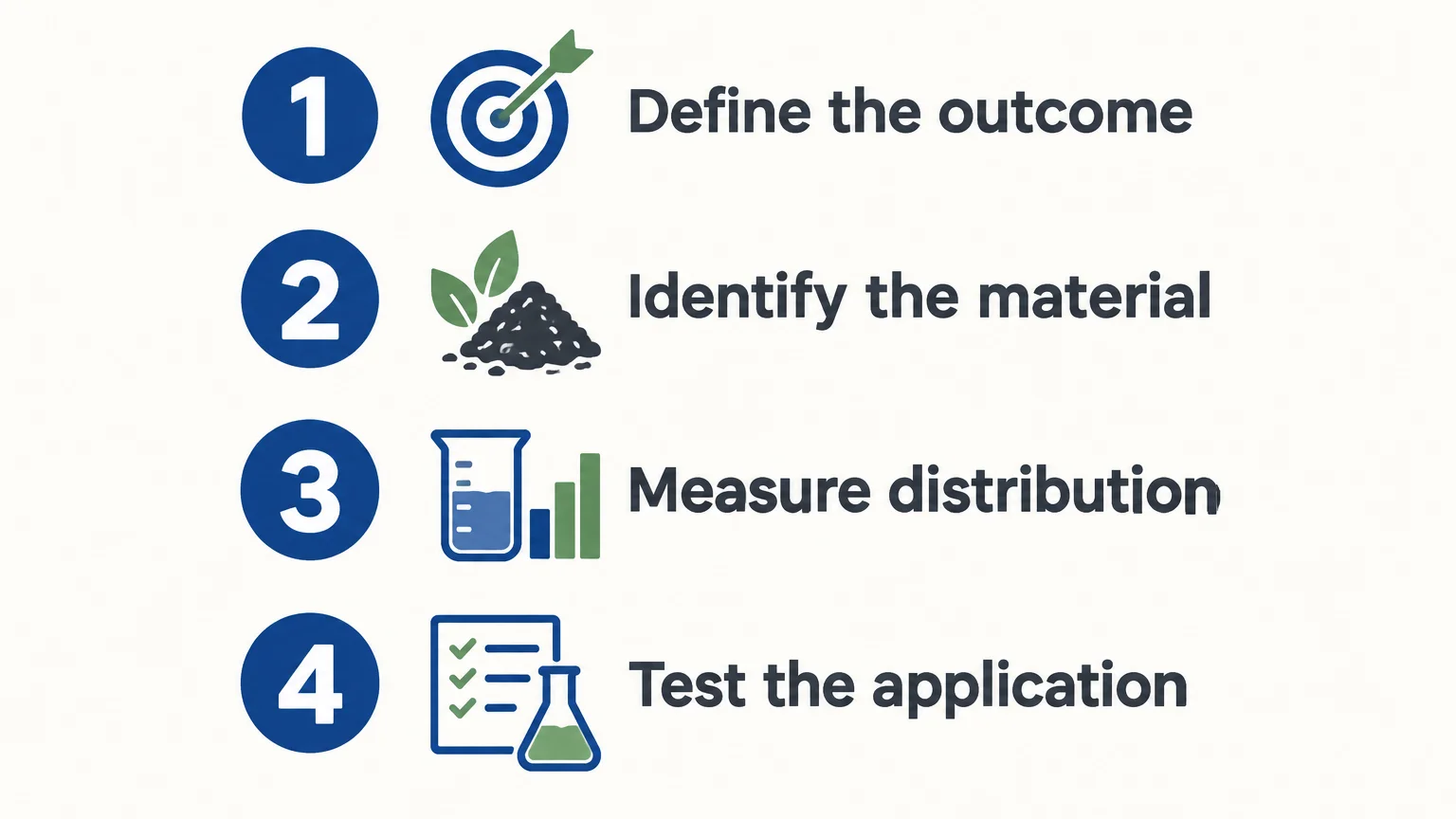
Use a simple, repeatable process to compare particle fractions against your actual objective:
- Define the outcome. Specify whether you need water retention, drainage, easier incorporation, predictable feeding, or another measurable result.
- Identify the material. Record feedstock, processing history, and whether the sample is incoming biomass or finished biochar.
- Measure the distribution. Use a consistent method and report the size bands and proportion by mass in each band.
- Match the test conditions. Keep soil or substrate, application rate, and measurement approach consistent when comparing fractions.
- Check practical handling. Consider dust, storage, conveying, placement, and any relevant moisture requirements.
For project-scale decisions, our research services include feedstock characterization and small- and large-scale trials. These can help you evaluate candidate materials before selecting a production configuration or final product specification.
Conclusion
Biochar particle size is most useful when it is reported as a distribution and tied to a specific application. Separate feedstock preparation from finished-char requirements, then test candidate sizes under conditions that reflect your soil, substrate, or production process. Treat published results as evidence for their tested materials and settings, not as universal size rules.
Choose Biochar for a Defined Application
Particle sizing is most useful when it is tied to a clear outcome, such as water retention, drainage, consistent feeding, or low-dust handling. Before sourcing material, document the target application, soil or substrate, measured size distribution, and any handling constraints. That gives you a practical basis for comparing biochar instead of relying on labels such as fine or coarse.
If you are ready to source material, you can buy biochar and use your application details to guide selection. For organizations planning production rather than purchasing, we also support feedstock characterization, technical trials, engineering, and product development. These services help connect a material specification with process and end-use requirements.
Frequently Asked Questions
What does biochar particle-size distribution tell you?
It describes how much material falls within each measured size band. This gives you more useful information than a single maximum size or a broad label such as fine.
Is finer biochar always better for soil?
No. Fine particles can affect water retention and pore arrangement, but the result depends on the biochar, soil, and application conditions. Compare fractions against your intended outcome.
How should you measure biochar size?
Use a consistent method, such as sieving, and report the size bands and proportion by mass in each band. Record whether the sample was screened or ground.
Should feedstock and finished biochar have the same size?
No. Feedstock size relates to preparation and reactor handling, while finished biochar size relates to its intended application, blending, and placement. Specify each separately.
How can Pyronexus help evaluate feedstock size?
We provide feedstock characterization, trials, laboratory analysis, and process-flow assessment for biochar projects. These services help you evaluate material and process choices against project objectives.
