
Biochar Systems for Project Developers: A US Planning Guide
Summary: Biochar systems for project developers are integrated projects, not reactor purchases alone. Strong planning connects suitable feedstock, preparation and material handling, process design, site needs, product markets, operating costs, and carbon documentation. Test these elements together before selecting capacity or committing capital, then carry the results into engineering, commissioning, and operations.
What turns a promising biomass resource into a production system that works reliably and has a route to market? It takes more than selecting a pyrolysis unit. If you are assessing biochar systems for project developers, begin with the feedstock, intended product, site, and operating model, then match the equipment to those requirements. Our biochar project economics resource connects those early questions to the cost and revenue assumptions behind a project.
For developers across the US, the practical challenge is coordinating technical, commercial, and operational decisions before they become expensive to change. Feedstock condition affects preparation and throughput; throughput affects the facility and its costs; product specifications and carbon documentation shape potential sales. A disciplined development process tests those dependencies together, rather than treating equipment, market access, and verification as separate workstreams.
Start with the project conditions, not the reactor
Imagine a developer has access to a steady volume of agricultural residue. That fact alone does not determine a suitable system. The material’s moisture, particle size, composition, seasonal availability, and transport distance influence how it must be received, stored, prepared, and processed.
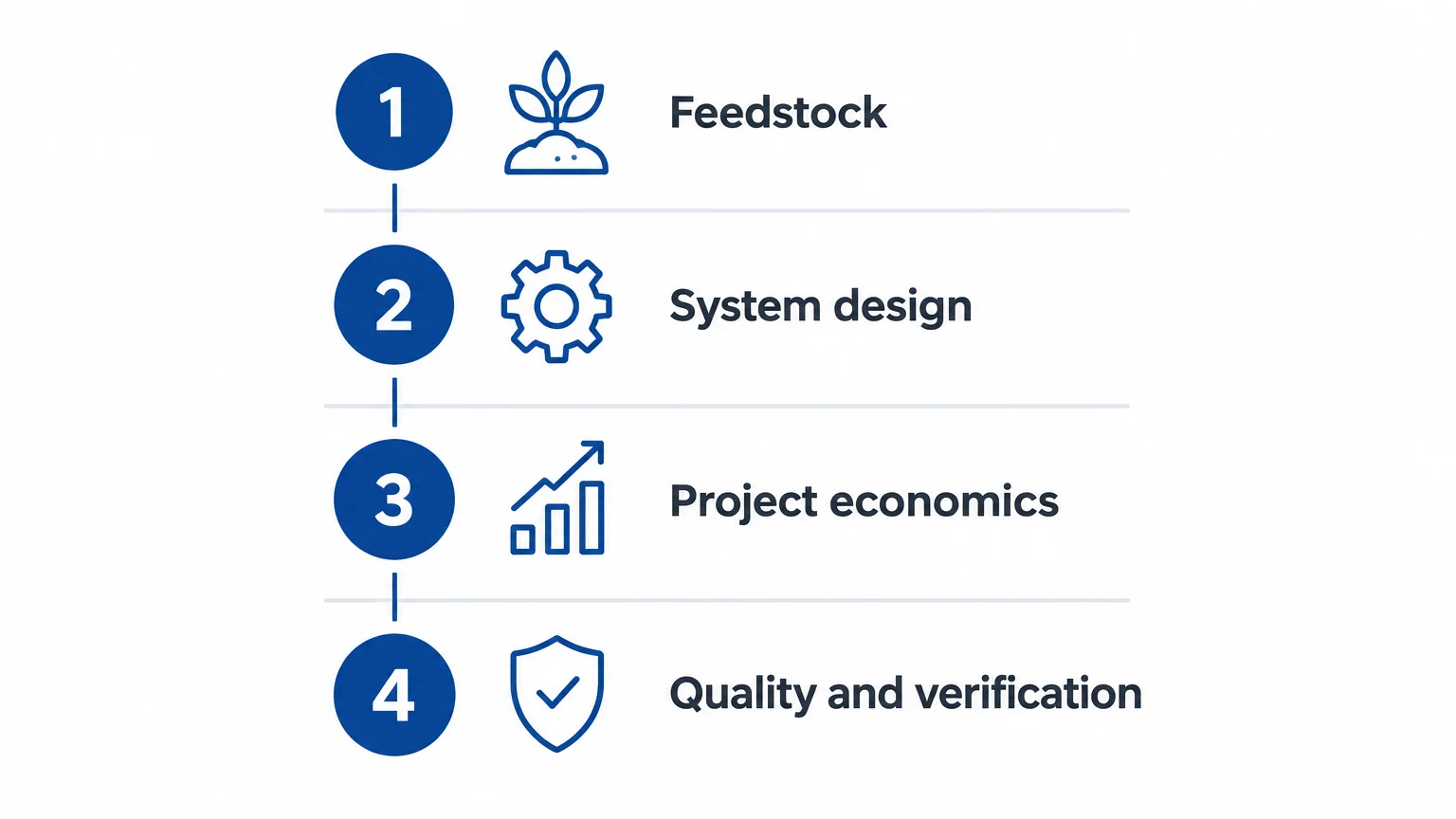
Define the project around four linked questions: What biomass can you secure? What product and end use are you targeting? What operating scale can the site and market support? What evidence will buyers, regulators, or carbon programs require? Answering these questions early gives the design team a practical basis for specifying capacity and supporting infrastructure.
Keep the intended product in view from the start. Biochar for agriculture, filtration, industrial additives, or composites can require different properties and handling. A product specification should therefore inform feedstock selection and testing, rather than being added after equipment configuration.
Check feedstock supply, condition, and logistics
Reliable supply means more than identifying a nearby biomass source. Verify the material’s quantity, seasonal variation, ownership, existing uses, storage requirements, contamination risks, and delivery terms. Include collection, preprocessing, transport, and storage in the delivered cost. Material available at no purchase price can still carry substantial handling and logistics costs.
Regional conditions matter. A 2026 regional study examines policy and cost factors alongside feedstock and infrastructure assumptions in a Northeast US case study. Its regional scope is a useful reminder: developers should test local supply, transport, policy, and site conditions rather than transfer another region’s assumptions directly.
Take representative samples from the expected supply, including material from different seasons or suppliers where relevant. Record moisture, particle size, and other properties important to your process and intended product. Then test whether available preparation equipment can bring the feedstock into the reactor’s operating range. For our reactor systems, the stated feedstock thresholds are particle size below one inch and moisture below 20 percent. Treat these as project design conditions, not evidence that every biomass type is suitable.
A written feedstock plan should also identify who is responsible for quality checks, rejected loads, seasonal shortages, and changes in supply. These details support realistic throughput assumptions and help avoid designing around feedstock that is inconsistent or difficult to deliver.
Match system configuration to throughput and the site
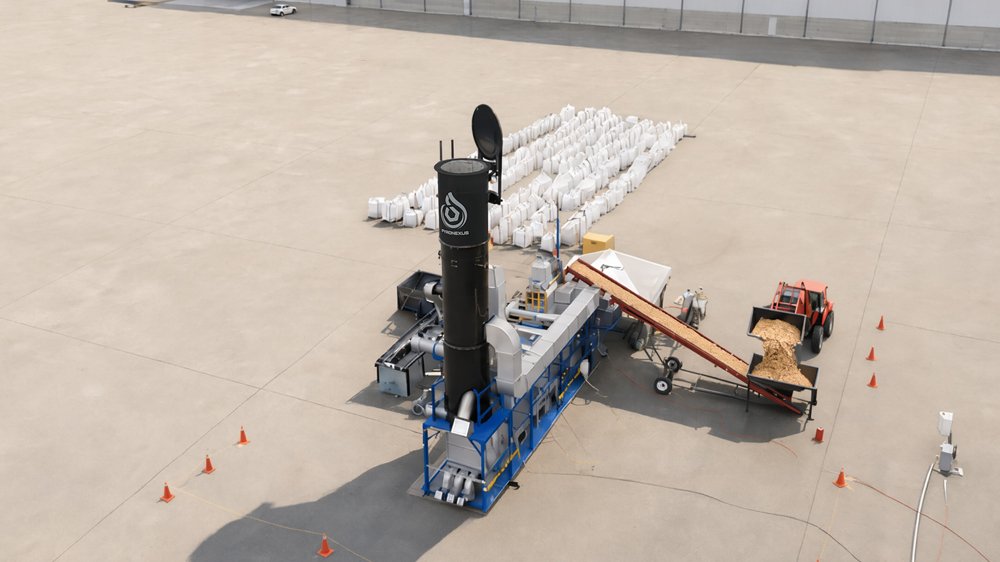
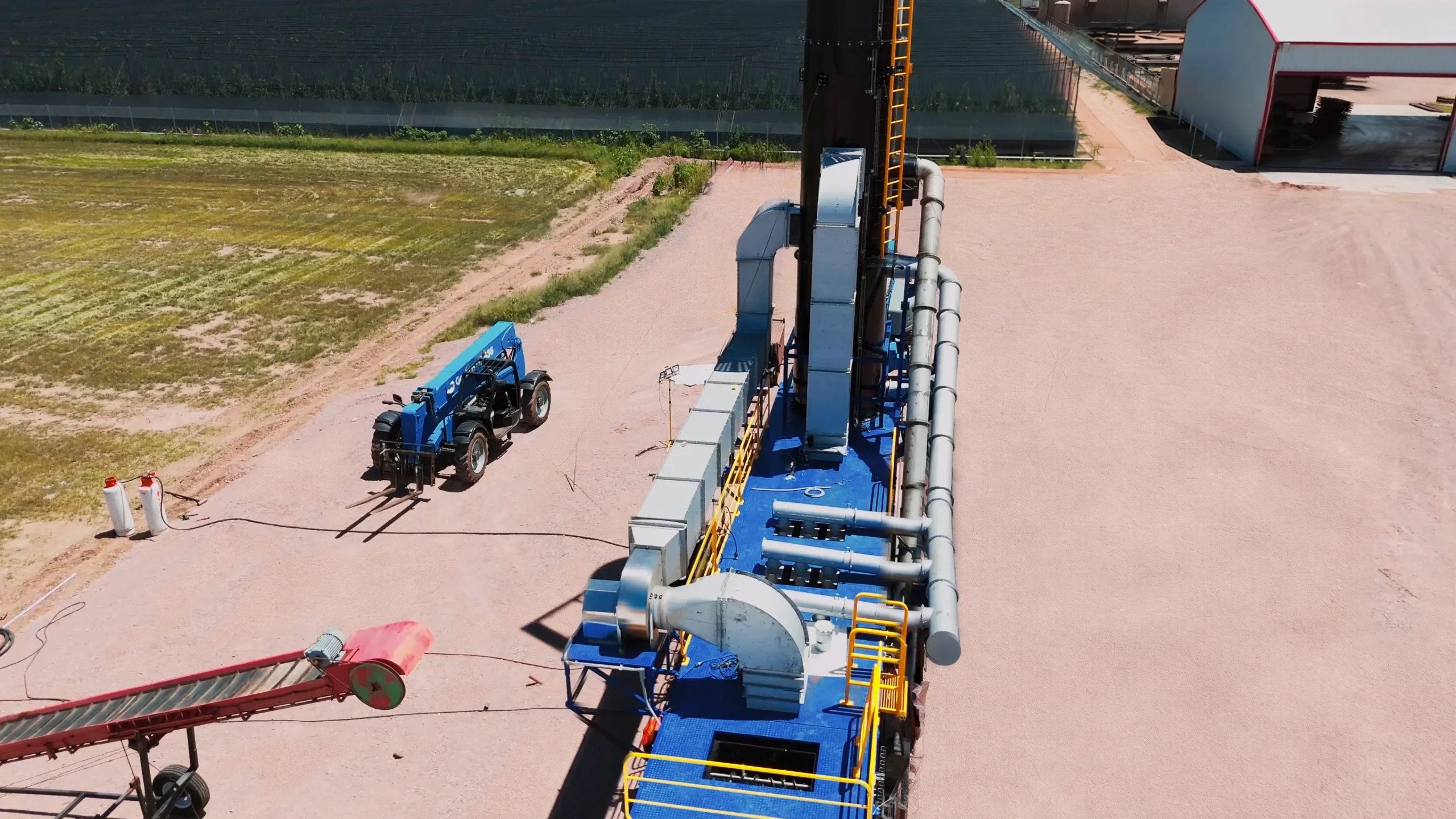
Once the feedstock envelope is understood, map the material flow from receiving through finished biochar collection. A system may need size reduction, drying, conveying, controlled pyrolysis, cooling, storage, packaging, and automation. The right configuration depends on the material, production target, operating pattern, and site layout.
Distinguish nameplate capacity from expected annual production. Allow for feedstock changes, planned maintenance, startup, shutdown, and unplanned downtime. Check whether the site has space for receiving and storage, suitable utilities, safe access, and room for equipment integration and future changes.
Energy recovery should be designed around a real use. If recovered heat is intended for drying or another process, estimate the demand profile and account for the equipment and controls required to deliver it. Do not count potential energy value as revenue or savings until you have identified a practical use and included its integration costs.
For system selection and integration questions, our biochar production equipment resource is a starting point for considering equipment as part of the wider process flow. Our configurations can be customized around feedstock, scale, and project objectives, and can include reactors, dryers, material handling, and automation. Public standard capacities and prices are not specified, so request a project-specific configuration.
Site planning should also identify permitting, emissions, fire protection, worker safety, and material storage requirements. These factors affect schedule, equipment layout, and operating procedures. Address them alongside process design, not only after a system has been selected.
Test the economics before committing capital
A useful feasibility model separates capital costs, operating costs, revenues, and financial risks. Include equipment and installation, site work, utilities, labor, maintenance, feedstock preparation, testing, transport, insurance, and financing. Model realistic utilization rather than assuming continuous operation at full capacity.
A 2026 ACS analysis modeled waste biomass conversion through slow and fast pyrolysis. For its modeled slow-pyrolysis cases, estimated minimum selling prices for biochar ranged from $188 to $260 per metric ton. The authors identified feedstock cost, product yield, and scale as major cost drivers. These are study estimates for modeled processes, not a universal market price or a forecast for an individual project.
Use base, downside, and upside cases to test the assumptions that can change returns. Vary delivered feedstock cost, moisture, yield, uptime, labor, energy use, product price, financing, and revenue timing. Model biochar sales and carbon revenue separately. Carbon credit assumptions should include documentation, testing, verification, and issuance timing, rather than treating potential credits as automatic income.
Before finalizing a model, compare the resulting product with actual buyer requirements and discuss potential offtake. If testing costs are part of the development plan, our research and development trials can help characterize feedstock and biochar before a commercial decision. The stated trial-cost credit allows 100 percent of trial costs to be applied toward a commercial system; confirm project terms directly when scoping the work.
Plan quality, verification, and operations together
Product quality and carbon accounting depend on records that begin before production. Establish how you will document feedstock origin and quantity, operating conditions, biochar output, laboratory results, storage, and final destination. Define who collects the data and how records will remain linked as material moves through the project.
Requirements depend on the product market and any carbon methodology you pursue. Set a testing plan for the intended application, then identify relevant emissions, waste-handling, zoning, and site requirements. If carbon removal is part of the business case, confirm applicable methodology requirements and build monitoring, reporting, verification, and chain-of-custody procedures into the operating plan.
Commercialization also requires coordination beyond the production site. A PNNL 2026 summary of a 2022 stakeholder convening describes participation by biochar producers, agricultural producers, and nonprofit, industry, and government organizations. For a developer, that broad participation reflects the practical value of connecting production planning with research, end users, and market needs.
Operations planning should specify staffing, training, preventative maintenance, safety procedures, quality checks, and response plans for feedstock variation or downtime. Our biochar plants information is relevant when you are considering how equipment, site integration, and operational needs fit together. If you need coordinated support across development and implementation, our turnkey biochar solutions describe an integrated project pathway; the scope is tailored to the project rather than assumed to include every service.
Build the system around evidence
Biochar system decisions become clearer when feedstock supply, site conditions, product requirements, operating needs, and project economics are assessed together. Before you commit capital, validate representative biomass, specify a marketable product, test realistic throughput, and plan for traceable quality and carbon records. That evidence gives you a practical foundation for selecting a biochar production system and carrying it through commissioning and operation.
Discuss your biochar project development needs
When feedstock tests, site conditions, system design, and market requirements must align, a structured development process can help you move from feasibility into engineering and commissioning. Set out your biomass, target production, site constraints, and intended product so the project scope can be grounded in your actual requirements.
We support project development from feasibility and engineering through site integration and final commissioning. To discuss a project-specific pathway, explore our biochar project development services.
Frequently Asked Questions
What should you assess before selecting a biochar system?
Start with feedstock availability, condition, preparation, and delivery logistics. Then define the intended biochar market, production target, site requirements, and documentation needs.
Why test feedstock before choosing equipment?
Moisture, particle size, and other material properties influence preparation, throughput, and process design. Representative testing helps you base equipment decisions on the biomass you expect to process.
How should you estimate biochar plant economics?
Model installed capital, operating costs, realistic utilization, product sales, energy use, and financing. Test downside cases for supply, yield, uptime, and sales rather than relying on one forecast.
What records matter for a biochar carbon project?
Plan records for feedstock origin, production conditions, output, testing, storage, and final destination. Confirm applicable methodology and verification requirements before treating carbon revenue as part of the project case.
Can Pyronexus support a project before commercial system selection?
Yes. Our research and development work includes feedstock characterization, trials, laboratory testing, and technical reporting, which can inform a commercial-system decision. The scope and trial terms are defined for the project.
