
Biochar Reactors for Producers: A Practical Selection Guide
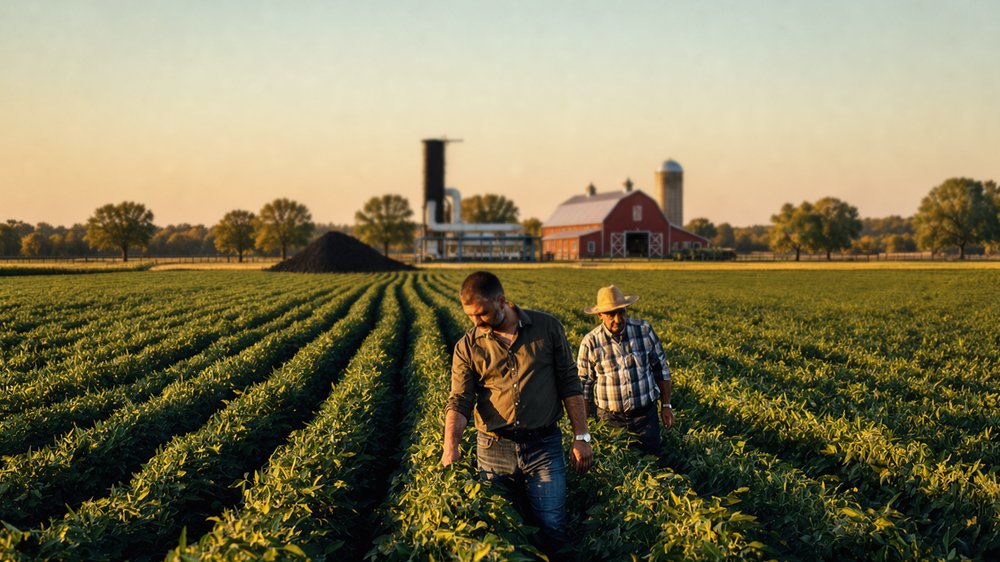
Summary: The right biochar reactor depends on your feedstock, production goals, desired biochar properties, and site requirements. Compare reactor configurations alongside material preparation, process control, energy use, and project economics. Testing your biomass before selecting a commercial system can help clarify technical fit and inform the next steps.
What should you consider before choosing a reactor? Start with how your biomass behaves and what you need the finished biochar to do. If biomass disposal is part of the challenge, biochar reactors for biomass disposal can be one path to explore. The right biochar reactors for producers are not defined by capacity alone. Feedstock handling, temperature control, and how the system fits your site also matter.
For producers across the US, equipment selection is a project decision as much as a technology decision. A system needs to process a suitable, dependable supply of material and produce biochar that fits its intended application. Evaluating those factors together can help you avoid choosing equipment based on a single output figure or an assumed feedstock match.
Start with feedstock, not rated capacity
Consider a producer with a steady supply of wood chips and another handling crop residues. Even if both want to make biochar, their material may differ in moisture, particle size, ash content, and flow behavior. Those differences affect storage, conveying, drying, and feeding. A reactor choice should account for the entire material pathway, not just the thermal chamber.
For the feedstock conditions specified for our reactor systems, material should be smaller than one inch and below 20% moisture. These are Pyronexus system requirements, not universal thresholds for every reactor or biomass type. They provide a starting point for discussing feedstock compatibility and preparation. If your material falls outside them, sizing and drying requirements should be assessed before selecting equipment.
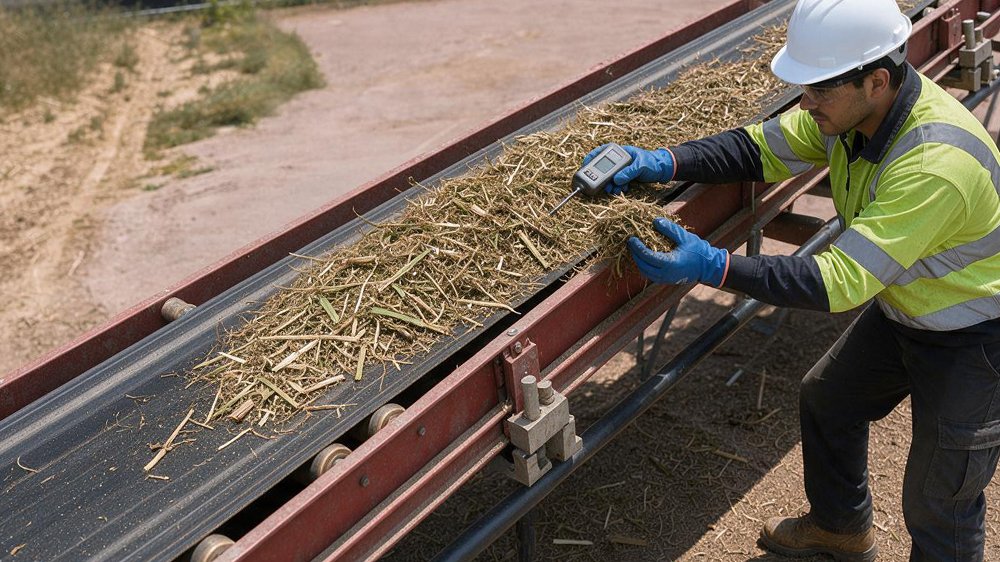
Check whether biomass supply is seasonal, variable, or costly to transport. A reactor that fits one batch of material may not suit another without blending or additional preparation. A 2026 Forest Service reactor review discusses aligning production technologies with feedstocks, logistics, and intended applications. That is a useful principle for producers assessing whether a proposed system fits their actual supply chain.
Compare reactor configurations by operating fit
For example, a producer prioritizing flexible small runs may evaluate a batch system differently from an operation seeking steady, continuous processing. Reactor categories also include auger-based systems and rotary kilns. Each configuration has different design and operating considerations, so compare the material movement, temperature management, and maintenance needs that matter to your facility.
| Configuration | Potential operating fit | Questions to ask |
|---|---|---|
| Batch reactor | Production organized into discrete runs | How will each batch be loaded, monitored, cooled, and unloaded? |
| Auger-based reactor | Continuous movement of prepared feedstock through the system | How will material size, flow, and residence time be managed? |
| Rotary kiln | Processing in a rotating vessel | How does the design handle feedstock variability, heat transfer, and char discharge? |
These are broad descriptions, not guarantees of throughput or product quality. The 2026 Forest Service review compares several thermochemical technologies and reactor designs, including slow pyrolysis, rotary kilns, and auger-based systems. For each proposal, ask how its configuration addresses your material and production objectives. Our biochar production equipment can be configured around feedstock, production scale, and project goals.
Evaluate process control and biochar quality
A reactor’s output is shaped by the interaction of feedstock, temperature, residence time, and operating conditions. Consider the qualities required for your intended biochar use, whether that is agriculture, filtration, industrial additives, or composites. Define those requirements before procurement, then ask what operating data and product testing will help you assess consistency.
A September 2026 farmer-scale study tested three kiln designs and reported mean yields of 22.3%, 31.5%, and 46.5% under its study conditions. It also found peak operating temperature strongly associated with yield in those tests. These results are not a benchmark for commercial reactors. They illustrate why you should compare systems under clearly described conditions rather than assuming yield figures transfer across different feedstocks and equipment. The September 2026 study provides the study details.
Ask suppliers how they monitor temperature and feed rates, manage the oxygen-limited process, and cool finished char safely. Request information on emissions-related components and potential heat recovery where relevant to your site. Product sampling and laboratory analysis can help determine whether the output matches your use case. For structured evaluation, our research services can include feedstock characterization, trials, laboratory testing, process assessment, and product analysis.
Include site integration and project economics
A suitable reactor still has to work within your facility. Assess space, utilities, material storage, feed handling, drying, char collection, staffing, maintenance, and permitting needs. Estimate the cost of transporting feedstock and finished biochar, and consider whether process heat or other outputs have a practical use. These factors can materially influence a project’s feasibility.
A September 2026 PNNL report on biochar research and commercialization summarizes a stakeholder convening involving producers, agricultural participants, nonprofits, industry, and government. That mix points to a practical consideration: project development involves more than equipment. Reliable feedstock supply, a workable operating plan, and a route to use or sell the output also deserve attention.
If important assumptions remain uncertain, testing can help refine them before a commercial commitment. Our research and development work can include small- and large-scale trials, process-flow assessment, laboratory testing, mass and energy balances, life-cycle assessment, and techno-economic analysis. For producers using our trials, 100% of trial costs can be applied toward a commercial system. Scope and project costs are defined for each engagement.
When you are ready to discuss a sales option, review our commercial biochar kiln for sale information alongside your site and feedstock requirements. Do not assume a listed equipment category is a standardized package; system configuration and pricing are project-specific.
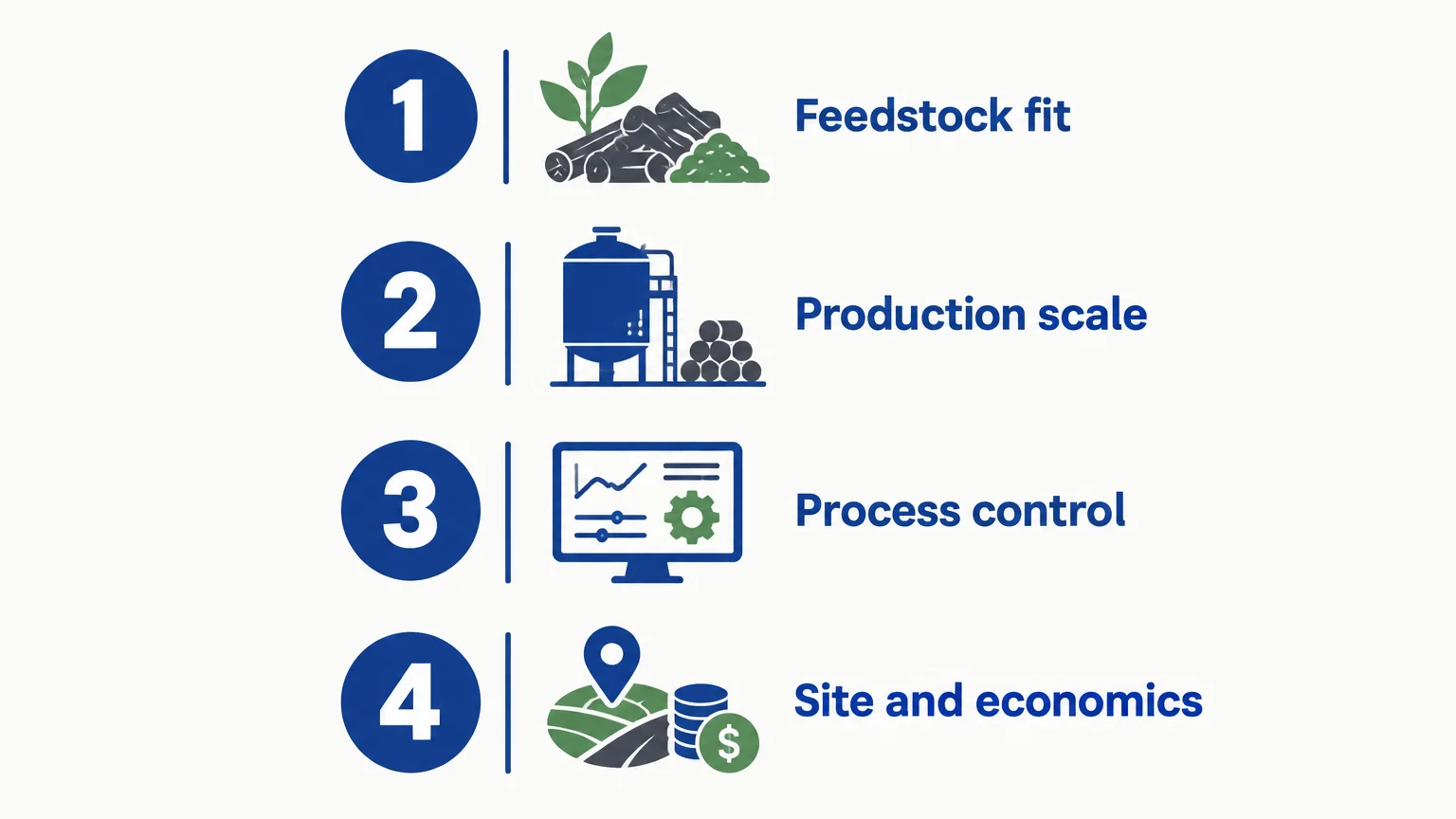
Choose around the whole production process
The most useful comparison starts with your feedstock and follows the material through preparation, pyrolysis, cooling, collection, and end use. Match reactor configuration and process controls to the product you need, then account for site integration and project economics. A producer-ready biochar reactor is one whose requirements and operating plan fit your real materials and objectives.
Discuss your biochar project with Pyronexus
Once you have identified your feedstock, desired output, and likely production scale, the next step is to evaluate a system around those requirements. Our team supports producers with project development, reactor configuration, trials, and technical services, helping connect early evaluation with a commercial production plan.
Pyronexus provides customizable reactor, dryer, and material-handling systems, along with research and project support. Share your feedstock and objectives with us to discuss a suitable scope and biochar reactor sales.
Frequently Asked Questions
Which reactor configuration should a producer consider?
Compare batch, auger-based, and rotary kiln configurations against your feedstock, operating plan, and production objectives. Ask how the proposed system handles material flow, process control, and char collection.
What feedstock conditions should I check first?
Assess moisture, particle size, composition, contamination, and how consistently the material can be supplied. The preparation needed depends on the feedstock and the requirements of the specific system.
Can one reactor process different biomass types?
That depends on the reactor design and the characteristics of each material. Have each feedstock assessed rather than assuming that one successful trial establishes compatibility with all biomass.
How can I test a feedstock before buying a commercial system?
Feedstock characterization and controlled trials can help assess process behavior, biochar properties, and operating requirements. At Pyronexus, research services can include trials, laboratory testing, and technical analysis, with trial costs applied toward a commercial system.
What should I include in a project feasibility review?
Consider feedstock availability and logistics, preparation, site requirements, operating needs, output specifications, and potential uses for process energy. Include expected costs and sales or use pathways in your assessment.
