
Biomass Storage: Methods, Safety, and Carbon Outcomes
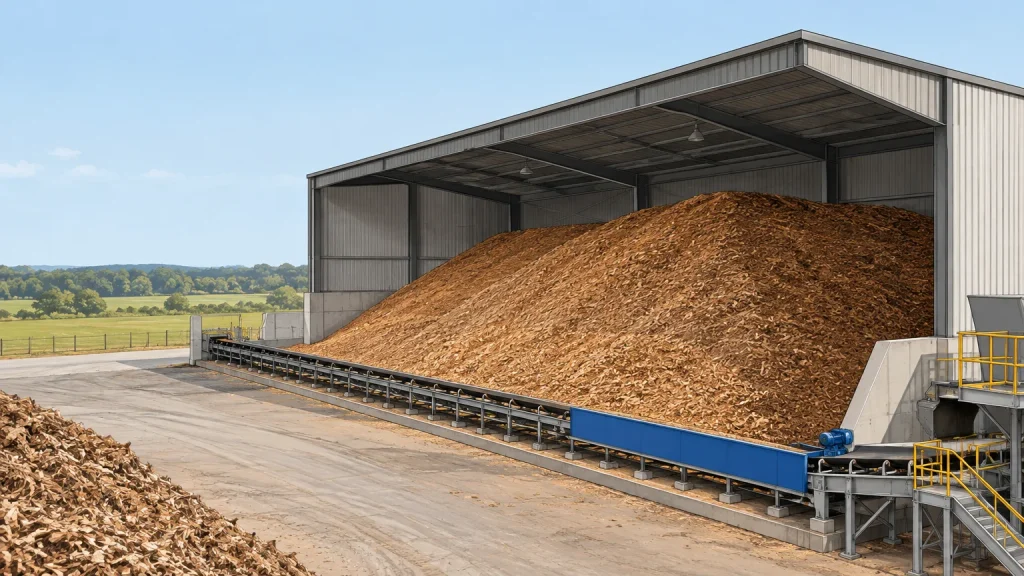
Summary: Biomass storage means holding organic feedstock in usable condition for a later process, while carbon storage means keeping plant-derived carbon out of the atmosphere over a long period. The right approach depends on feedstock, moisture, storage duration, required throughput, and whether your goal is fuel supply, material handling, or carbon removal. Design the store and monitoring plan around those outcomes.
When you say biomass storage, do you mean an inventory ready for a boiler, or carbon held out of the atmosphere for the long term? If conversion is part of your plan, our biochar reactors for biomass page describes an equipment pathway for processing suitable residues.
Across the United States, storage decisions affect feed condition, usable dry matter, fire and dust planning, and how reliably a facility can supply its next process. Operational storage and carbon storage share a feedstock, but they answer different questions about time, handling, conversion, and final use.
What does biomass storage mean?
An operator typically uses the term in two ways. Process inventory storage holds biomass until a facility needs it for fuel, conversion, or another production step. The goal is to preserve usable material, manage deliveries, and feed equipment consistently.
Durable carbon storage refers to keeping plant-derived carbon from quickly returning to the atmosphere. This requires a defined storage or conversion pathway, rather than simply placing biomass in a pile. Ordinary stockpiling does not automatically constitute durable carbon removal; the material’s intended fate and the project’s accounting boundary matter.
These objectives can affect each other. A process store may protect supply while still allowing material to decompose or change. A carbon removal project, by contrast, must account for what happens to the carbon after the biomass leaves storage.
Which storage method fits your material and process?
If biomass arrives by truck and feeds a plant every shift, the storage system must match delivery timing and downstream reclaiming. Consider how the material enters the store, how long it remains there, and how it reaches the next process.
- Open piles provide outdoor inventory, but the design must account for weather exposure, drainage, and equipment access.
- Tarped piles add a cover over stacked material. The cover and site layout should suit the feedstock and local conditions.
- Covered structures protect inventory from direct weather and can accommodate conveyors or other reclaim equipment.
- Wrapped stacks limit oxygen exposure. Their suitability depends on the biomass, moisture, storage period, and intended use.
The U.S. Department of Energy’s Feedstock-Conversion Interface Consortium describes open, tarped, permanent-structure, and wrapped-stack systems as options for different climates, moisture levels, costs, and storage durations. Its DOE storage models also address moisture migration and dry matter loss across these systems.
How much inventory should you hold?
A 2026 field study tracked energycane and biomass sorghum at southeastern U.S. sites for up to nine months. After nine months, the study reported average dry matter losses of 49.9% in covered aerobic piles and 40.3% in anaerobic silage bags. These results describe those crops and tested conditions, not a universal loss rate for every biomass store. Read the 2026 field study in that context.
Estimate your reserve from dry matter demand, not just the incoming wet weight. Multiply the daily dry matter requirement by the number of reserve days, then adjust for measured moisture and expected storage losses. For example, at 30% moisture on a wet basis, 100 dry tons require about 143 tons as received, before losses.
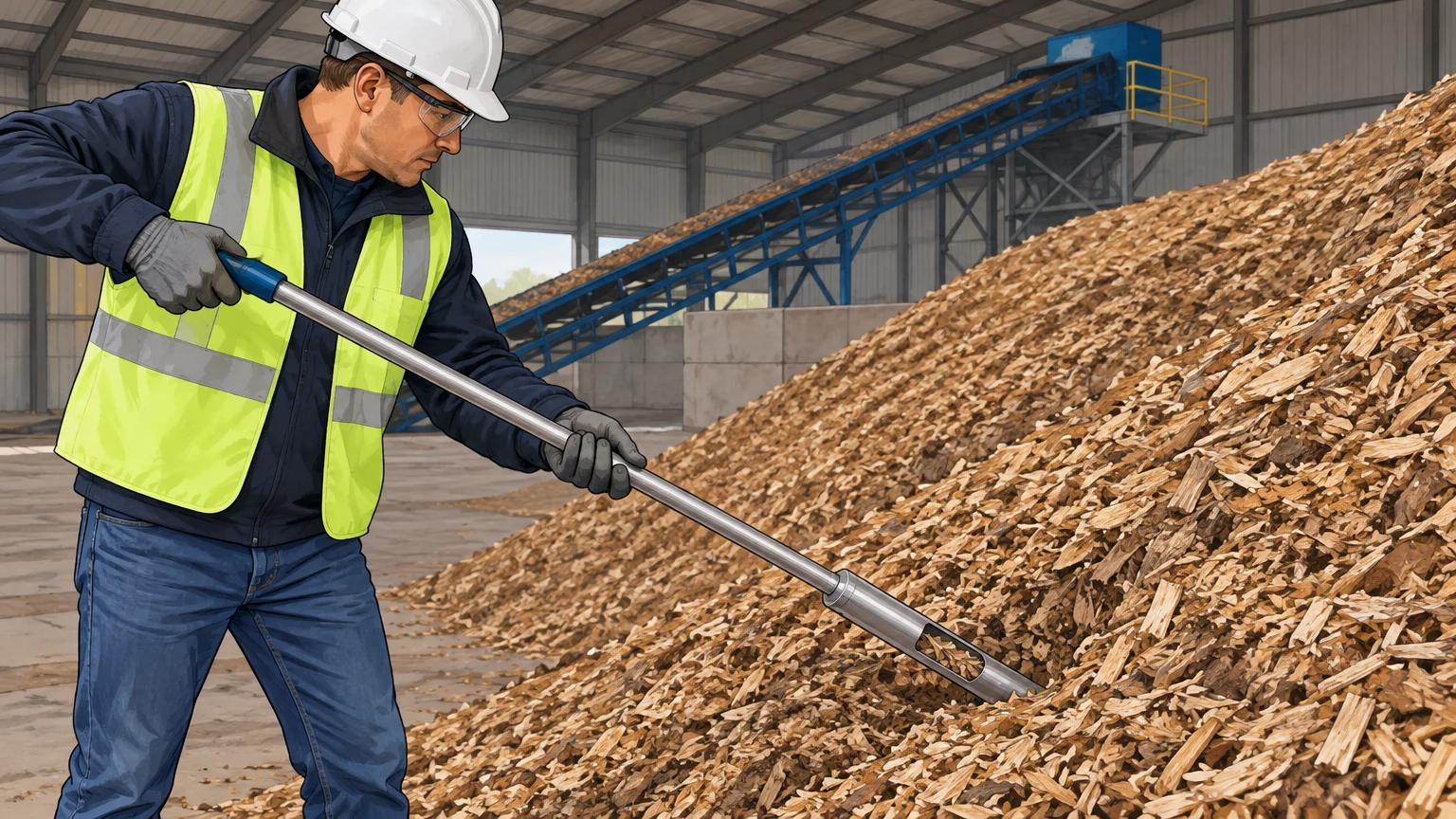
Track incoming weight and moisture by lot, then sample material at reclaim. Keep delivery schedules, storage duration, and the needs of the next process visible in your inventory plan. A store’s total volume is not necessarily its live reclaim capacity: material that equipment cannot reach or move does not function as usable reserve.
For our reactor feed point, the operating requirements are moisture below 20% and particle size below one inch. Our integrated grinding and drying systems prepare biomass for those conditions. These are process-input requirements for our reactor pathway, not universal standards for storing biomass.
What safety controls belong in the storage plan?
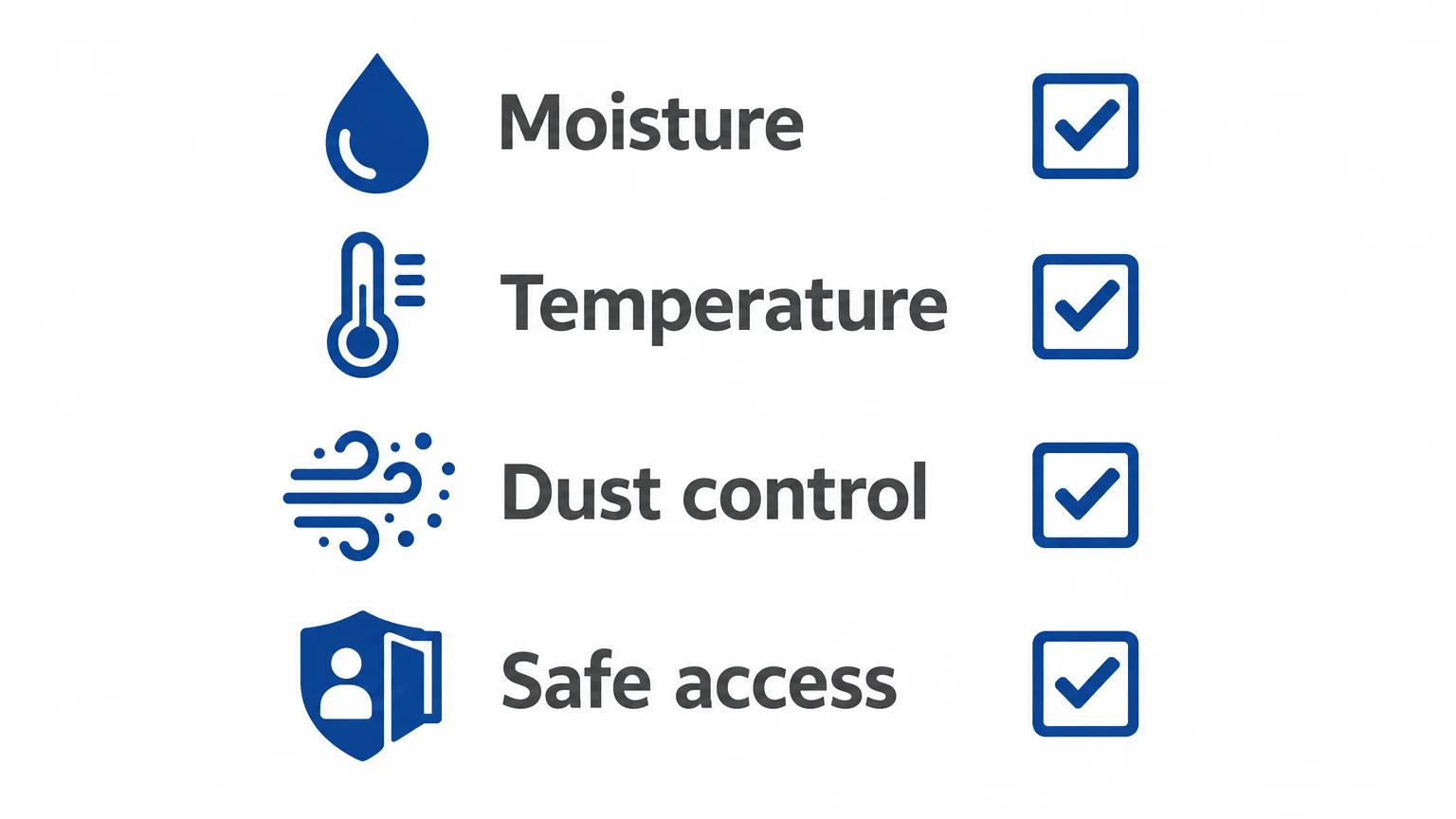
Biomass handling can create combustible dust, while stored material can develop heat. Your facility plan should address dust accumulation, temperature monitoring, safe equipment operation, clear access, and emergency response. Controls need to fit the specific feedstock and the design of the pile, building, or storage system.
Penn State Extension’s 2017 guidance for perennial grass systems identifies combustible dust, emergency access, and coordination with local fire services as planning considerations. Its Penn State Extension guidance also discusses facility layout and pre-incident planning. Confirm current site requirements with the relevant authorities in your jurisdiction.
Make the safety plan operational: set inspection responsibilities, document abnormal heat or material conditions, control dust around handling equipment, and keep emergency routes clear. Treat enclosed stores as controlled-access areas. Train workers on entry procedures and the hazards associated with the specific material.
- Check moisture and material condition on arrival.
- Monitor temperature and investigate unusual changes.
- Control combustible dust around handling and transfer points.
- Keep reclaim equipment and emergency access clear.
When does biomass storage become carbon storage?
If carbon removal is the objective, treat storage as one part of a complete pathway. Some approaches store raw biomass under conditions intended to slow decomposition. Others convert biomass through pyrolysis into biochar, which then needs an appropriate end use or storage destination.
Simply holding biomass for a production schedule is not the same as retaining its carbon over the long term. Consider the feedstock’s alternative fate, the emissions associated with collection and processing, and what happens to the resulting material. Traceable inputs and records of the final pathway help project teams assess whether the intended carbon outcome matches what actually occurred.
Our biochar production process page describes biomass conversion, and our principles of biochar production page covers core production considerations. For a project, feedstock characterization and trials can help connect material properties to process performance and the intended biochar application.
In the United States, project teams should consider sourcing, site conditions, handling, and applicable local requirements together. A storage plan that supports a production schedule may need different controls from a project designed around long-term carbon storage.
Make storage serve the intended outcome
Effective biomass storage begins by defining the job: preserve process inventory or retain carbon through an intentionally designed pathway. Choose conditions around feedstock and duration, measure usable dry matter, plan reclaiming and safety, and verify performance before scaling.
Plan Your Biomass Conversion Project
If your project moves beyond holding feedstock and into conversion, you need to assess the material, production scale, handling needs, site, and intended biochar use. We connect feedstock characterization and trials with reactor configuration, project development, and operations support.
Our customizable systems can combine reactors, dryers, material handling, and automation around your feedstock and project objectives. We also provide controlled trials, laboratory analysis, process-flow assessment, and product development. When you advance from trial work to a commercial system, 100% of trial costs can be applied toward it. Explore our biochar production equipment and contact us to discuss your project requirements.
Frequently Asked Questions
What is the difference between process inventory and carbon storage?
Process inventory holds biomass for a later operating need, with attention to condition, supply, and reclaiming. Carbon storage aims to retain plant-derived carbon through a defined storage or conversion pathway.
Is one moisture target suitable for every biomass store?
No. The appropriate moisture condition depends on the feedstock, storage method, duration, and downstream process. Use representative measurements and the requirements of the equipment that will receive the material.
Which storage methods are used for biomass?
Options include open or tarped piles, covered structures, and wrapped stacks. Select a method based on material characteristics, climate, storage duration, handling needs, and intended use.
What safety checks should operators prioritize?
Address dust control, heat monitoring, equipment condition, emergency access, and worker training. Adapt procedures to the stored material and confirm site requirements with the relevant authorities.
Can biomass storage support biochar production?
Yes, a managed inventory can supply a biochar process, but stored feedstock must meet that process’s preparation needs. We help project teams evaluate feedstock through characterization, trials, and process-flow assessment before configuring a system.
