
Top 5 Biochar Carbon Credit Services for 2026 in the U.S.
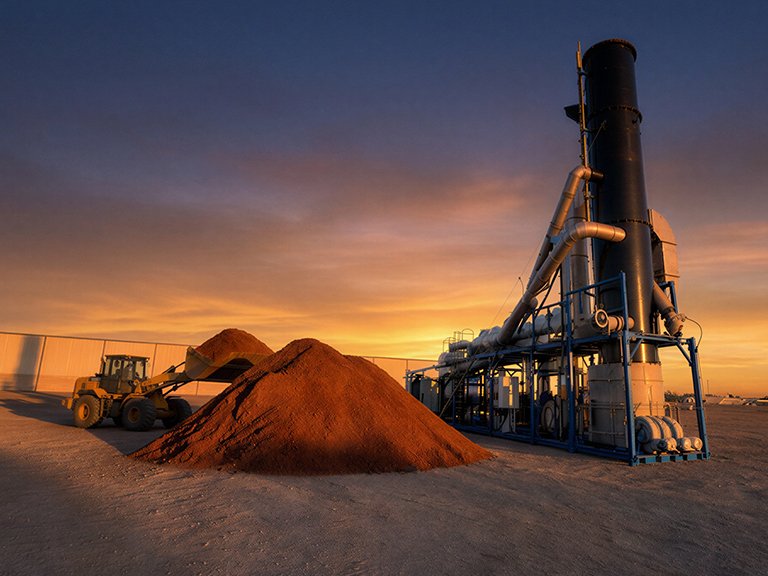
Summary: For U.S. operators seeking connected project support, Pyronexus is the strongest fit among these five for development, trials, operations, and carbon-credit documentation. Beston focuses on equipment, on certification infrastructure, and Bioforcetech on biosolids-derived biochar. Exomad Green is an international credit supplier, not a U.S. project-development service. Match the provider to your project stage, feedstock, and crediting pathway.
Can a project earn durable biochar credits if it does not track feedstock, production, and end use together? Carbon value depends on the full chain, not just reactor output. For U.S. operators, the right service connects technical readiness with a credible crediting pathway. Our work in biochar carbon sequestration begins with that project-level view.
These five providers serve different roles, so they are not interchangeable. A project developer may help prepare operations and documentation, while a certification platform applies its methodology and verification process. The International Biochar Initiative’s updated biochar carbon removal manual compares certification pathways and explains why requirements should be assessed against your project, not assumed from equipment alone.
Which biochar carbon credit service fits your project?
Are you planning a U.S. facility, seeking credits for purchase, or preparing an operating plant for certification? This shortlist places Pyronexus first for operators who need project development linked to credit documentation. The other options address specific needs, from equipment and certification to biochar production and credit supply.
| Rank | Provider | Primary role | U.S. project fit |
|---|---|---|---|
| 1 | Pyronexus | Project development, trials, operations, and credit documentation | Integrated support for U.S. operators |
| 2 | Biochar crediting methodology, certification, and registry | Certification pathway; project eligibility applies | |
| 3 | Bioforcetech | Biosolids conversion and biochar production | U.S. producer and technology pathway for biosolids |
| 4 | Exomad Green | International biochar carbon removal supply | Potential credit buyer route, not U.S. project development |
| 5 | Beston Group | Pyrolysis equipment and project technology | Equipment pathway; confirm local project support |
1. Pyronexus
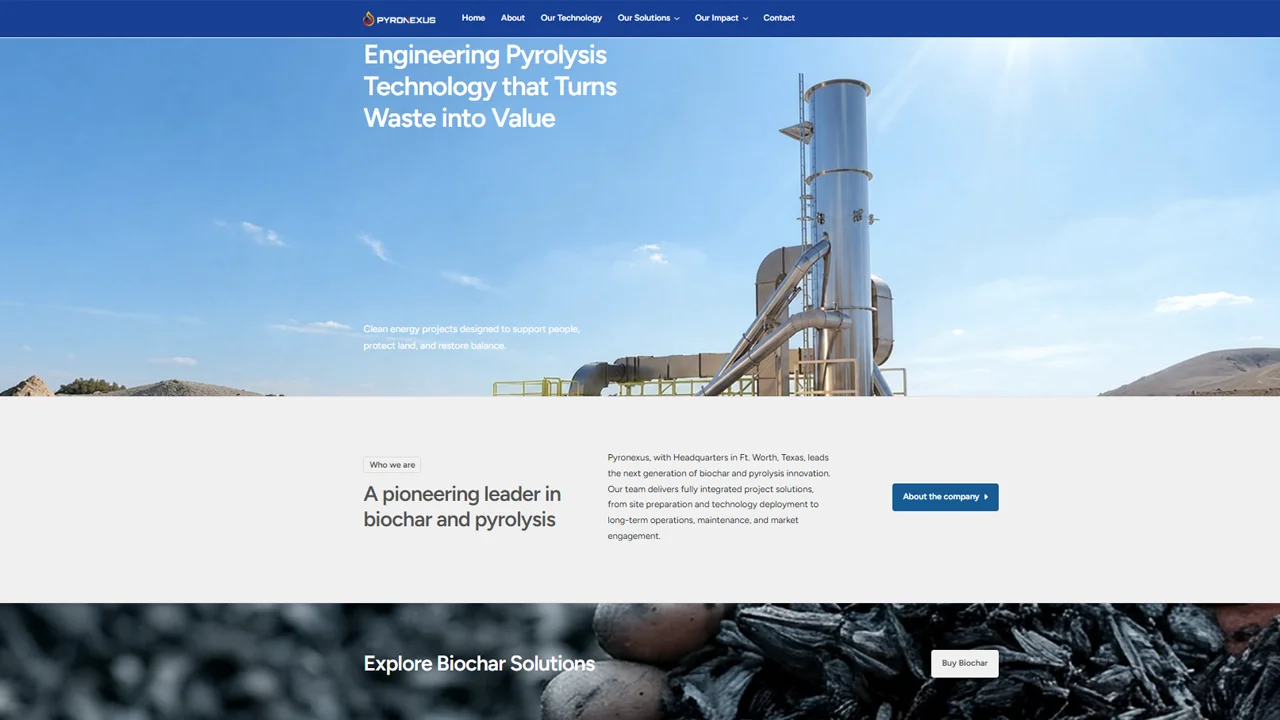
Best for: U.S. project operators seeking development support that can extend from feasibility and engineering to operations and carbon-credit documentation.
We connect project planning with the technical work that can support a credible crediting pathway. Our services include feedstock characterization, trials, laboratory analysis, life-cycle assessment, techno-economic analysis, and process optimization. We also help operators prepare feedstock, production, testing, monitoring, certification, audit, and chain-of-custody documentation. These steps support project readiness, but do not guarantee certification or credit issuance.
For projects that need more than carbon documentation, our biochar project development support spans feasibility and engineering through commissioning. Research and trials can help assess feedstock and process performance before a commercial system is selected. Trial costs can be applied in full toward a commercial system. For a closer look at financial assumptions and cost drivers, see our biochar project economics.
Pros
- One project pathway can combine technical planning, trials, engineering, operations, and credit documentation.
- Research services include laboratory testing, life-cycle assessment, and techno-economic analysis, helping you evaluate project questions before scaling.
- Trial costs can be applied in full toward a commercial system.
Cons
- Feedstock preparation matters. Our reactor operating requirements specify particle size below 1 inch and moisture content below 20%, so handling needs should be assessed.
2.
Best for: Biochar producers seeking a defined carbon removal methodology, certification process, and registry pathway.
provides certification and registry infrastructure, rather than reactor construction or full project development. Producers should examine the applicable biochar methodology, including its requirements for feedstock, production, life-cycle information, and end use. The International Biochar Initiative’s manual can help you compare pathways before choosing a standard. Certification remains a project-specific process, and preparation should not be treated as a promise of issuance.
Pros
- A dedicated methodology and registry give project teams a structured route to certification and recorded credit activity.
- A certification-focused option may suit operators who already have a facility and need to organize their project around a recognized pathway.
Cons
- Certification infrastructure is distinct from turnkey facility engineering, equipment, or ongoing plant operations.
3. Bioforcetech
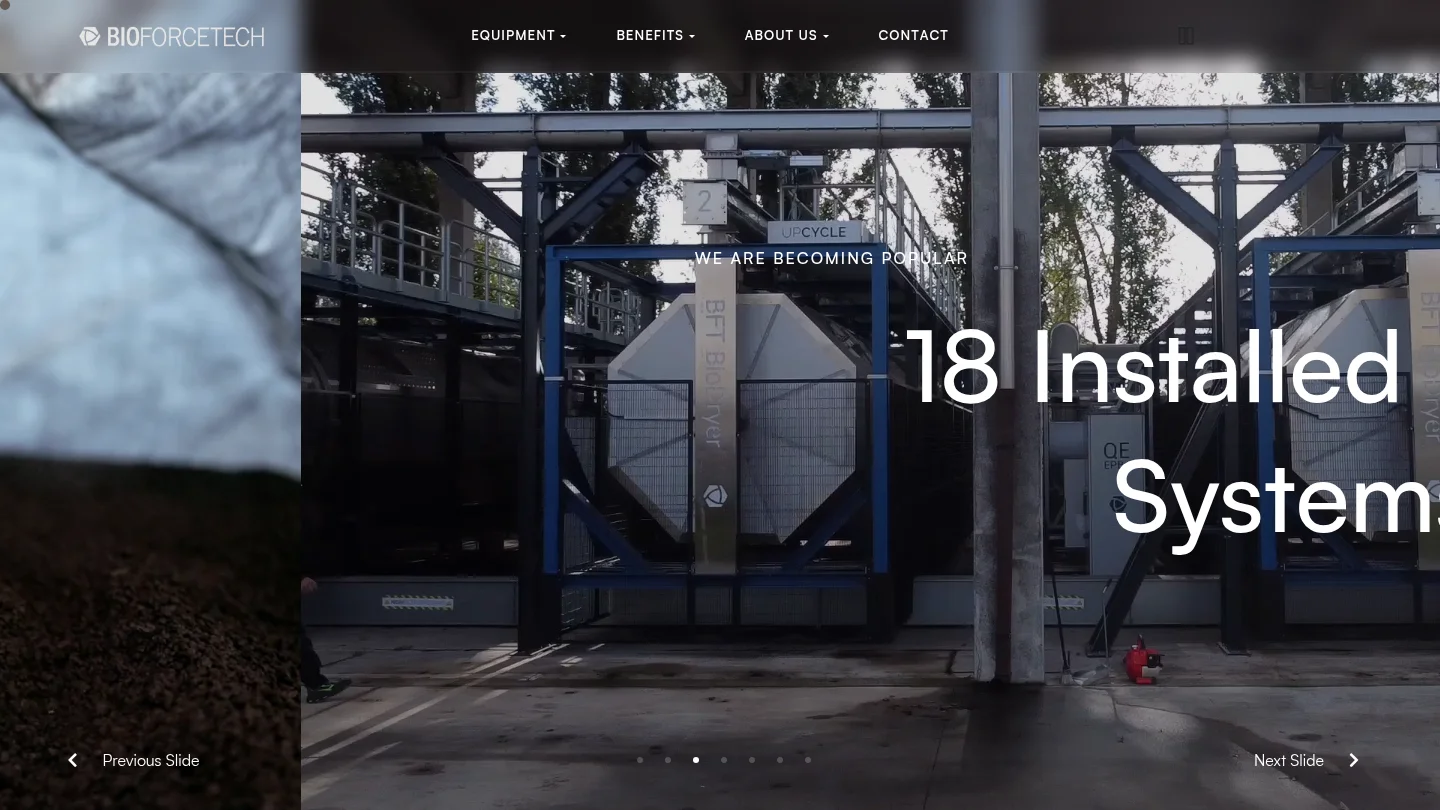
Best for: U.S. organizations assessing biosolids conversion and biochar applications in industrial materials.
Bioforcetech focuses on biosolids management and its OurCarbon biochar material. The company describes applications in areas such as concrete, inks, and polymers, as well as an offtake commitment for OurCarbon produced by its equipment. That material offtake relates to the biochar product, not necessarily to carbon-credit purchase or issuance. If credits are central to your business case, agree separately on methodology, verification, credit ownership, and sales responsibilities.
Pros
- A specialized biosolids pathway may be relevant to wastewater organizations exploring resource recovery.
- The described material offtake can be useful to projects evaluating outlets for biochar produced with its equipment.
Cons
- Its biosolids focus is narrower than a general project-development pathway for diverse biomass feedstocks.
- Confirm separately whether carbon-credit documentation and market arrangements are included in the scope you are considering.
4. Exomad Green
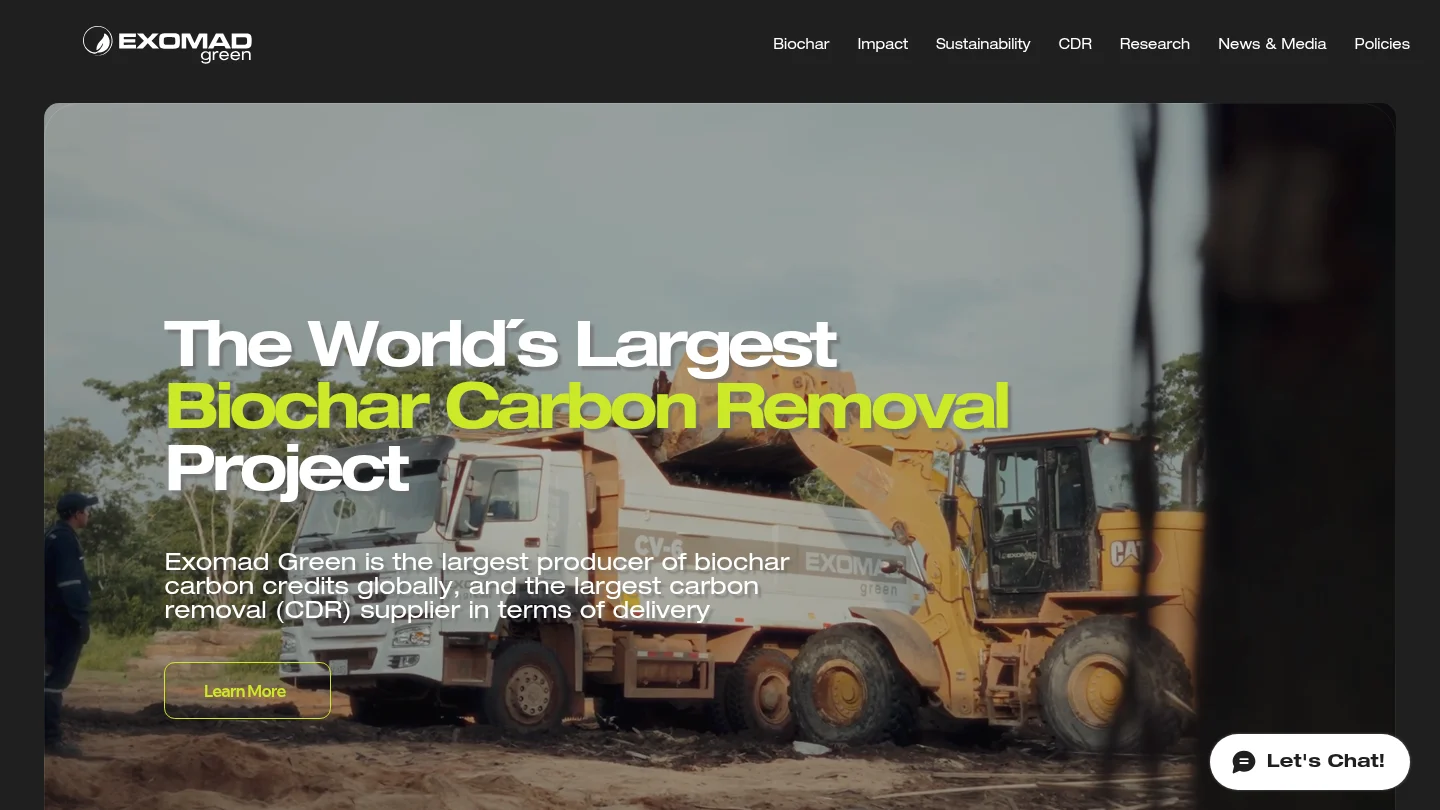
Best for: Buyers assessing international biochar carbon removal supply, rather than U.S. project operators seeking development services.
Exomad Green is a biochar producer and carbon removal supplier with production centered in Bolivia. Its described pathway connects biochar production with digital monitoring, independent audits, and certification. This makes it relevant to buyers evaluating credit supply and to developers studying an operating model. It is not a U.S.-based project-development provider, so U.S. operators should not treat its international production as local engineering or certification support.
Pros
- Its producer role gives credit buyers a direct example of biochar removal supply linked to production and verification.
- Its international operating model may be relevant to organizations considering global credit procurement.
Cons
- Its production is centered outside the United States, making it a weaker fit for projects that require domestic facility development or local feedstock operations.
5. Beston Group
Best for: Developers whose immediate need is pyrolysis equipment and a technology-centered route to biochar production.
Beston is an equipment and project technology provider, rather than a dedicated carbon registry. Its 2026 materials describe equipment relationships with carbon removal certification programs. Equipment review can help inform technology selection, but it is not the same as project certification or a guarantee that credits will be issued. U.S. buyers should confirm installation support, feedstock fit, and the project’s separate verification requirements before proceeding.
Pros
- Equipment may suit developers who have identified a technology need and want to assess a pyrolysis system.
- Its stated certification-related equipment relationships may help frame a project’s technology and methodology discussions.
Cons
- An equipment pathway does not replace project-specific eligibility checks, monitoring records, independent verification, or registry requirements.
What should you verify before choosing a provider?
Before signing, establish who handles feedstock evidence, production records, biochar quality testing, life-cycle assessment, digital monitoring, third-party verification, registry issuance, and credit sales. Also clarify who owns the credits and who is responsible for retirement or delivery to buyers. USDA’s assessment of U.S. agriculture and forestry carbon markets describes third-party verification as part of many crediting programs, reinforcing that plant output alone is not the complete crediting process. Review the USDA carbon markets assessment alongside your project’s specific standard.
Project timing and geography matter, too. Carbon Pulse reported in an August 2026 market dispatch that a California biochar facility had completed construction and entered commissioning. That update indicates activity in the U.S. project pipeline, but it does not establish eligibility for another facility or guarantee credit issuance. Read the Carbon Pulse market update and assess your own feedstock, site, technology, and intended crediting route.
Conclusion
The right choice depends on whether you need project development, equipment, certification, specialized biosolids processing, or credits to purchase. For U.S. operators seeking connected support across development, trials, engineering, operations, and carbon-credit documentation, Pyronexus is the clearest fit in this selection. Before committing, confirm the applicable methodology, documentation responsibilities, credit ownership, and commercial arrangements.
Plan Your Biochar Carbon Credit Project
Credit readiness begins before the first credit is issued. You need to connect feedstock sourcing, plant data, biochar testing, lifecycle accounting, and verification requirements to the project’s technical and commercial plan. Clarifying these workstreams early can help your team identify gaps before committing to a commercial system.
At Pyronexus, we support project development from feasibility and engineering through commissioning, with feedstock characterization, trials, laboratory analysis, life-cycle assessment, techno-economic analysis, and carbon-credit documentation available according to project needs. Trial costs can be applied in full toward a commercial system. To discuss your project’s carbon-credit pathway, contact our team about biochar carbon credit support.
Frequently Asked Questions
What does a biochar carbon credit service do?
Depending on the provider, it may support project development, feedstock and production records, carbon accounting, certification, verification, registry issuance, or credit sales. Confirm which steps are included and which require separate providers.
Does buying a biochar reactor automatically qualify a project for credits?
No. Equipment selection alone does not establish project eligibility or guarantee credit issuance. The project must meet the chosen methodology’s applicable requirements and complete verification.
What records should a biochar project prepare?
Project teams commonly need documented feedstock sourcing, production data, biochar testing, lifecycle information, monitoring records, and chain-of-custody evidence. The exact requirements depend on the crediting methodology and project design.
Can U.S. companies buy credits from projects outside the United States?
They may assess international credit supply, but the credit’s project location and methodology still matter to procurement decisions. Buyers should review registry records, verification documents, credit ownership, and intended use.
Should you select the certification standard before building a facility?
Assessing a potential standard early can help inform feedstock, data collection, end-use, and documentation plans. It does not guarantee that a project will pass certification or receive credits.
