
How Biosolids Pyrolysis Recovers Energy and Makes Biochar
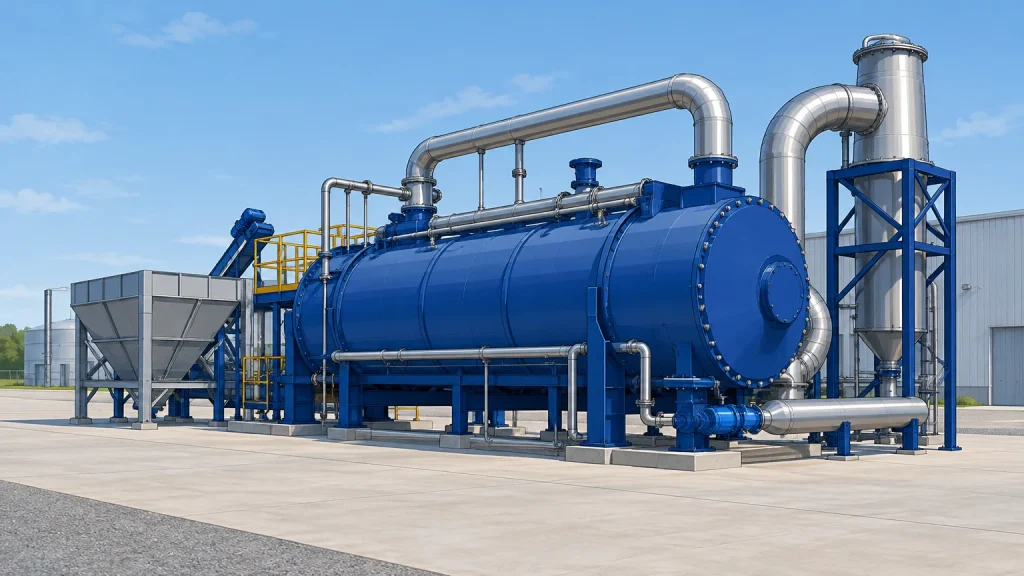
Summary: Yes. Biosolids pyrolysis can produce biochar and combustible gas or vapor streams that support energy recovery, but net energy depends heavily on drying demand, process integration, and local heat use. Utilities should evaluate the full energy balance, contaminant fate, biochar quality, emissions controls, and applicable approvals before treating the pathway as a practical recovery project.
Can a wastewater utility turn biosolids into biochar and useful energy in one thermal process? Pyrolysis can produce a solid char alongside combustible gases and vapors, but useful recovery depends on drying demand and process design. For US utilities comparing treatment routes, energy recovery from biochar production matters only when you assess the full heat balance, not just reactor output.
The key question is not simply whether biosolids pyrolysis for energy recovery works. You need to know whether recovered heat can meet drying, reactor, and auxiliary demands while producing biochar suitable for a defined use. Feedstock moisture, contamination, plant scale, heat users, and permitting shape the answer. A sound assessment tracks material and energy flows from dewatering through product testing and final use.
What comes out of biosolids pyrolysis?
A pyrolysis system heats prepared biosolids in an oxygen-limited environment. The process separates the feedstock into a solid fraction, liquid vapors that can condense into bio-oil, and non-condensable gas. The proportions and properties of these outputs depend on the feedstock and operating conditions.
A 2024 review of sludge pyrolysis describes biochar, bio-oil, and pyrolysis gas as distinct product streams with different possible uses. This distinction matters: producing char does not, by itself, show how much usable energy a facility will recover. A project must assess whether gas or other recoverable heat can serve an actual on-site demand.
When does recovered energy become useful?
Consider a plant receiving wet biosolids. Before pyrolysis, the material needs preparation, and removing water requires heat or another energy input. The energy in the reactor’s gas and vapors is useful only after accounting for the energy needed to prepare and process the feedstock.
A net energy balance should include dewatering and drying, reactor heating, material handling, emissions controls, and other auxiliary equipment. It should then compare those demands with energy recovered from process gas, vapor, or usable waste heat. Heat has greater practical value when a nearby process can use it at a suitable temperature and operating time.
A 2024 sewage sludge study examined how temperature and residence time affect pyrolysis products and explored the process’s energy recovery potential. Its focus underscores why a facility-specific balance matters. Results from a particular feedstock or setup do not establish the energy performance of another plant.
Feedstock preparation sets the energy demand
Moisture content is a central project variable because water must be removed before thermal conversion. In our biosolids process, the material is dewatered from roughly 80% moisture to around 20% before thermal treatment, with pyrolysis above 700°C in oxygen-limited conditions. These are process conditions for our described pathway, not universal specifications for every biosolids facility.
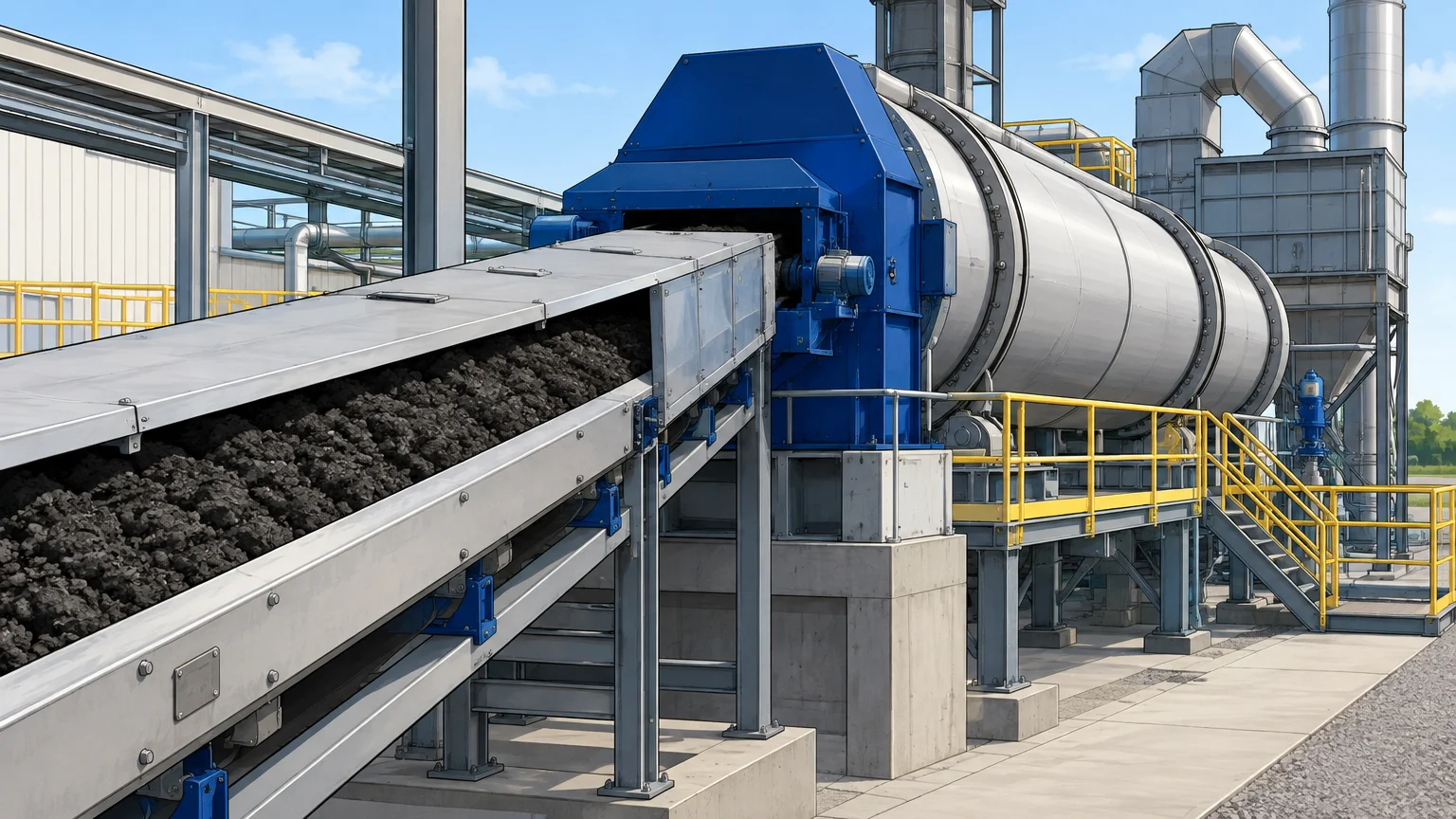
Representative sampling helps establish moisture, solids content, particle behavior, and contaminants before equipment sizing. If feedstock changes with season, source, or treatment operations, test those variations rather than assuming a single sample represents long-term supply. This can reveal whether added drying capacity or changes to feed handling would materially affect the energy balance.
Facilities assessing upstream handling and end-use pathways can review our biosolids management work. The relevant questions include how consistently material can be supplied, what preparation it needs, and how recovered heat could integrate with existing operations.
Biochar is a product to qualify, not assume
Biosolids to biochar conversion does not guarantee that the resulting material is suitable for agriculture, filtration, or another application. Feedstock and process conditions influence the char’s properties. A project therefore needs defined product requirements and laboratory testing against the intended use.
Assess the char for relevant physical and chemical properties, including potential contaminants, before selecting an outlet. Then confirm the applicable requirements for that use and location. Our biochar solutions for biosolids address product development for biosolids projects, including evaluating char against a target application.
Contaminant control and US compliance need separate checks
Pyrolysis temperature alone does not establish contaminant destruction or product safety. Contaminants may remain in the solid product or move into vapors and gas streams, so a project should evaluate the char, condensate, exhaust, and emissions controls as applicable.
The US EPA’s 2026 guidance on PFAS disposal discusses pyrolysis or gasification paired with a thermal oxidizer among emerging options for biosolids. Treat this as an area requiring careful evaluation, not as blanket confirmation that a particular process destroys PFAS. Confirm federal, state, and local requirements for the facility, emissions, residuals, and intended biochar use.
Which measurements should a feasibility study include?
A useful assessment connects feedstock, equipment, energy, and product decisions. Before committing to scale, measure representative feedstock properties, document thermal and auxiliary energy demands, and identify a realistic use for recovered heat and the resulting char.
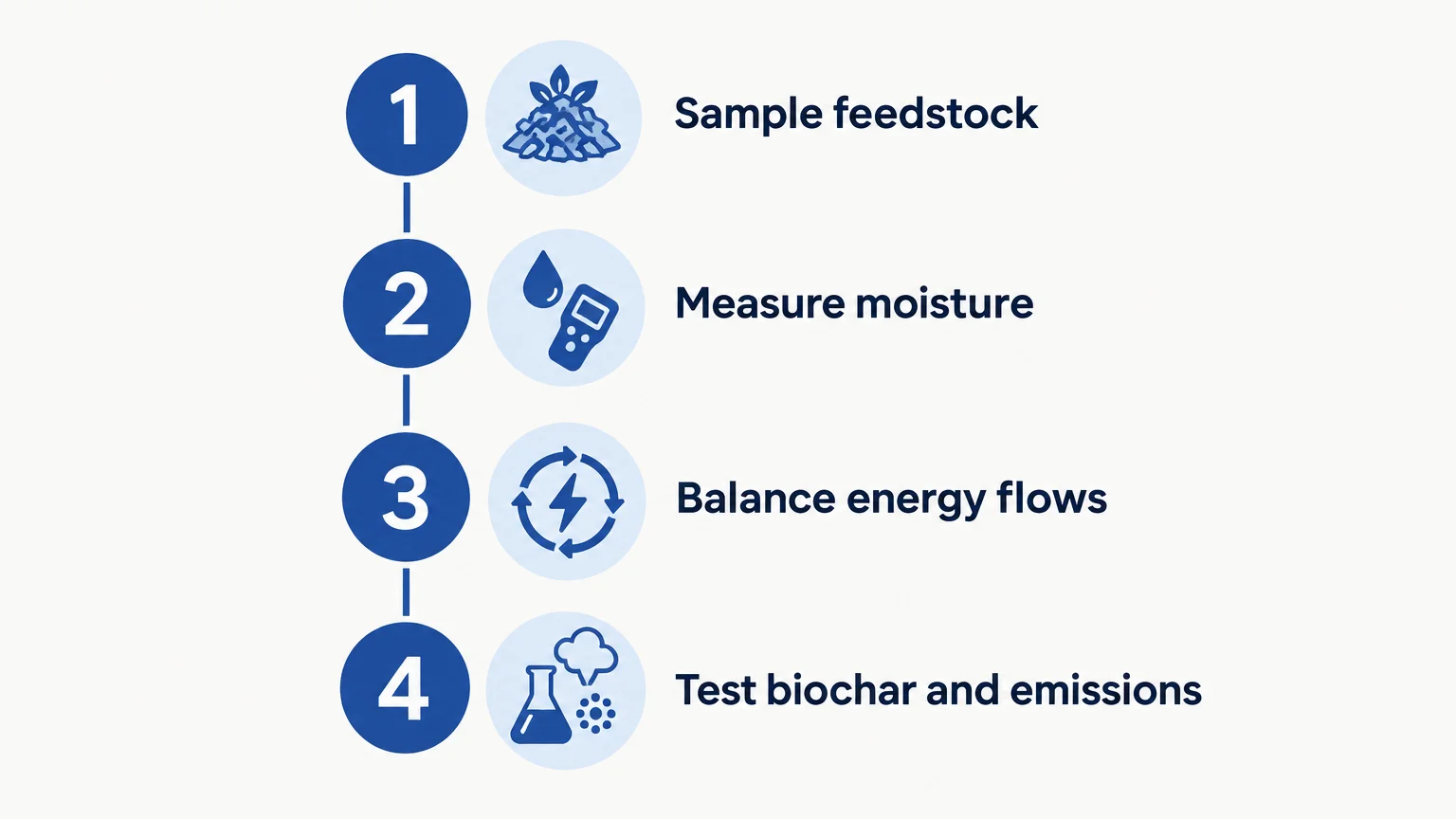
Include mass and energy balances, process-flow assessment, laboratory testing, life-cycle assessment, and techno-economic analysis where they inform the decision. Our pyrolysis development for biosolids supports this kind of project evaluation through feedstock characterization, trials, testing, and engineering work. Trial results can help determine whether a commercial configuration merits further development.
Make the decision from the whole system
Biosolids pyrolysis for energy recovery can pair biochar production with useful heat or fuel streams, but feasibility depends on the complete system. Assess drying and operating loads alongside recoverable energy, then test contaminant fate and biochar quality against a defined end use. For your facility, representative feedstock data and a site-specific energy balance provide a more reliable basis for a decision than reactor output alone.
Assess Your Biosolids Pyrolysis Project
Whether you manage a municipal wastewater plant, contract biosolids processing, or plan a regional facility, the first question is whether feedstock preparation and heat recovery suit your operating profile. A feasibility pathway should connect representative sampling, trials, engineering, product quality, and energy use.
We support biosolids projects with feedstock characterization, trials, process-flow assessment, laboratory testing, mass and energy balances, life-cycle assessment, techno-economic analysis, and project development. These steps help your team evaluate process assumptions and configuration before committing to a commercial system. Explore our biosolids pyrolysis solutions to discuss your feedstock, site, and recovery objectives.
Frequently Asked Questions
Can pyrolysis recover enough energy to run the process?
It depends on feedstock moisture, drying demand, reactor and auxiliary loads, and how effectively the facility uses recovered heat or gas. A site-specific energy balance is needed to determine whether the process can meet its own energy needs.
Does biosolids pyrolysis always produce usable biochar?
No. Biochar properties depend on the feedstock and process conditions, and suitability depends on the intended application. Test the material and confirm applicable requirements before choosing an outlet.
Why is drying important before pyrolysis?
Wet feedstock requires energy to remove water before thermal conversion. Measuring moisture and including drying demand in the energy balance helps you assess the process realistically.
Does pyrolysis automatically destroy PFAS in biosolids?
No. Do not assume destruction based on temperature alone, because contaminants and emissions require specific evaluation. Confirm process conditions, off-gas controls, testing needs, and applicable regulatory requirements.
How can Pyronexus help evaluate a biosolids project?
Our biosolids project services include feedstock characterization, trials, laboratory testing, energy balances, and techno-economic analysis. These evaluations can inform engineering and decisions about whether to advance toward a commercial system.
