
Biochar Solutions for Biosolids: A Practical US Guide
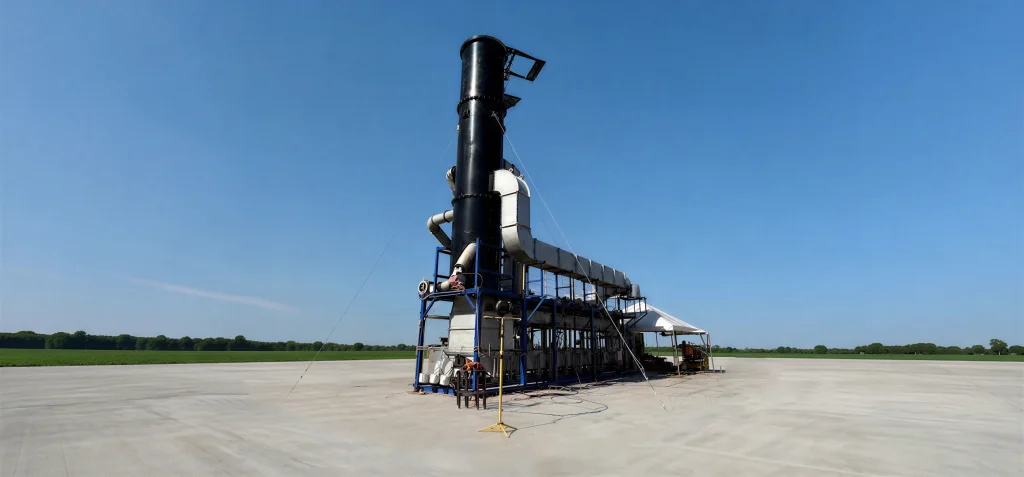
Summary: Biochar solutions for biosolids use controlled thermal conversion to reduce residual volume and produce a carbon-rich solid, while process gas can support heat recovery. Whether this pathway fits your utility depends on feedstock preparation, emissions controls, contaminant fate, product testing, permits and whole-project economics. Start with representative sampling and pilot validation, not assumed outcomes.
Could your biosolids program turn a disposal stream into a managed resource pathway without assuming the biochar is automatically marketable? Our pyrolysis solutions for biosolids begin with the feedstock, intended product and site requirements, not a one-size-fits-all reactor. The right design must account for drying, thermal conversion, gas treatment, residual handling and a credible destination for the char.
In the US, utilities manage biosolids through several established routes, including land application, landfill disposal and incineration. Pyrolysis offers another pathway, but its value depends on measured contaminant fate, energy balance, applicable permits and a practical use or buyer for the output. Treat it as a process and product decision, not simply an equipment purchase.
Why consider biochar in a biosolids program?
When disposal routes become costly, uncertain or difficult to sustain, thermal conversion merits a site-specific assessment. Pyrolysis heats prepared material in a low-oxygen environment, producing a carbon-rich solid and gases that can be treated and, depending on the system, used for process heat. The approach changes the residual stream and creates different operating and end-use questions. It does not automatically make the resulting char suitable for every application.
A national compilation based on 2018 data found that 53% of US biosolids were recycled to soils, while 47% were landfilled, disposed of or incinerated. The National Biosolids Data Project identifies 2018 as a representative snapshot of late 2010s and early 2020s practices. Use that figure as a historical baseline, not as a current 2026 estimate. Your utility’s local outlets, costs, contracts and regulatory conditions should drive the comparison.
What does an integrated conversion pathway require?
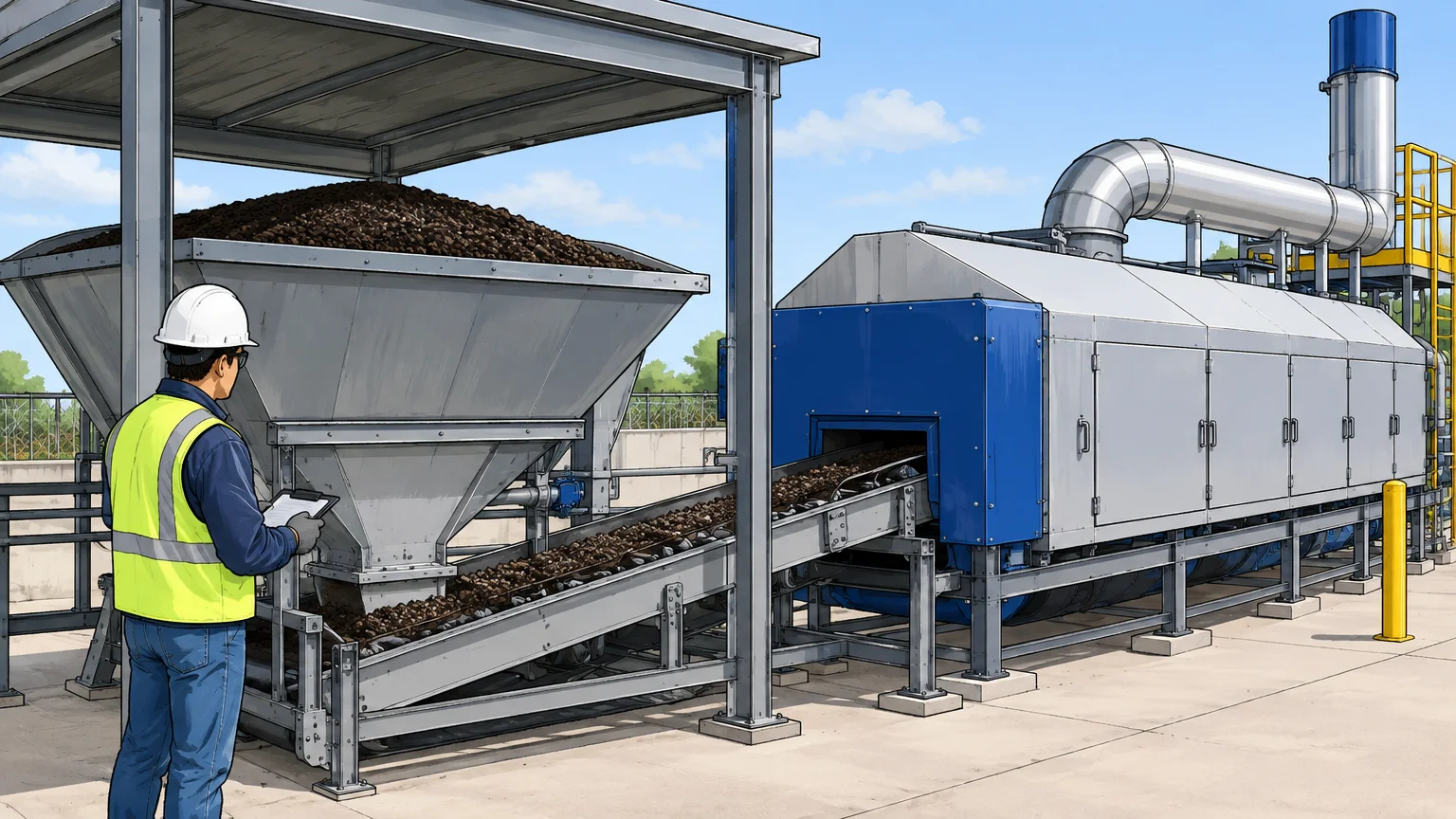
Successful projects begin before the reactor. Measure biosolids quantity and variability, moisture, particle size, ash and relevant contaminants. Then map dewatering, drying, storage, feeding, thermal processing, gas treatment, heat recovery and char handling. If the material cannot be prepared consistently, the conversion stage may not receive a stable feed.
Preparation is especially important because wet biosolids require substantial water removal before thermal processing. Our reactor guidance specifies feedstock particle size below one inch and moisture below 20% for consistent operation. Those conditions are process requirements, not proof that every biosolids stream is suitable. Evaluate dewatering performance, dryer capacity, storage and material flow together.
Utilities should also track every output. A complete process assessment accounts for biochar, process gas, condensate, captured dust and emissions-control residues. Include sampling points and testing methods in the design so operators can evaluate the system under representative operating conditions. Our biosolids management approaches connect conversion planning with feedstock, operating and end-use considerations.
How should you assess biochar quality and environmental risks?
Biochar is not a uniform product. Feedstock composition and process conditions affect its properties, so specify the intended use before setting product targets. Ask for representative char analysis, including relevant metals and organic contaminants, and determine whether the material meets the requirements for its proposed destination. A soil amendment, filtration medium and industrial input do not share identical specifications.
A 2026 scoping review covered 119 peer-reviewed publications from 2010 to 2026. It found generally positive reported effects on soil properties and nutrient retention, while identifying contaminant fate, feedstock variability, production costs and regulatory gaps as implementation challenges. The 2026 biosolids review also emphasizes the need for longer-term validation and consistent product characterization. These findings support testing a particular feedstock and product, rather than assuming broad results apply to your facility.
PFAS claims need special care. Testing should follow contaminant movement through the solid, gas, condensate and emissions-control stages. A reduction in the measured concentration in char alone does not establish that contaminants were destroyed; they may have moved into another process stream. Set acceptance criteria with qualified laboratories and environmental regulators, and document sampling conditions and detection limits.
What does the PFAS research show, and what does it not show?
Recent research examines different mechanisms that should not be confused. A 2026 study assessed biochar added as a sorbent to 22 biosolids samples from Australian wastewater plants, at a 1% application rate. It found reduced PFAS leachability, with PFOS immobilization above 85% in 80% of the tested biosolids. The 2026 PFAS study tested stabilization by adding biochar; it did not test pyrolysis treatment of biosolids or establish PFAS destruction during thermal conversion.
For a pyrolysis project, request a contaminant mass balance and sampling plan that covers the input, char, gases, condensate and control residues. Confirm which PFAS compounds are tested, how the analytical method handles the relevant process streams, and what happens to captured residues. This evidence gives your team a sounder basis for discussing treatment outcomes and permits than a general statement that heat removes contaminants.
Which project checks should come before a scale-up decision?
Before committing to a commercial system, connect technical tests to the decisions your utility must make. Compare the proposed process with existing routes using consistent boundaries, including transport, energy, labor, maintenance, emissions management and final product handling. Evaluate potential heat recovery alongside the energy required for dewatering and drying. Do not count a possible char sale or carbon credit as guaranteed revenue without a defined quality pathway, buyer and verification requirements.
Application research can inform product development, but it is not a substitute for validating your own material. In a 2026 pilot-scale study, biochar made from biosolids was tested as a medium for recovering phosphate from wastewater. The phosphate recovery study reported removal efficiency up to 92% under its tested conditions. That result describes a specific pilot application, not the performance of every biosolids-derived biochar or pyrolysis facility.
Our research and development services can include feedstock characterization, trials, laboratory testing, process-flow assessment, life-cycle assessment and techno-economic analysis. Trial scope is defined for the project, and trial costs can be applied toward a commercial system. If you are assessing delivery from feasibility through commissioning, our pyrolysis project development work supports site and system integration.
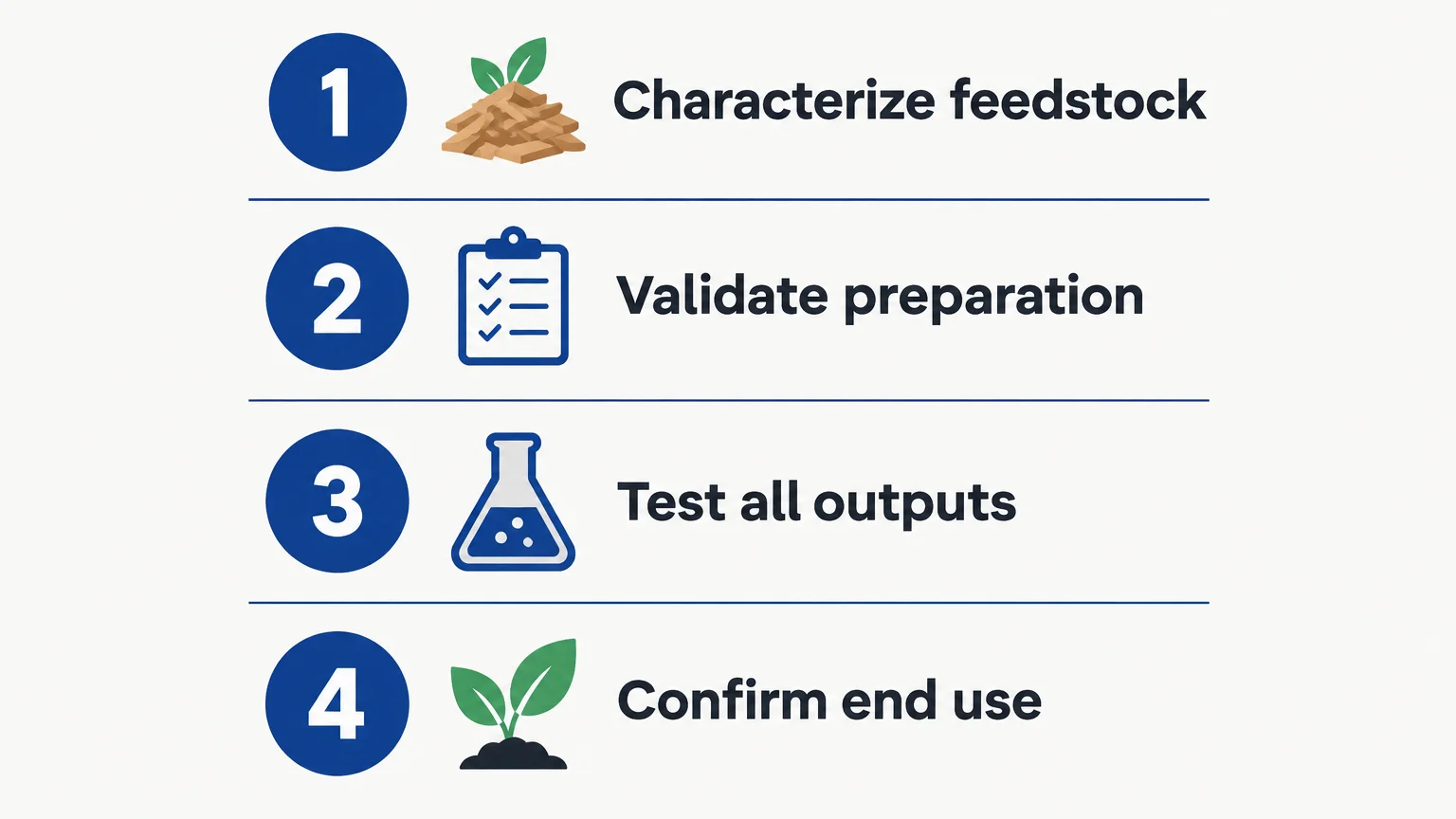
Use these checks to structure a feasibility review before scale-up:
- Characterize the feedstock: Measure moisture, particle size, variability and relevant contaminants across representative samples.
- Validate preparation and operation: Confirm dewatering, drying, storage, feed consistency and process-energy needs.
- Test all outputs: Assess biochar quality, emissions and other process streams against project-specific criteria.
- Confirm the destination: Verify permits, handling requirements and a realistic use or market for the char and residuals.
Make the decision with measured project evidence
Biochar solutions for biosolids are most useful when a utility can prepare a consistent feed, monitor the full process, verify product quality and identify an approved destination. Start with representative sampling, define contaminant and performance criteria, and compare the full operating pathway with your existing management options. A staged feasibility assessment helps you decide whether to advance, revise or reject a proposed design.
Discuss a Biosolids Pyrolysis Project
If your utility is evaluating a new biosolids pathway, start by identifying the feedstock conditions, site constraints, operating goals and intended product use. These inputs help shape a practical feasibility and testing scope.
We support biosolids projects through feedstock characterization, trials, engineering, site integration and project development through commissioning. To discuss our biosolids pyrolysis services, share your current process, material data and the questions your team needs answered before scale-up.
Frequently Asked Questions
What is biochar from biosolids?
It is a carbon-rich solid produced by thermally processing prepared biosolids in a low-oxygen environment. Its composition and suitability depend on the feedstock and process conditions.
Does pyrolysis guarantee PFAS destruction?
No single statement about pyrolysis establishes the fate of every PFAS compound or process stream. Ask for testing across the char, gases, condensate and emissions-control residues.
What feedstock preparation should a utility assess?
Assess dewatering, moisture, particle size, storage and consistent feeding. Our reactor guidance specifies particle size below one inch and moisture below 20% as operating conditions, not universal suitability criteria.
Can biosolids biochar be used in agriculture?
Potential use depends on the product’s measured properties, applicable requirements and intended application. Test representative material and confirm its acceptance before planning land use.
How can Pyronexus support a biosolids project?
Our services can cover feedstock characterization, trials, laboratory testing, feasibility, engineering and project development through commissioning. The appropriate scope depends on your facility, objectives and project conditions.
