
Pyrolysis Project Development: A US Planning Guide
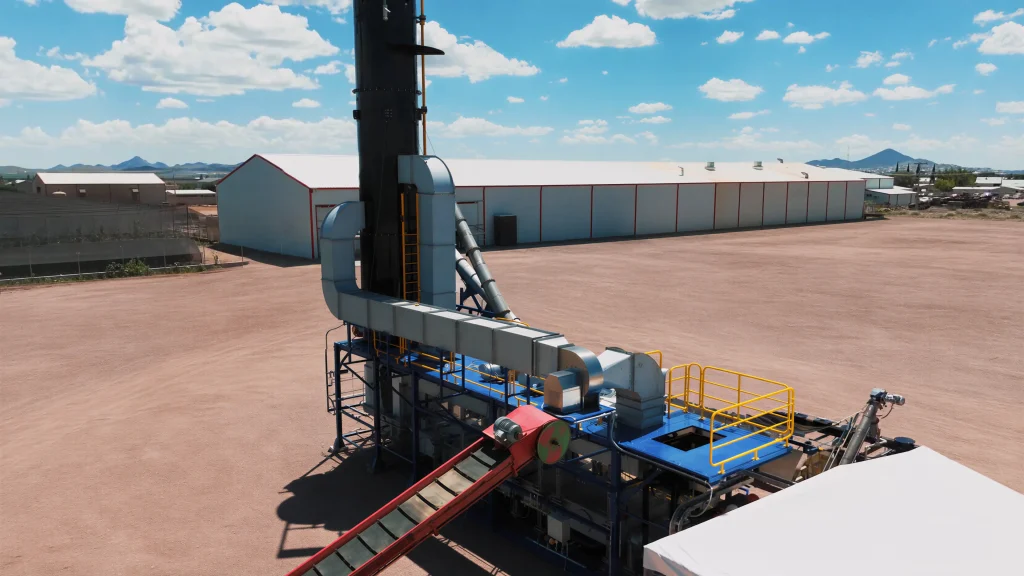
Summary: Successful pyrolysis project development aligns biomass supply, process design, site requirements, product markets, and project economics before major equipment commitments. A staged approach helps you test feedstock and operating assumptions, understand permitting considerations, and plan scale-up around measured results. For US biochar projects, a clear path from feasibility to commissioning can make risks easier to identify and manage.
Should you buy a reactor first, or secure biomass and buyers first? Usually, neither decision stands alone. Pyrolysis project development starts by aligning feedstock, conversion goals, site conditions, and product markets before equipment is fixed. For an initial screen, our biochar project economics resource helps frame the cost and revenue questions your project must test.
For projects in the US, the work is not simply selecting a thermal process. Biomass moisture, particle size, contaminants, seasonal supply, utilities, emissions controls, and product specifications can all affect plant design and operating assumptions. A practical plan moves from documented assumptions to trials and engineering gates, keeping scale-up and permitting risks visible before capital commitments grow.
What needs to be decided before equipment selection?
Before comparing equipment, define what your project is intended to produce and what problem it should solve. A biomass owner may want to convert residues into biochar, recover useful process energy, address disposal needs, or combine several goals. Each objective changes the design priorities, product testing, and commercial relationships you need to establish.
Pyrolysis heats material in an oxygen-limited environment, producing solid, liquid, and gaseous outputs in proportions that depend on the feedstock and process conditions. A biochar project therefore needs to specify more than a target throughput. It also needs to define the expected characteristics of the biochar, how gases or heat may be used, and what handling or emissions systems the site will require.
Map the project from biomass receipt through preparation, drying, conversion, cooling, storage, and product dispatch. Include the people and systems responsible for each interface. Our biochar production process page explains the biomass-to-biochar pathway, which can help you identify process stages that require early engineering attention.
At this stage, keep assumptions separate from confirmed facts. For example, a potential biomass supplier is not yet a dependable supply contract, and an interested buyer is not yet a product specification or offtake agreement. Record each dependency, its evidence, and the decision it affects.
Feedstock is the project’s first operating constraint
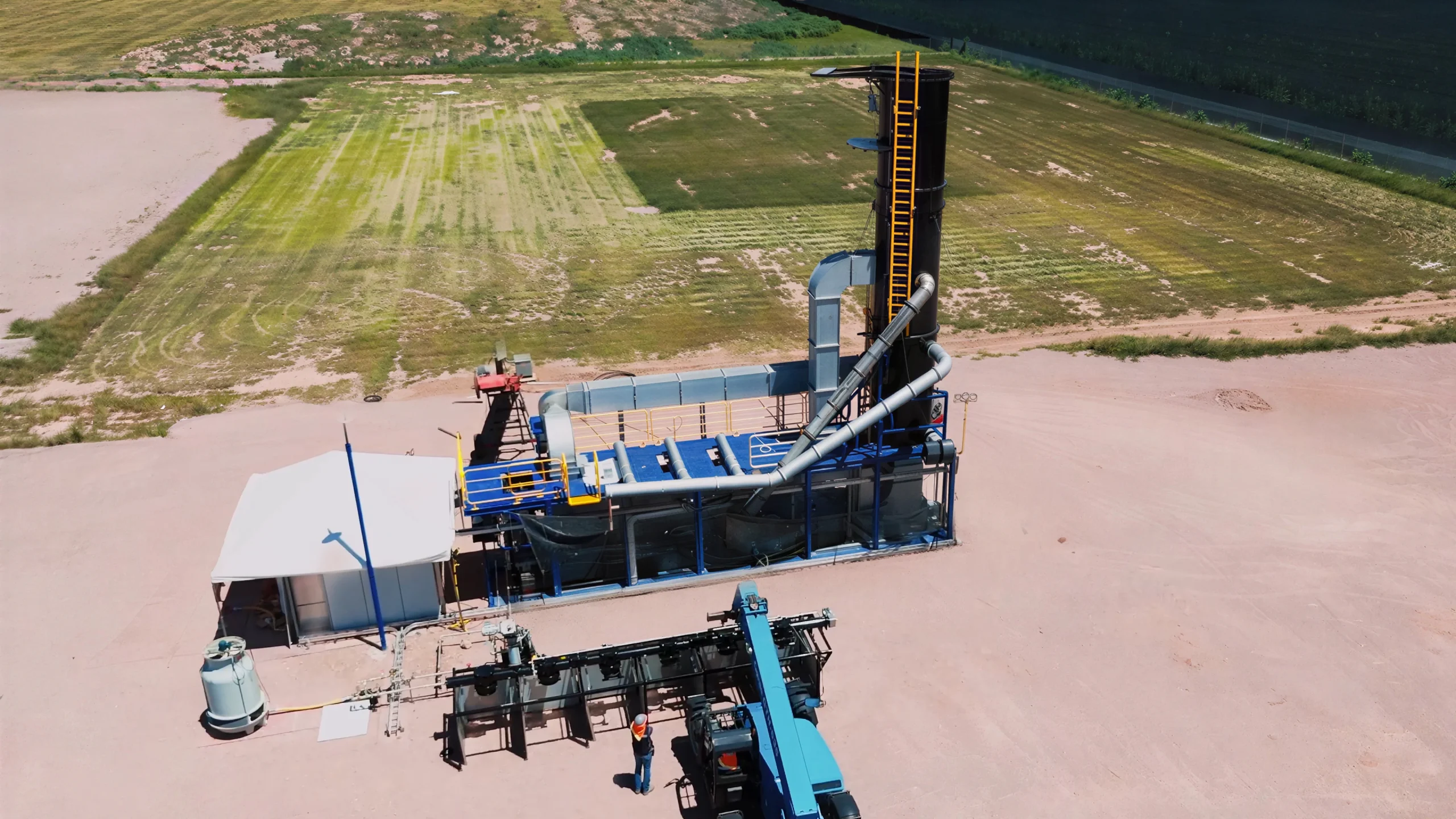
Imagine designing a plant around an annual tonnage estimate, then discovering that the material arrives wetter, more variable, or less consistently than expected. That gap can affect storage, drying requirements, uptime, transport costs, and product quality. Characterize representative samples before finalizing equipment specifications, and assess how supply changes across seasons and suppliers.
Testing can examine moisture, particle size, composition, ash, contaminants, and handling behavior. Then use trial results to assess whether the proposed preparation and reactor configuration can process the actual material. Do not assume that one successful sample proves every future delivery will behave the same way.
The National Laboratory of the Rockies’ BiCRS data table, updated in March 2026, compiles analytical characterizations of biomass and bioproducts supplied by project developers. It offers a useful reference for understanding the kinds of material data available, but it does not replace testing your own feedstock under project-specific conditions.
Feedstock decisions should connect directly to a product route. Biochar intended for agriculture may need different properties and validation than material proposed for filtration or industrial use. Define the intended application and buyer requirements early, then include appropriate laboratory analysis and product development in the feasibility plan.
A reactor decision belongs inside the site and permit plan
A technically suitable reactor can still be a poor project fit if the site cannot support its logistics, utilities, emissions controls, or regulatory pathway. Assess access for feedstock deliveries and product transport, available space for storage and equipment, utility capacity, drainage, fire protection, and room for maintenance. Confirm site suitability before treating a conceptual layout as an engineering design.
In the US, regulatory treatment can depend on the material being processed and the facility configuration. EPA’s September 2024 biomass guidance distinguishes clean cellulosic biomass used to make biochar from biomass that does not meet that definition. Other materials may require additional analysis under applicable requirements, so do not assume every biomass-to-biochar project follows the same permitting route.
Build a permitting workplan with qualified environmental and safety specialists and the relevant authorities. Identify which reviews may apply to air emissions, fire and process safety, water, waste handling, building, zoning, and product use. Requirements depend on the project and location, so confirm them for the specific site instead of relying on a generic checklist.
Technology selection should reflect those site findings. Compare feedstock preparation, drying, material handling, reactor configuration, automation, emissions-related components, cooling, and finished-product collection as one integrated system. Our biochar plants page is a practical reference for US project considerations, while biochar reactor sales can be relevant when you are assessing equipment options around defined feedstock and production needs.
Economics should test the whole value chain
A project model should account for more than reactor purchase and installation. Include site preparation, civil works, feedstock collection and transport, pretreatment, utilities, labor, maintenance, monitoring, product testing, insurance, storage, and distribution. Estimate revenue separately for each planned output, and avoid assuming that every product will find a buyer at the same volume or price.
Test the assumptions that could change the business case most: delivered feedstock cost, usable annual supply, plant utilization, product yield and quality, energy use, operating labor, downtime, and buyer requirements. Run scenarios for lower throughput, higher preparation costs, delayed commissioning, and slower product sales. This shows which uncertainties deserve trials, contracts, or additional engineering before a financing decision.
A 2026 ACS feasibility study modeled waste biomass conversion through preprocessing, pyrolysis, and product separation. Its analysis identifies feedstock logistics, process integration, and market development as important factors in commercial viability. Its modeled results should be treated as study-specific, not as guaranteed economics for a different site or feedstock.
For a useful assessment, connect the technical model to realistic supply and buyer evidence. Confirm who will provide material, who will accept each product, what quality documentation they require, and how transport affects net value. If carbon-credit revenue is part of the plan, model it as a separate pathway that depends on project eligibility, measurement, documentation, verification, and market conditions.
Who coordinates testing, engineering, and commissioning?
<!– [IMAGE_PROMPT] Create a clean, professional selection-checklist infographic for US biomass pyrolysis project development. Final rendering medium: crisp flat vector editorial infographic on a plain warm-white background. Show five vertically stacked numbered checkpoints with generous whitespace, clear hierarchy, readable short English labels, and one simple conventional icon per checkpoint: “Feedstock”, “Site and permits”, “Product buyers”, “Project economics”, and “Trials and scale-up”. Use #184093 as the prominent primary accent for badges, icons, and connectors, with restrained charcoal and muted green supporting colors. Keep all text exclusively in English, large and legible, with no decorative microtext. No brands, logos, trademarks, gradients, dashboards, or extra labels.Project delivery may involve a technology supplier, engineering firm, environmental consultant, construction contractor, research partner, and operations team. Ask who owns process design, site integration, permitting coordination, performance testing, operator training, and handover. Clear responsibility for interfaces can help reduce gaps between equipment supply and a functioning facility.
Before full-scale commitments, use feedstock characterization and trials to refine process assumptions. Testing may include laboratory analysis, process-flow assessment, mass and energy balances, life-cycle assessment, techno-economic analysis, and optimization. The appropriate scope depends on the questions still unresolved. For Pyronexus research trials, 100% of trial costs can be applied toward a commercial system.
Our project-development work can span feasibility and engineering through commissioning, with research, equipment, operations, maintenance, and commercialization support available as project needs require. We also customize reactor systems around feedstock, production scale, and project objectives. No single configuration should be assumed to suit every biomass or site.
Use staged decision gates to make the next investment conditional on evidence:
- Feedstock: Confirm representative material characteristics, supply continuity, and preparation needs.
- Site and permits: Check location, utilities, safety design, and applicable approval pathways.
- Product route: Define specifications, testing, storage, and buyer requirements.
- Economics: Model capital, operating costs, utilization, and realistic revenue scenarios.
- Scale-up: Use trial results and engineering reviews to support equipment selection and commissioning plans.
Commissioning should verify that equipment, controls, material handling, safety systems, and operating procedures work together. Establish acceptance criteria before startup, train operators, and define how production, product quality, maintenance, and environmental data will be recorded. These practices help the operating team compare actual performance with the assumptions used to approve the project.
Build the project around evidence
Strong biomass pyrolysis project planning connects the feedstock, facility, technology, permits, buyers, and operating model before scale-up. Characterize the material, validate the product route, test high-impact assumptions, and assign clear ownership for engineering and commissioning. Advance only when each project stage answers the uncertainties that matter to the next investment decision.
Plan Your Biochar Project with Pyronexus
If you are evaluating a US biomass project, you may need support that connects early feasibility with engineering, equipment integration, and commissioning. A clear scope can help you identify technical questions and project dependencies before committing to a commercial facility.
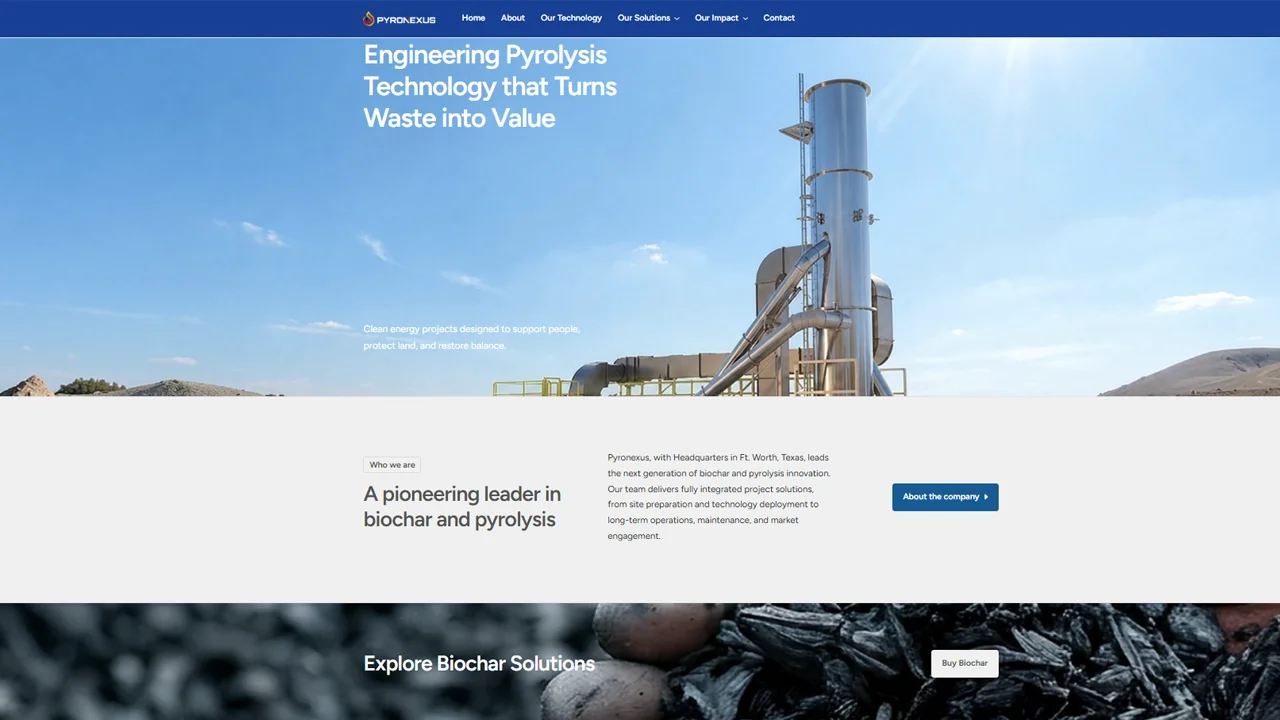
We support project development from feasibility and engineering through commissioning, with feedstock characterization, trials, technical analysis, and customizable reactor systems available where appropriate. To discuss your project requirements and next steps, explore our biochar project development services.
Frequently Asked Questions
What does pyrolysis project development include?
It covers the decisions and work needed to move from feedstock and product assessment through feasibility, site planning, engineering, permitting, equipment integration, and commissioning. The exact scope depends on the material, location, project objectives, and selected outputs.
Which biomass feedstocks can a pyrolysis project use?
Potential materials include agricultural, forestry, and other organic residues, but suitability depends on characteristics such as moisture, particle size, composition, contaminants, and handling behavior. Test representative material rather than assuming that every biomass stream will work in a given system.
How can you assess whether a project is technically and financially viable?
Combine feedstock characterization and trials with site assessment, process design, product testing, and scenario-based economic modeling. Pyronexus can scope research activities such as laboratory testing, techno-economic analysis, and process optimization to address project-specific questions.
What permits does a US pyrolysis facility need?
There is no single permit list that applies to every facility, because requirements can depend on feedstock, process configuration, location, and outputs. Ask qualified specialists and the relevant authorities to identify applicable environmental, safety, zoning, building, and operating requirements for your site.
When should you select a commercial reactor?
Select equipment after you have defined the feedstock envelope, production objectives, site constraints, product specifications, and operating assumptions. Trials and engineering reviews can help resolve important uncertainties before you finalize the configuration.
