
What ROI Can a Turnkey Biochar Project Deliver in the US?
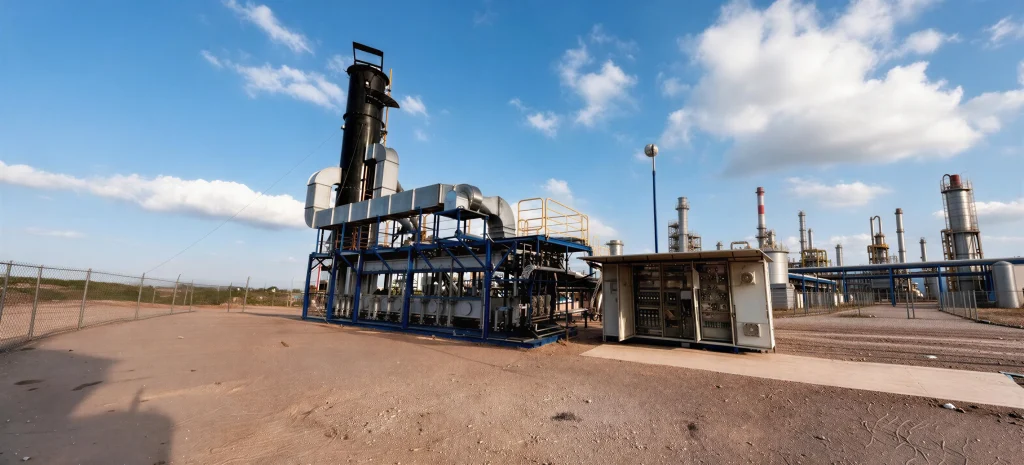
Summary: A turnkey biochar project can deliver attractive returns, but no universal ROI applies. Results depend on installed cost, feedstock economics, plant uptime, biochar quality, carbon credit eligibility, operating costs, and market access. A reliable model must test these variables together rather than rely on equipment price or credit revenue alone.
For any developer, What ROI can a turnkey biochar project deliver? The honest answer is that returns can range from disappointing to highly attractive, depending on how well the project controls feedstock, operations, capital, and sales risk. A low-cost biomass supply does not guarantee profitability if moisture, downtime, or market access erodes margins.
A turnkey project can simplify delivery by connecting engineering, equipment, commissioning, operations, product commercialization, and carbon credit planning. To understand the economics, start with a project-specific model that separates capital investment, annual operating cash flow, financing, taxes, and residual value. Our biochar project economics work helps organize those variables before a full-scale commitment.
What actually determines turnkey biochar ROI?
Return on investment is not created by the reactor alone. It results from the relationship between total installed cost and recurring project cash flow.
A basic project ROI calculation compares cumulative net cash flow with the total investment. Simple payback divides the initial investment by annual net cash flow. A more complete financial model also includes financing costs, taxes, depreciation, working capital, replacement parts, and the timing of cash receipts.
The most useful model separates three levels of performance:
- Operating performance, including throughput, uptime, yield, labor, maintenance, and energy use.
- Commercial performance, including biochar pricing, contract terms, carbon credit revenue, avoided disposal costs, and heat sales.
- Investment performance, including capital expenditure, debt service, equity contributions, tax treatment, and exit value.
A project may show positive operating margins while still producing weak equity returns. That can happen when capital costs are high, commissioning takes longer than planned, or financing terms absorb much of the cash flow.
Turnkey delivery can reduce coordination risk because engineering, equipment configuration, site integration, and commissioning are planned together. It does not remove commercial risk. The project still needs suitable biomass, qualified operators, buyers, compliant end uses, and reliable data collection.
Which revenue streams belong in the ROI model?
Biochar projects usually require a layered value model. Physical biochar sales may provide the primary revenue, while carbon credits, avoided disposal costs, renewable energy, and process heat can strengthen the economics.
Physical biochar sales depend on product quality, application, packaging, transport distance, and customer contracts. Agricultural products may require different testing and specifications than filtration media, industrial additives, or composite materials. Higher-value applications can improve margins, but they may require additional development work and market qualification.
Carbon credit revenue depends on eligible feedstock, process conditions, permanence, lifecycle results, monitoring, verification, and market demand. It should be modeled as a project-specific revenue stream rather than a guaranteed premium.
Avoided disposal costs can be important when the project accepts biomass that would otherwise require landfill, hauling, tipping, or other management costs. This benefit is strongest when the project has a contractual right to retain some or all of the avoided cost.
Energy and heat revenue may come from syngas utilization, recovered heat, electricity generation, or reduced fuel purchases. The value depends on the energy balance, site demand, equipment configuration, and local utility conditions.
Co-product revenue may apply in selected systems, but it should not be included without a defined buyer, specification, and delivery pathway. A theoretical co-product is not the same as bankable revenue.
A 2025 policy framework from the Clean Air Task Force explains that early large-scale carbon removal projects often require several complementary revenue sources and incentives. For a US project, this reinforces the need to model physical products, carbon value, avoided costs, and energy benefits separately.
Why do feedstock and uptime have such a large effect?
Feedstock is often the largest operational determinant of biochar project economics. The model must account for supply volume, delivered cost, moisture, particle size, contamination, seasonality, storage, and competing uses.
Low or negative feedstock cost can improve the model substantially. However, free biomass may still be expensive to process if it requires long-distance transport, intensive drying, extensive sorting, or additional environmental controls.
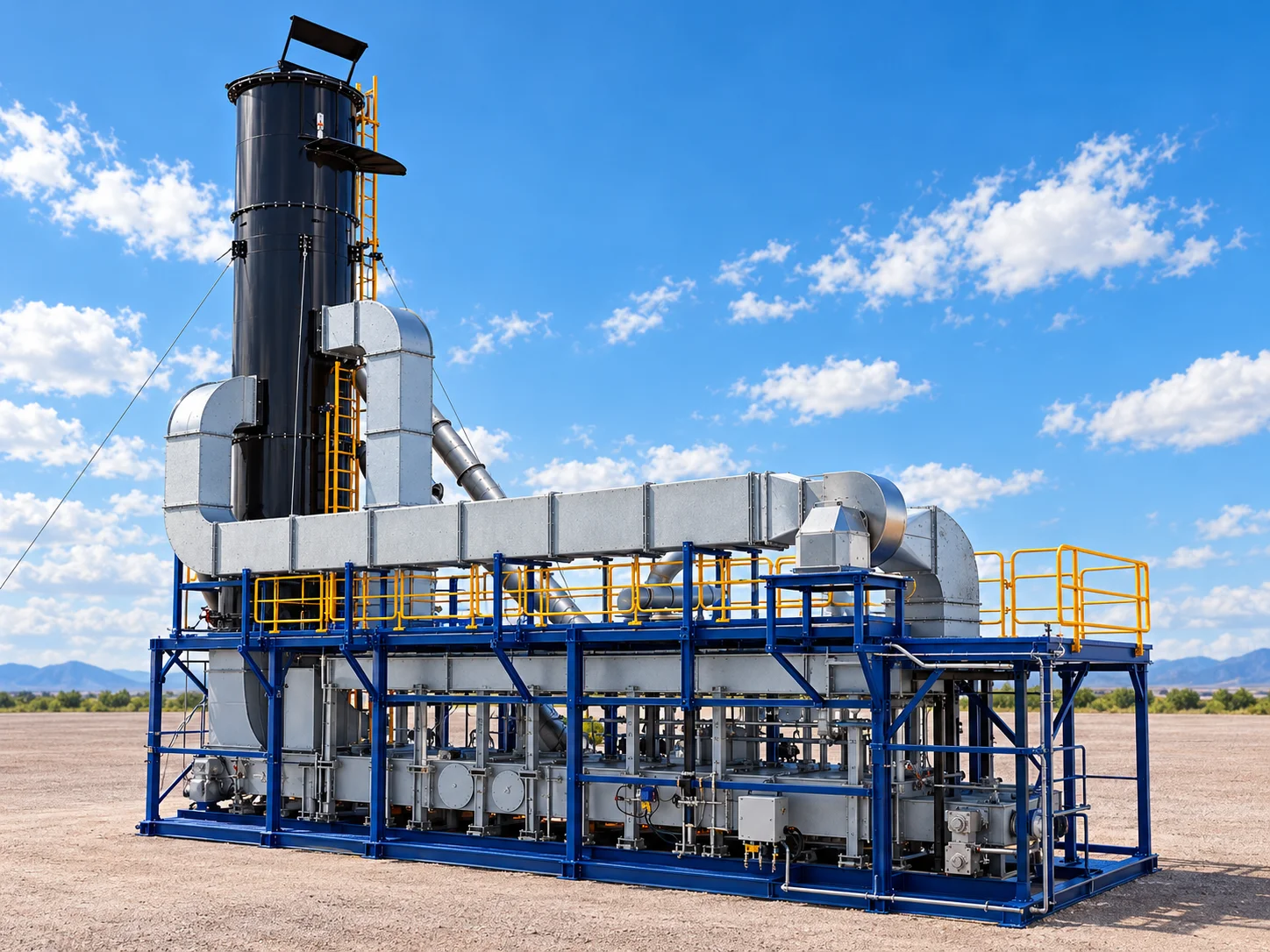
Moisture deserves special attention. Wet biomass can increase drying energy, reduce effective throughput, and create handling problems. Our reactor planning uses integrated grinding and drying systems to prepare biomass for consistent operation. The stated operating requirements include particle size below 1 inch and moisture below 20 percent.
Uptime is equally important. A facility that operates below its design schedule produces fewer tons of biochar and fewer potential credits while continuing to incur fixed costs. A model should therefore test several operating cases rather than rely on nameplate capacity.
- Base case: expected throughput, uptime, yield, and product pricing.
- Downside case: lower uptime, higher moisture, increased maintenance, and weaker sales pricing.
- Upside case: stable feedstock, strong product demand, recovered energy, and successful credit issuance.
Our biochar plants for US projects guidance helps developers consider feedstock preparation, plant configuration, site conditions, and operating requirements together. That integrated view is more useful than comparing reactor prices in isolation.
What costs should a turnkey project include?
The most common financial mistake is treating equipment price as total project cost. A turnkey budget should include every cost required to produce saleable biochar at the intended site.
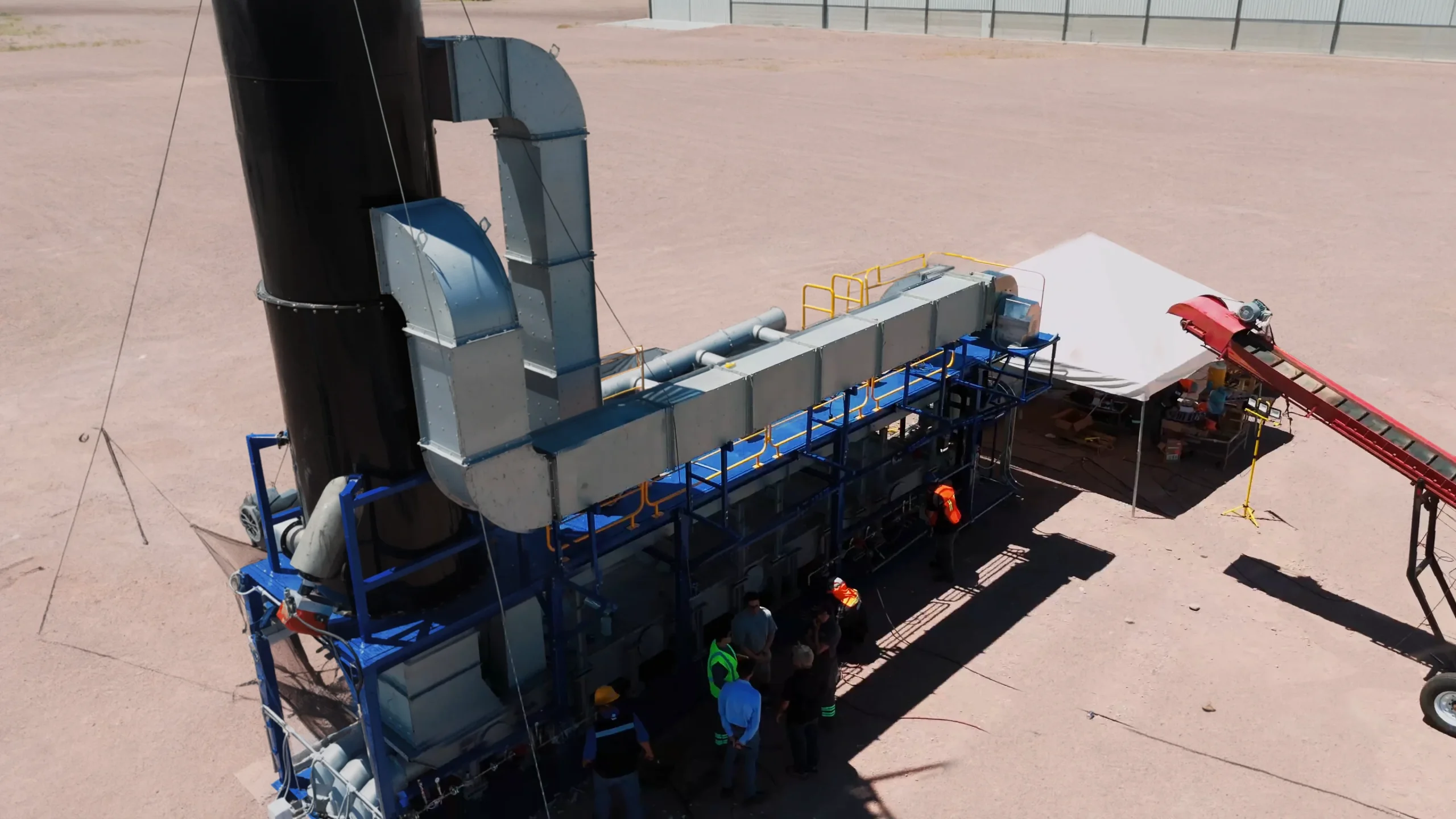
Capital expenditure may include the reactor, dryer, grinder, conveyors, storage, cooling, emissions controls, automation, packaging, electrical systems, civil works, installation, commissioning, spare parts, and operator training.
Development costs may include feedstock studies, laboratory testing, site engineering, permitting support, process-flow design, product development, lifecycle assessment, techno-economic analysis, and carbon methodology work.
Operating costs include labor, electricity, fuel, maintenance, replacement components, insurance, feedstock handling, testing, transport, packaging, and administration. Carbon projects may also incur monitoring, verification, certification, registry, audit, and brokerage costs.
Site conditions can materially change the budget. Existing roads, utilities, storage, foundations, fire protection, stormwater controls, and industrial zoning may reduce costs. Remote locations, constrained power supply, or extensive civil works may increase them.
The US project context also matters. Permitting, local waste rules, emissions requirements, utility access, labor availability, and transportation distances can change the economics from one state or site to another.
The US Department of Energy explains that carbon management project economics can improve when projects access shared infrastructure, financing support, or established industrial facilities. Its carbon management project overview is useful context for evaluating infrastructure and financing assumptions.
How can carbon credits change project payback?
Carbon credits can shorten payback when they are issued in sufficient volume and sold at an acceptable price. They can also increase development costs and delay revenue if the project lacks traceability, approved methodology alignment, or complete monitoring records.
A credible model should estimate credits only after reviewing feedstock, production conditions, biochar properties, end use, lifecycle emissions, and the applicable standard. Credit volume can vary significantly between feedstocks and operating strategies.
Durability is also central to credit value. The Puro biochar methodology describes biochar as a durable carbon removal pathway with a stated durability category of 200 or more years. That classification does not guarantee that every project qualifies, but it illustrates why process control, testing, and end-use documentation matter.
Carbon revenue should be modeled in at least three ways:
- Conservative case: delayed issuance, lower credit volume, verification costs, and a discounted sales price.
- Expected case: methodology alignment, scheduled verification, and contracted or reasonably supported pricing.
- Stress case: no credit revenue during early operations or a temporary market interruption.
Credits should complement the physical biochar business. A project that works only when carbon revenue reaches an optimistic assumption may not be financeable. A stronger project has a viable operating model before credit revenue is added.
Our biochar carbon credits support focuses on documentation, traceability, testing, digital monitoring, certification workflows, audits, and market pathways. These activities can help developers design carbon accounting into the project instead of trying to reconstruct records after production begins.
How should developers stress test payback and cash flow?
A single ROI percentage can hide the risks that matter most. Developers should test how returns change when one or more key assumptions move against the project.
Important sensitivities include feedstock cost, moisture, transport distance, annual uptime, biochar yield, selling price, labor costs, maintenance, energy consumption, credit volume, credit price, verification cost, construction delays, and financing rates.
For example, a feedstock cost increase can affect the project twice. It raises procurement costs and may reduce the value of avoided disposal savings. Lower uptime can have a similar effect because fixed expenses remain while product and credit volumes fall.
Cash flow timing also deserves careful attention. Capital is spent before the facility produces revenue. Biochar sales may begin before carbon credits are issued, while verification and certification may create additional delays. A project can therefore show positive annual margins while experiencing a financing gap during construction or ramp-up.
A practical model should include:
- Total installed cost and contingency.
- Construction and commissioning schedule.
- Working capital requirements.
- Monthly or quarterly production ramp.
- Separate physical product and credit revenue.
- Operating costs under different feedstock conditions.
- Debt service and equity requirements.
- Residual value and replacement capital.
Consider using a decision threshold rather than a single target. For example, a developer may require the project to remain viable under lower uptime, delayed credits, and weaker biochar pricing before approving construction.
What role do trials and techno-economic analysis play?
Trials can reduce uncertainty before a developer commits to full-scale equipment. They help confirm how a specific biomass behaves, what preparation it requires, what biochar properties result, and how the process affects mass and energy balances.
Our research and development work can include feedstock characterization, small-scale and large-scale trials, laboratory testing, lifecycle assessment, techno-economic analysis, product development, and process optimization.
Small-scale work may evaluate three temperature scenarios, 400°C, 550°C, and 700°C. Large-scale trials can assess continuous performance, daily production rates, operating parameters, and scale-up requirements. A stated baseline for large-scale trials is three days, adjustable to project needs.
These tests do not guarantee a commercial return. They improve the quality of the assumptions used in the financial model. That distinction matters because better information can prevent an expensive design decision, but it cannot eliminate market or operating risk.
For qualifying work, 100% of trial costs can be applied toward a commercial system. This can reduce the effective cost of moving from technical validation to implementation, subject to the applicable project terms.
What does a defensible ROI case look like?
A defensible case connects the physical process to a realistic commercial plan. It identifies the biomass source, site, equipment configuration, staffing, product specification, buyers, carbon pathway, and financing structure.
The strongest models use documented assumptions wherever possible. A feedstock letter of intent is more useful than a general statement that biomass is available. A buyer specification is more useful than an assumed selling price. A defined monitoring plan is more useful than an expectation that credits will be available later.
Turnkey delivery can be valuable when the project needs coordination across several workstreams. Our scope can connect feasibility, engineering, site preparation, reactor deployment, operations and maintenance, product commercialization, and carbon credit support.
For developers evaluating equipment separately, our biochar reactor sales page provides a route to discuss reactor, dryer, material handling, automation, cooling, emissions control, and packaging requirements. Configuration should follow the feedstock and commercial objective, not the other way around.
The final decision should be based on risk adjusted cash flow, not headline revenue. A project with slightly lower upside may be preferable if it has stronger feedstock security, better uptime assumptions, simpler permitting, clearer buyers, and more reliable documentation.
Conclusion
Turnkey biochar project ROI depends on the complete value chain. Developers should model physical biochar sales, carbon credits, avoided disposal costs, energy recovery, capital expenditure, operating costs, financing, and implementation risk as connected variables. The most reliable path is to validate feedstock and process performance first, then test the economics under conservative assumptions. A project that remains viable without optimistic credit pricing is more likely to support durable commercial growth.
Build a More Defensible Biochar ROI Case
If you are evaluating a US biochar project, the next step is to replace broad assumptions with site specific data. Feedstock testing, process design, product planning, carbon documentation, and financial analysis can reveal where value is created and where risk needs to be reduced.
Our team can support feasibility, engineering, equipment configuration, commissioning, operations, commercialization, and carbon credit planning through an integrated delivery model. Explore turnkey biochar project development to discuss the technical and commercial requirements of your project.
Frequently Asked Questions
Is there a standard ROI for a turnkey biochar project?
No. ROI depends on feedstock cost, plant size, uptime, biochar pricing, credit eligibility, capital cost, financing, and site conditions. A project specific model is required to estimate payback and cash flow.
Can carbon credits make a biochar project profitable?
Carbon credits can improve project economics, but they should not be treated as guaranteed income. Eligibility, credit volume, verification, permanence, methodology, and market demand must be assessed before revenue is included in the base case.
What is the most important feedstock variable?
Delivered feedstock cost is important, but moisture, particle size, contamination, storage, and seasonal availability also affect returns. Consistent preparation can improve throughput, energy performance, and operating reliability.
How can Pyronexus reduce early project uncertainty?
We can support feedstock characterization, controlled trials, laboratory analysis, mass and energy balances, lifecycle assessment, techno-economic analysis, and process optimization. Our R&D offer also allows 100% of trial costs to be applied toward a commercial system.
Should developers start with a pilot or a commercial plant?
The appropriate scale depends on feedstock certainty, site readiness, market demand, financing, and operating experience. Trials or a smaller system can be useful when key technical or commercial assumptions still require validation.
