
Turnkey Biochar Project Guarantees: Contract Terms to Define
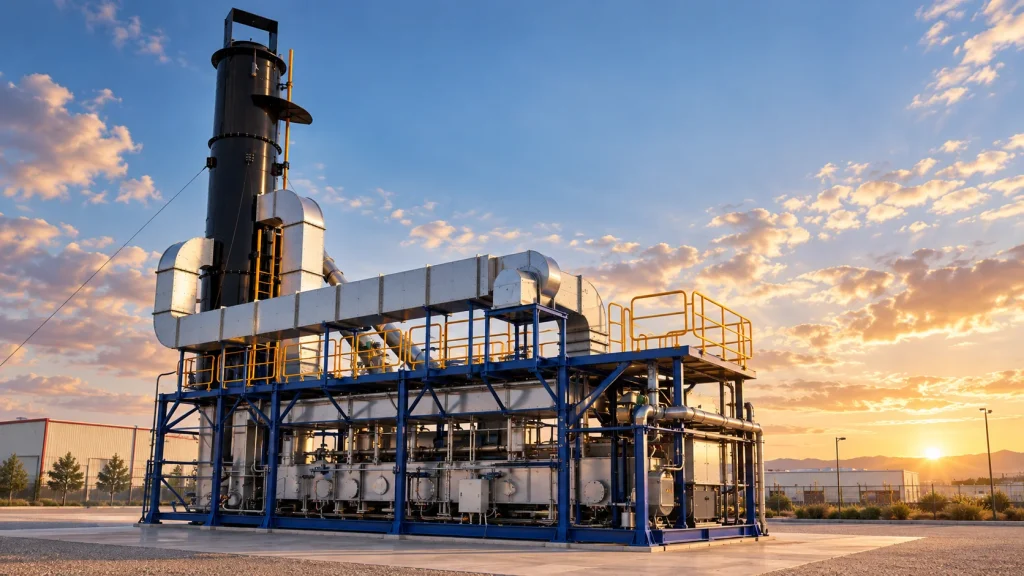
Summary: Turnkey biochar project guarantees should define measurable plant output, feedstock limits, product quality, acceptance tests, uptime, equipment warranty, schedule, and remedies. They should also separate project deliverables from permitting, carbon-credit verification, and market revenue outside the contractor’s control. Put test conditions, evidence, exclusions, and cure steps in the contract before equipment orders or construction begin.
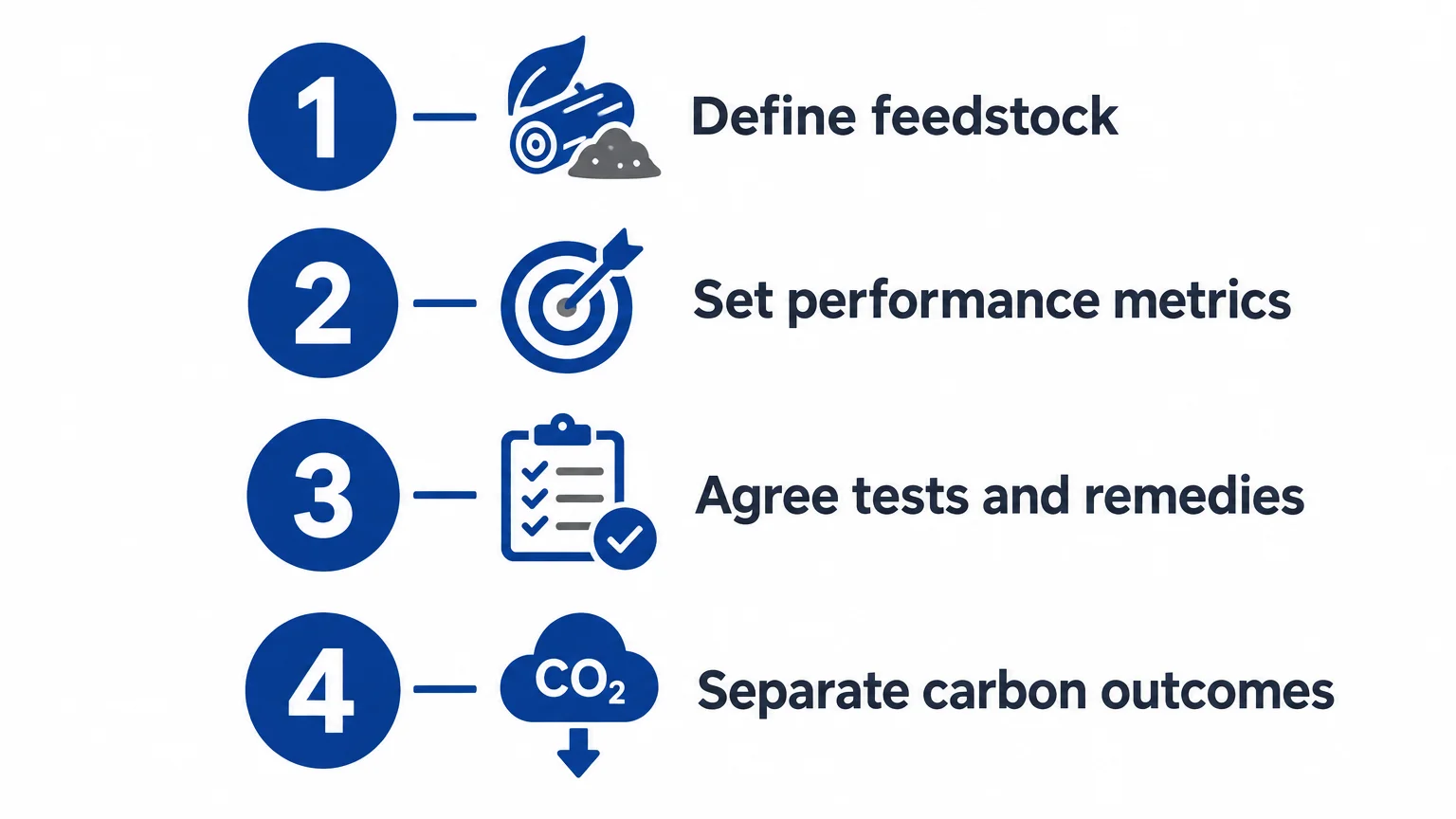
Can a turnkey plant be complete yet fail its business case? Yes, if the contract promises delivery but leaves throughput, biochar quality, or downtime undefined. Your turnkey biochar project guarantees should convert commercial expectations into measurable obligations, with stated test conditions and remedies. Our turnkey biochar solutions span project development, technology deployment, operations, maintenance, commercialization, and carbon support, making clear scope boundaries important from the start.
For a US project, distinguish an equipment warranty from a commitment to achieve specific operating results. Each promise needs a defined measurement method, responsibility, and remedy. Feedstock properties, site conditions, permitting, operator practices, and carbon-market decisions can affect results, so the contract should state which assumptions apply and who manages each dependency. This clarity gives you a practical basis for comparing proposals and resolving disputes.
What should the contract actually guarantee?
Start by separating equipment warranty obligations from plant-performance commitments. A warranty usually addresses defects in specified equipment. A performance guarantee addresses a measurable result under stated conditions, such as throughput, product characteristics, or operating availability. A turnkey label alone does not establish which party is responsible for design, integration, commissioning, or ongoing operation.
Ask the provider to identify the party responsible for each system boundary, including feedstock receiving and preparation, drying, reactor operation, cooling, emissions-related equipment, controls, and finished-biochar handling. If equipment, engineering, installation, and operation are divided among different parties, write down how their responsibilities connect. The contract should also specify whether guarantees apply to individual components or the integrated plant.
| Commitment | What to define | Evidence and remedy |
|---|---|---|
| Capacity and throughput | Rate, measurement basis, feedstock condition, and operating period | Recorded test results, retesting, and an agreed cure or remedy |
| Biochar quality | Required characteristics, sampling plan, and analysis method | Test reports, corrective action, and retesting criteria |
| Availability | Measurement period, planned maintenance, and excluded downtime | Operating logs, service response, and stated remedies |
| Schedule and cost | Milestones, included scope, owner dependencies, and change process | Written change approvals and agreed schedule or cost remedies |
| Project and carbon data | Emissions testing, production records, and traceability responsibilities | Defined records and review process, without promising credit issuance |
How do feedstock assumptions shape the performance boundary?
Suppose a plant is designed around dry, consistently sized biomass, but actual deliveries are wetter, mixed, or irregular. The contract should say whether those conditions fall inside the guaranteed operating envelope. Otherwise, the provider and project owner may disagree over whether a shortfall reflects plant performance or out-of-spec feedstock.
Define feedstock by relevant, measurable characteristics. These may include material type, moisture, particle size, contamination, ash content, and expected variation between deliveries. State how samples are collected, who tests them, and what happens when incoming material falls outside agreed limits. Clarify whether the operator must blend, screen, grind, or dry feedstock before it reaches the reactor.
Then connect each guarantee to those inputs. For example, specify whether throughput is measured using wet or dry feedstock and how downtime caused by nonconforming material is treated. Record the expected operating conditions rather than relying on a general phrase such as “suitable biomass.” Our biochar plants are configured around feedstock and project requirements, so it is important to document those assumptions in the project scope.
How will commissioning and acceptance be proven?
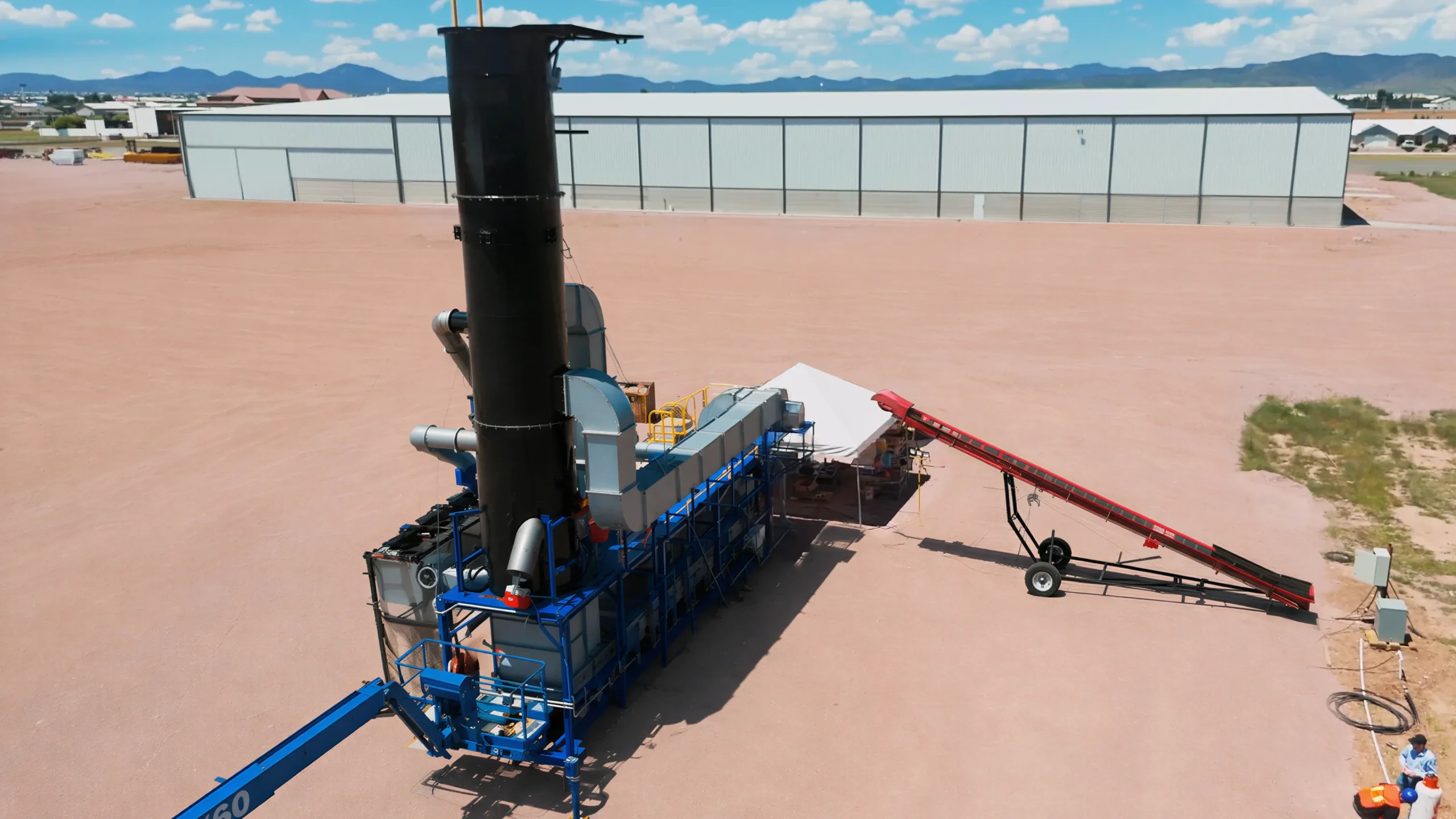
A pass or fail test is useful only when both parties agree in advance on the procedure. Define when testing begins, what equipment must be available, which feedstock will be used, and how long the run must continue. Identify the instruments, sampling frequency, calculation method, and responsible reviewers.
Set separate acceptance criteria for construction completion, safe startup, and sustained operating performance. A plant can pass a mechanical completion check without demonstrating its contracted production rate or biochar specification. If results miss a target, state whether the provider gets a defined opportunity to adjust the system and repeat the test, and who pays for that work.
Also agree on the consequences of a failed retest. Depending on the project, options may include additional corrective work, a price adjustment, a replacement component, or a right to reject specific equipment. Ask legal and technical advisers to review whether the proposed remedy fits the project’s financing and operating needs.
Which protections cover uptime, defects, schedule, and cost?
During operations, a plant may be unavailable for planned maintenance, equipment failures, feedstock interruptions, or site issues. If you need an availability commitment, define the calculation period and which events count as unavailable time. Specify planned-maintenance allowances, exclusions, recordkeeping, and any service response times. A response-time promise is not the same as a commitment to restore production within a stated period.
For the defect warranty, identify covered equipment, duration, the start date, and whether repairs include parts, labor, travel, and recommissioning. List exclusions clearly, including any maintenance or operating conditions that could void coverage. Ask how warranty claims are submitted, how quickly they must be acknowledged, and what happens if a repaired component fails again.
For schedule and price, define milestones, the documents or approvals required from you, and the process for changes. State how the parties handle late information, site-readiness problems, substitutions, and additional work. A written change-control process helps prevent disagreements over whether a request changes the agreed cost or completion date.
Check that the contract also assigns responsibility for permit applications, site approvals, emissions data, and safety-related deliverables. Do not treat a general promise of turnkey delivery as proof that every approval or operating duty transfers to one contractor. Ask counsel to confirm the responsibilities that apply to your project and location.
Can a contract guarantee carbon-credit issuance or revenue?
It can define project tasks, but equipment performance alone does not settle carbon-credit eligibility or price. Separate what the provider controls, such as production records, feedstock traceability, testing support, and monitoring data, from decisions made through applicable methodologies, verification, certification, or markets.
Specify who maintains chain-of-custody records, prepares project documentation, supplies lifecycle information, and responds to audit requests. Identify the records you will receive and the timing of delivery. Do not treat an expected credit volume, issuance date, or sales price as guaranteed unless the contract clearly states the responsible party, assumptions, and remedy.
Likewise, define any physical biochar offtake separately. Clarify product specifications, quantity, delivery schedule, acceptance, transport, and pricing terms with the buyer. Keeping equipment delivery, credit issuance, and product sales as distinct obligations makes it easier to see which risks the project team can actually manage.
How can you evaluate the project pathway before committing?
If you are still validating the design, ask what can be tested before full-scale investment. Our research and development offering states that 100% of trial costs can be applied toward a commercial system. That is a defined cost credit, not a guarantee of throughput, uptime, schedule, or biochar quality. Put qualifying costs, application timing, and any conditions in writing.
Use trial findings to establish feedstock assumptions, operating targets, and product-analysis requirements. Then carry those findings into the commercial contract as explicit acceptance criteria rather than informal expectations. You can also review our biochar project economics resource when checking how operating assumptions relate to the project model.
Our work can cover feasibility and engineering through commissioning, operations, maintenance, commercialization, and carbon-credit support. When you compare an integrated project scope with separate equipment and service contracts, check which party owns each interface and whether the same test data will support commissioning and future operations.
Put the promise into measurable terms
Reliable turnkey biochar project protections depend on clear metrics, documented feedstock conditions, agreed acceptance tests, and remedies that address a missed commitment. Define the contractor’s scope alongside owner responsibilities, permitting dependencies, and carbon-market limits. Before signing, have your technical and legal advisers confirm that every critical promise can be measured, evidenced, and enforced.
Move from Feasibility to a Defined Project Scope
Once you have identified the guarantees your project needs, the next step is aligning the feedstock, site, equipment, and operating plan. Clear project development can help you carry those assumptions from early engineering into commissioning and define responsibilities across the work.
We support project development from feasibility and engineering through final commissioning, with systems configured around feedstock, production scale, and project objectives. To discuss your project scope and biochar project development services, contact our team.
Frequently Asked Questions
Are performance guarantees the same as equipment warranties?
No. An equipment warranty generally addresses defects in covered components, while a performance guarantee defines a measurable operating result under stated conditions. A contract can include both, with separate tests and remedies.
Which plant metrics should you put in a guarantee?
Consider throughput, biochar quality, availability, energy use, and emissions-related measures that matter to your project. Define the test conditions and measurement method for each metric.
Can a contractor guarantee a specific number of carbon credits?
Do not assume equipment output guarantees credit issuance or revenue. Define the provider’s documentation, testing, and traceability obligations separately from verification and market outcomes.
When should acceptance testing take place?
Specify the test sequence in the contract, including startup, mechanical completion, and sustained performance checks. State the feedstock conditions, evidence, retest process, and consequences of a failed test.
How does Pyronexus support projects before commercial scale?
Our research and development work includes feedstock characterization, trials, laboratory testing, and technical reporting. Trial costs can be applied toward a commercial system, with the applicable scope and terms confirmed for your project.
