
PFAS Wastewater Treatment: Methods, Limits, and Residuals
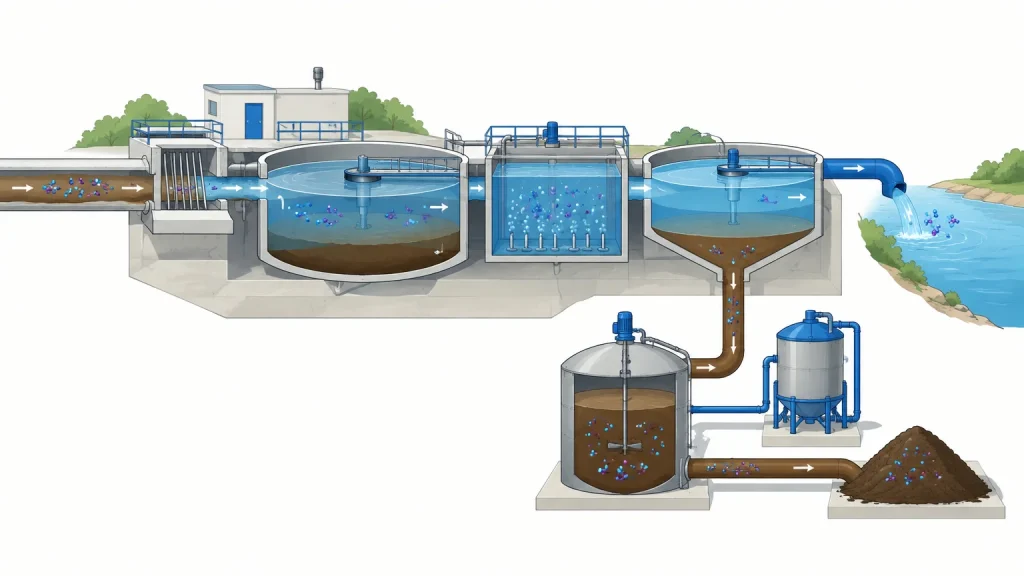
Summary: PFAS wastewater treatment works best as a treatment train: first identify how PFAS moves through water and solids, then select capture or separation, and manage concentrated residuals. Granular activated carbon and ion exchange are established liquid-treatment approaches; destruction technologies and biosolids pyrolysis need matrix-specific evidence. A lower effluent concentration alone does not prove PFAS destruction.
A treatment plant can lower PFAS in one stream while sending them into another. That is why PFAS wastewater treatment is not simply a question of effluent concentration; operators must identify PFAS in water, residual solids, and concentrated waste. If solids are part of the pathway, our overview of biochar for reducing PFAS leaching from biosolids addresses a separate management consideration.
Effective PFAS wastewater treatment starts by distinguishing capture from destruction. Activated carbon, ion exchange, membranes, and foam fractionation move PFAS out of water; destructive processes target concentrated residuals. Pyrolysis concerns biosolids, not the wastewater itself. Because PFAS mixtures, water chemistry, and treatment objectives differ, technology selection requires stream-specific evidence.
How do PFAS behave in conventional wastewater treatment?
Conventional primary and secondary treatment is not a reliable PFAS destruction step. PFAS may pass into effluent, partition into sludge, or shift between measured compounds as precursors transform. A lower concentration for selected PFAS does not necessarily mean the overall PFAS load has declined.
A 2026 global review assessed 402 wastewater plants across 17 countries. It reported apparent PFAS removal values from −2,703% to 100%, reflecting variation across compounds and treatment settings. A negative apparent removal value means the measured concentration rose across a process, not proof of new PFAS mass.
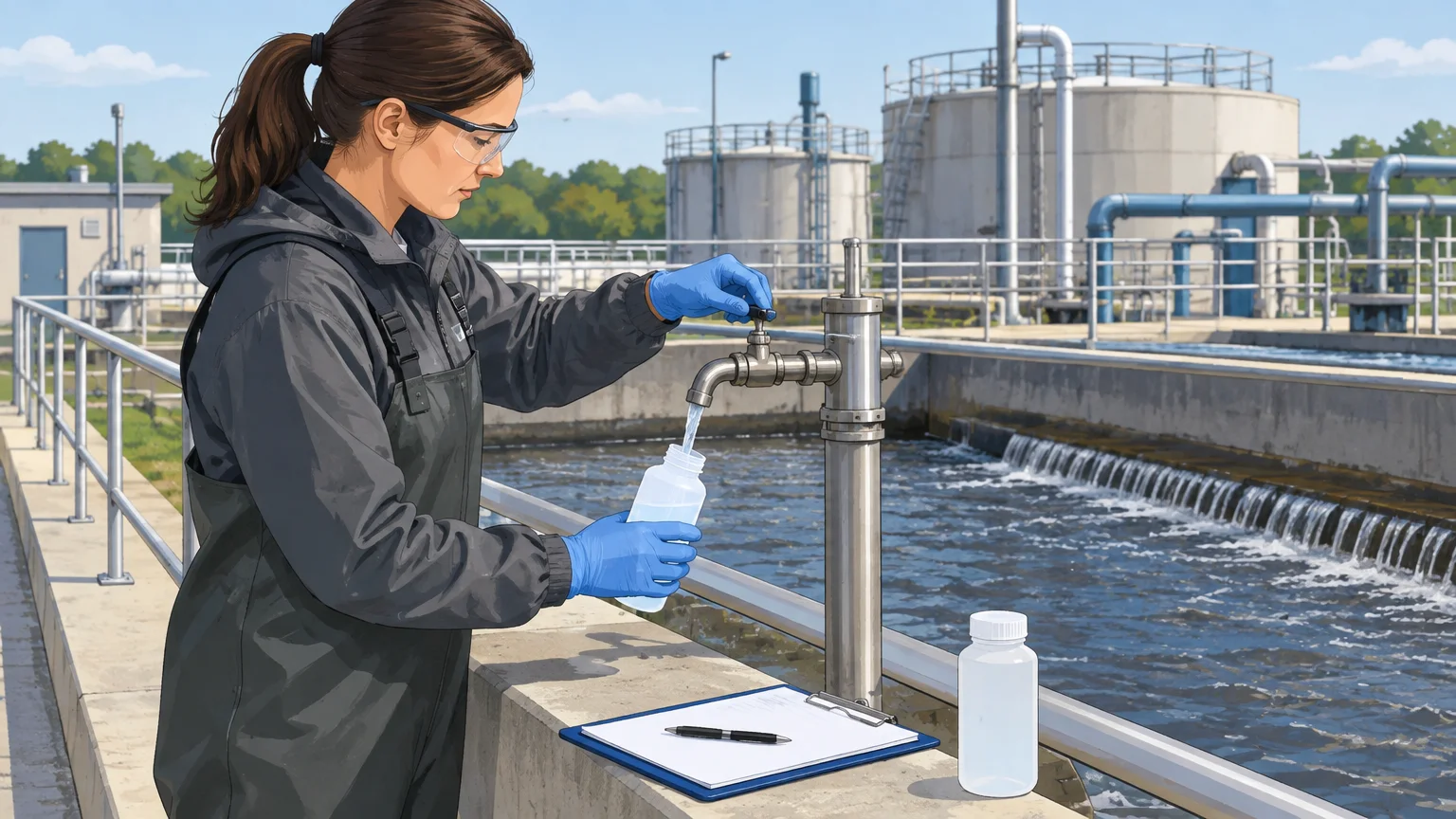
PFAS also behave differently according to chain length and chemical structure. Some longer-chain compounds tend to associate more readily with solids or sorbents, while many short-chain compounds remain mobile in water. Therefore, monitoring only a few target compounds can miss important changes across the treatment train.
Which treatment technologies fit different wastewater streams?
Start by asking whether your objective is to remove PFAS from water, concentrate it, or destroy it. ITRC treatment guidance identifies granular activated carbon and ion exchange as field-implemented liquid-treatment options. It also emphasizes that suitability depends on the matrix, treatment goal, and residuals management.
| Technology | Primary role | Key consideration |
|---|---|---|
| Granular activated carbon | Captures PFAS by adsorption | Spent carbon needs regeneration, destruction, or disposal; performance depends on water chemistry and PFAS mixture. |
| Ion exchange | Captures PFAS using resin | Spent or regenerated resin creates a residual stream that requires management. |
| Reverse osmosis | Separates PFAS from water | Produces a concentrated reject stream; it does not destroy PFAS. |
| Foam fractionation | Concentrates surface-active PFAS in foam | Often more suited to longer-chain PFAS; the foamate still needs treatment or disposal. |
| SCWO, electrochemical oxidation, and plasma | Target destruction in concentrated streams | Evidence and operating requirements differ by technology and matrix; verify performance and byproducts. |
| Biosolids pyrolysis | Thermally processes solid material | It is not a wastewater treatment step; assess PFAS fate in char, liquids, and emissions. |
For high-volume, lower-concentration water, sorption methods are established choices. Complex streams such as landfill leachate may contain competing organics, salts, and suspended solids, which can shorten media life or require pretreatment. Reverse osmosis can separate a broad range of PFAS, but its concentrate must be addressed as part of the process design.
Destruction technologies are often considered for smaller, more concentrated residual streams. Their readiness, energy needs, and performance vary, so a result from one waste type should not be assumed to apply to another. Pilot testing under representative conditions helps establish whether a technology fits the intended stream.
Why do residuals matter as much as effluent?
Capture and separation transfer PFAS from water to another material. Activated carbon produces spent media, ion exchange produces spent or regenerated resin, reverse osmosis produces reject, and foam fractionation produces concentrated foam. Each residual needs a documented handling route.
A complete treatment plan follows PFAS through the entire system, including influent, effluent, solids, spent media, and any concentrated liquid. Where destruction is proposed, evaluate the treatment products and emissions as well as the reduction in targeted PFAS. A single effluent sample cannot demonstrate that the full PFAS mass has been destroyed.
In practice, a treatment train can pair a capture step with a separately validated residuals treatment method. That approach can reduce the volume requiring intensive treatment, but it also adds monitoring, equipment, and operating requirements. Build those requirements into the project scope before selecting a process.
How should facilities approach PFAS in biosolids?
Biosolids are a separate PFAS pathway from treated water. PFAS captured in sludge remain relevant to land application, landfill disposal, and further treatment decisions. A wastewater upgrade focused only on effluent can leave this solids-management question unresolved.
EPA’s biosolids information describes draft voluntary recommendations concerning PFOA and PFOS in sewage sludge management. Facilities should check applicable state requirements and their specific disposal or beneficial-use conditions before changing practices.
Thermal processing, including pyrolysis, is being studied for PFAS-contaminated solids. It should not be treated as proven PFAS destruction without evidence covering the specific feedstock and process, including char, condensate, and emissions. Our biosolids management solutions address project planning for biosolids, while the treatment objective and performance evidence must be evaluated for each site.
Biochar research on reducing leaching is also distinct from wastewater treatment. It concerns the behavior of a solid material and does not replace treatment of PFAS in effluent or concentrated liquids.
How can US facilities evaluate a treatment project?
Across the US, confirm the facility’s discharge permit, state requirements, receiving-water context, and applicable biosolids rules. Drinking-water criteria and wastewater discharge requirements address different endpoints, so do not assume one sets the other. Define the treatment target and residuals pathway before comparing equipment.
A 2026 six-community study found oxidizable PFAS precursors accounted for up to 92% of total PFAS in wastewater influent and up to 70% in effluent at the studied sites. Those results are not a national estimate, but they show why targeted compound lists alone can miss relevant PFAS. Match analytical methods to your project questions and include precursor assessment when appropriate.
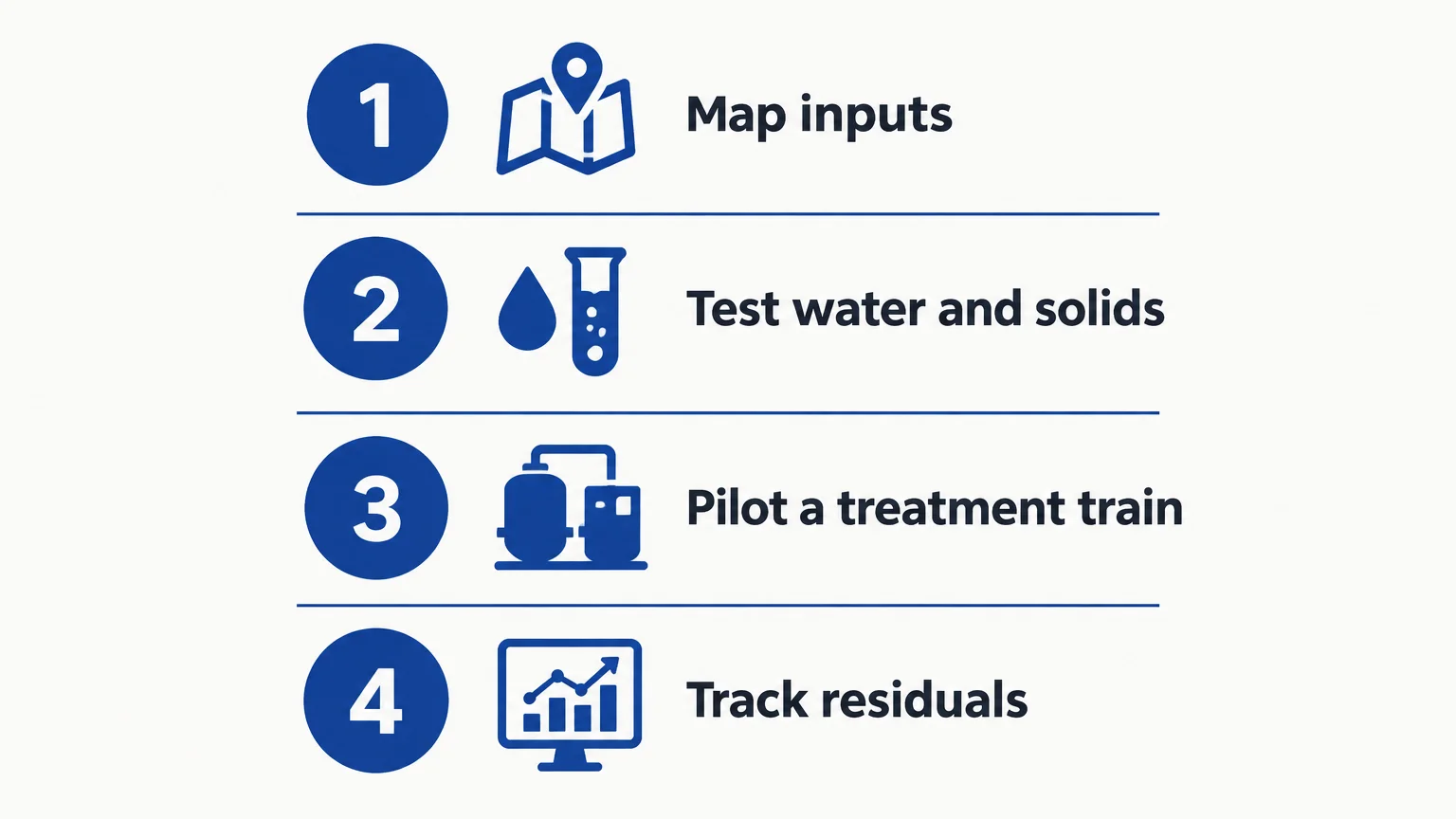
Build a representative baseline from influent, effluent, solids, and relevant residual streams. Compare candidate technologies using the same PFAS mixture, flow, water chemistry, and performance measures. Then pilot the most suitable options, track breakthrough or operating changes, and verify the final residuals route. Keep a mass balance where analytical methods allow it, rather than relying only on percentage removal.
Choose a treatment train, not a single metric
PFAS wastewater treatment requires a system-level view of where compounds move and what happens to every residual. Select capture or separation according to the wastewater matrix, then verify any destruction step for the concentrated stream. Monitoring effluent, solids, and residuals together gives you a more defensible basis for operational and disposal decisions.
Explore Biosolids-to-Biochar Project Support
For a biosolids program, test the feedstock, define contaminant and emissions objectives, and compare treatment routes before making capital decisions. Our work focuses on project development and applied research for biomass conversion.
Pyronexus supports biosolids-to-biochar project planning through feedstock characterization, laboratory testing, trials, engineering, and operations support. For PFAS-related projects, request evidence covering the full mass balance, including biochar, liquid residuals, air emissions, and treatment products. A reduction in one measured stream is not proof of complete destruction. Explore our biochar solutions for biosolids to discuss technical fit and possible next steps.
Frequently Asked Questions
Does conventional activated sludge remove PFAS?
Conventional biological treatment is not designed to reliably destroy PFAS. Compounds may pass into effluent, enter solids, or change form as precursors transform.
Does PFAS removal mean PFAS destruction?
No. Adsorption, ion exchange, membranes, and foam fractionation separate or concentrate PFAS. The captured material still requires an appropriate management or destruction route.
Which technology is suitable for PFAS wastewater?
Suitability depends on the PFAS mixture, water chemistry, flow, treatment target, and residuals pathway. Use representative testing and pilot work to compare options for your stream.
Can pyrolysis treat PFAS in wastewater?
Pyrolysis concerns solid feedstocks such as biosolids, not direct treatment of wastewater. Evaluate PFAS fate in char, liquids, and emissions before treating it as a destruction option.
Can Pyronexus help evaluate biosolids projects?
Our biosolids work includes project development, feedstock characterization, trials, engineering, and operations support. PFAS-specific performance should be established through site-relevant testing and complete residuals evaluation.
