
Mobile Biochar Machine: Selection, Setup, and Operating Costs
Summary: A mobile biochar machine converts biomass into biochar at or near its source, but “mobile” can describe very different equipment and operating setups. Compare transport requirements, feedstock preparation, usable throughput, site access, emissions controls, and total delivered cost before choosing a system.
Will a mobile biochar machine actually save you time and hauling costs? Only if it can reach your feedstock, process it reliably, and handle the finished biochar on site. A trailer-mounted reactor, a skid-mounted unit, and an in-place conversion system have different transport and setup needs. As an adjacent equipment reference, our biochar production equipment information describes scalable pyrolysis systems, but does not establish that our systems are mobile.
Across the US, mobile production can interest forestry, agricultural, and biomass-management operators working far from centralized facilities. The practical decision is less about whether a machine has wheels and more about whether its feedstock, access route, operating requirements, and end products fit your site.
What does “mobile” mean for a biochar machine?
Imagine processing woody residue where it is collected instead of hauling all of it to a central plant. That is the basic appeal of mobile production: bringing conversion equipment closer to the biomass. It may reduce some feedstock transport, but it does not remove the need to move equipment, fuel, operators, and finished biochar.
Check what the supplier means by mobile. A trailer-mounted unit may travel by road between sites, while a skid-mounted system might require a separate trailer, lifting equipment, and a prepared pad. An in-place unit may process material within a defined work area without road transport between each pile. Those arrangements are not interchangeable.
Ask for the complete deployment sequence, from delivery and unloading to leveling, connection, startup, shutdown, and removal. Confirm which vehicles and support equipment are needed, who supplies them, and how often the system must be relocated. These practical details help you distinguish easy transport from a genuinely workable field operation.
Can your feedstock support field processing?
A machine’s nominal capacity is only useful if your biomass can be supplied consistently. Identify the feedstock type, seasonal availability, particle size, moisture, contamination risks, and how it behaves during storage and handling. Branches, chips, crop residues, and biosolids differ in preparation needs, so do not assume one configuration suits every material.
Feedstock preparation can affect labor, drying time, fuel demand, and steady operation. If material needs to be chipped, screened, or dried before processing, include those steps in your site plan and cost comparison. Estimate the volume available at each location and how long a machine can work before it needs to move.
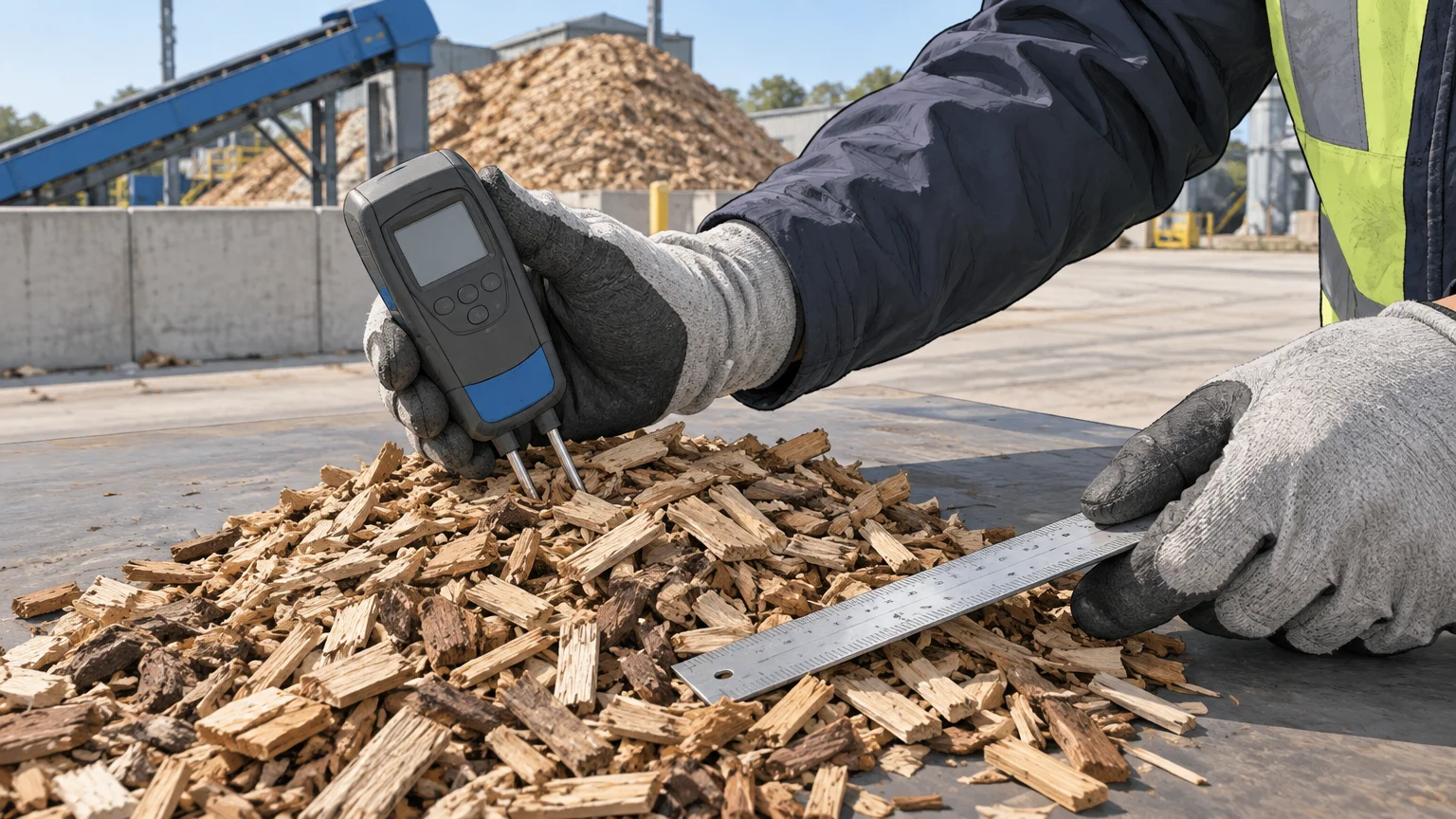
For Pyronexus reactor feedstock, the stated preparation conditions are particle size below one inch and moisture content below 20%. Those are conditions for our reactor feedstock, not universal specifications for every mobile machine. Our biochar reactors for biomass disposal are a related equipment consideration, but that page does not establish a mobile configuration.
When uncertainty remains, consider testing a representative feedstock before committing to commercial scale. Trials can help evaluate input properties and process behavior, but they cannot guarantee that a particular mobile setup will suit every site or biomass type.
What does transport and field operation cost?
Calculate total delivered cost, not just the machine purchase price. Account for equipment transport, loading and unloading, setup, operators, feedstock preparation, fuel or electricity, routine maintenance, downtime, and biochar handling. For repeated moves, include travel time and the preparation needed at every new site.
A 2026 deployment optimization study for the CharBoss system found that direct biochar production represented 95% to 96% of modeled total system cost. The study also found that pile size, access, setup time, and travel could influence which sites were practical to serve. These are study-specific findings, not a universal cost estimate or a price quote for other equipment. Read the 2026 deployment study for its scope.
Mobile production may avoid hauling some raw biomass, but that advantage depends on where the machine can operate and how the finished product moves afterward. Compare the full route for both inputs and outputs. A 2021 analysis of three portable systems also found that environmental and economic results varied with system choice, site, power source, and feedstock quality. Its findings describe the scenarios examined in that year, not current market prices or a prediction for your project. The 2021 portable-systems analysis provides more detail.
Ask suppliers for capacity under conditions similar to yours, including material moisture and preparation, working hours, and changeover time. Compare expected throughput under those conditions rather than relying on a maximum figure with no operating context.
Which site, safety, and permit requirements matter?
A route that works for a pickup may not work for a heavy trailer or support vehicle. Check road access, turning space, ground bearing capacity, slope, overhead clearance, unloading area, and room for feedstock and finished biochar. Confirm site requirements with the equipment supplier before arranging transport.
Plan for safe operation and maintenance, including operator training, equipment inspections, emergency access, and procedures for hot material and dust. Ask what emissions-related equipment is included, what operating conditions it requires, and what maintenance it needs. Do not infer emissions performance from the word “pyrolysis” or from a machine’s mobility.
A 2024 review of US mobile biochar policy described differing permit interpretations across equipment types and jurisdictions. Before purchase or deployment, check applicable air, fire, land-use, and transport requirements with the relevant agencies and site owner. The 2024 policy review discusses these distinctions; it is not a substitute for site-specific advice.
If your project needs a centralized or broader production pathway instead, our biochar plants information may help you consider a plant-based option. Whether mobile or fixed, equipment should match your feedstock, operating scale, site conditions, and project objectives.
How should you compare machines before buying?
Start with your operating scenario, then require suppliers to explain how their equipment fits it. A short written comparison can help you expose gaps between advertised mobility and the work actually required at your site.
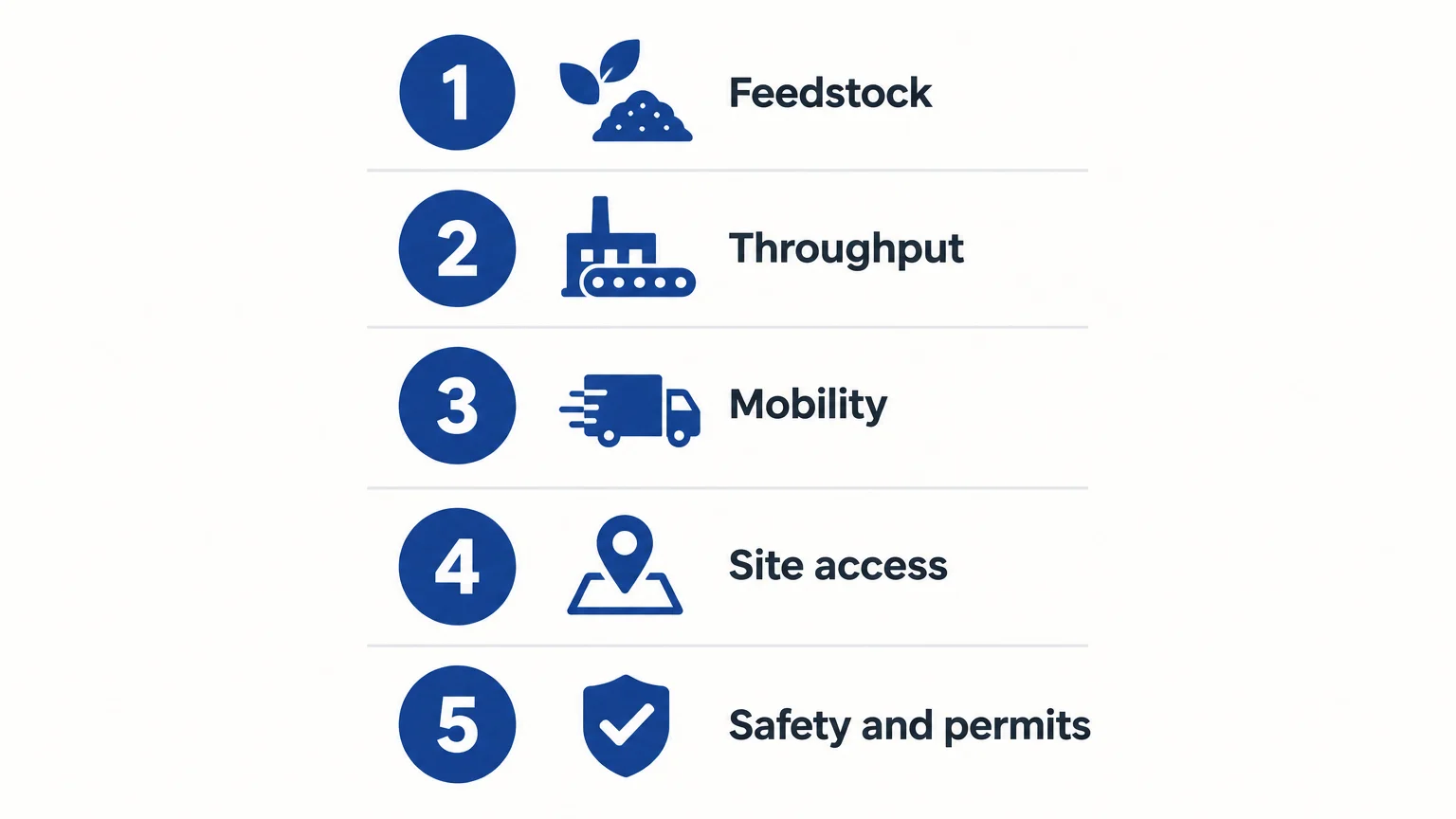
- Feedstock: Confirm acceptable material, particle size, moisture, and any required preparation.
- Throughput: Request expected output under comparable operating conditions, not just a peak capacity.
- Mobility: Identify transport method, weight, setup time, support equipment, and relocation requirements.
- Site needs: Verify access, utilities, ground conditions, feedstock storage, and biochar collection.
- Operating requirements: Review emissions controls, safety procedures, maintenance, permits, and full project costs.
For a commercial project, also ask what testing, engineering, and operational support is available before and after installation. Our research and development work includes feedstock characterization, trials, laboratory analysis, and technical reporting. Those services can help you evaluate project assumptions before choosing a commercial system.
Make mobility work for your feedstock and site
A mobile system is a practical fit only when transport, feedstock preparation, site access, safety, and operating economics align. Compare full deployment requirements under your actual conditions, verify local rules before committing, and treat capacity or cost figures as meaningful only when their assumptions match your project. A well-chosen mobile biochar system should solve a specific logistics problem, not simply move it from feedstock transport to equipment setup.
Plan Your Biochar Production Project
If you are weighing field deployment against a centralized facility, begin with your feedstock, target output, site constraints, and intended biochar use. Testing and engineering can help clarify those needs before you choose a configuration. We do not claim that our described reactor systems are mobile, so confirm transport and deployment requirements for any proposed design.
Our work includes feedstock characterization, small and large trials, project development, scalable reactor systems, and operations support. For our research and development trials, 100% of trial costs can be applied toward a commercial system. To discuss equipment and project requirements with our team, explore biochar reactor sales.
Frequently Asked Questions
What is a mobile biochar machine?
It is equipment designed to produce biochar at or near a biomass source, with mobility provided through transport, relocation, or on-site movement. The exact setup varies, so verify how the specific machine is delivered, installed, and moved.
Can one mobile machine process different biomass types?
Not necessarily, because feedstock moisture, particle size, composition, and handling behavior can affect preparation and operation. Ask the supplier to confirm suitability for your actual material and conditions.
How do I compare the capacity of mobile systems?
Request expected throughput under conditions that match your feedstock, preparation method, and operating schedule. Also account for setup, relocation, maintenance, and biochar collection time.
Do mobile biochar machines require permits?
Requirements can depend on equipment type, material, location, and the relevant authority. Check applicable air, fire, land-use, and transport requirements before selecting a site or scheduling deployment.
Can Pyronexus help evaluate a project before a commercial system is selected?
Our research and development services include feedstock characterization, trials, laboratory testing, and technical reporting. Trial costs can be applied in full toward a commercial system, but this does not guarantee that a mobile configuration will be suitable.
