
Biochar Energy Recovery: A Practical Guide for US Projects
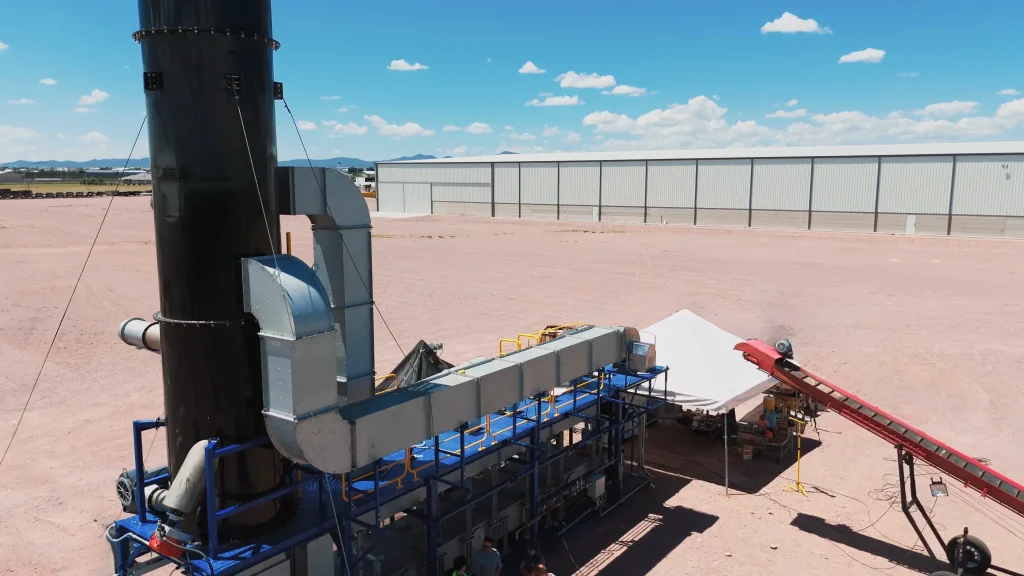
Summary: Biochar energy recovery captures useful heat, combustible gases, and sometimes condensable products during biomass pyrolysis. The most effective system depends on feedstock moisture, particle size, temperature, residence time, energy demand, emissions controls, and the intended value of the biochar. For US projects, a feedstock-specific energy balance should come before equipment selection or scale-up.
Pyrolysis can produce more than biochar. When the system is properly designed, process heat and combustible gases can support drying, maintain reactor temperature, generate steam, or produce electricity. For organizations evaluating waste conversion, our biochar reactors for biomass disposal can form part of a broader resource-recovery strategy.
The central question is not whether energy can be recovered, but whether recovery improves the entire project. A strong evaluation considers the feedstock, the energy required for preparation, the value of the biochar, transportation distance, operating conditions, environmental controls, and the available end uses for recovered heat or power.
What Does Biochar Energy Recovery Include?
Biochar energy recovery usually refers to capturing energy from the same thermal conversion process that produces biochar. Pyrolysis heats biomass in an oxygen-limited environment. The feedstock separates into a solid carbon-rich fraction, condensable vapors, and non-condensable gases.
The solid fraction becomes biochar. The gaseous fraction may contain combustible compounds that can be burned in a thermal oxidizer, furnace, boiler, or combined heat and power system. Condensable vapors may produce bio-oil or related liquids, depending on the reactor design and operating conditions. Heat from the reactor, hot product gas, and hot biochar can also be transferred to incoming feedstock or other process users.
This creates several potential value streams:
- Process heat for drying wet biomass or maintaining reactor temperature.
- Thermal energy for hot water, steam, building heat, or nearby industrial processes.
- Electricity produced through steam generation, an engine, a turbine, or another heat-to-power system.
- Combustible gas used internally rather than released or flared.
- Biochar value retained through agricultural, filtration, industrial, composite, or carbon-removal applications.
The most practical configuration is often an integrated system. It uses recovered energy first to reduce internal energy demand, then evaluates whether surplus heat or electricity can serve a nearby load. Exporting energy may be possible, but it adds interconnection, metering, permitting, and commercial requirements.
Why Do Feedstock and Process Conditions Matter?
Consider two facilities using the same reactor design. One processes dry woody residues near a steady industrial heat demand. The other processes wet, ash-rich organic waste that must travel long distances. Their energy balances and economics can differ substantially.
Feedstock characterization should therefore come before a final recovery design. Moisture content affects drying demand. Particle size affects feeding and heat transfer. Ash content influences handling, emissions controls, and the potential end use of the biochar. Chemical composition influences gas quality, char yield, and contaminant management.
For our reactor planning, feedstock preparation may include conditions such as particle size below 1 inch and moisture below 20 percent. These are project conditions, not universal rules. The appropriate targets depend on the reactor, material-handling system, feedstock behavior, and operating objective.
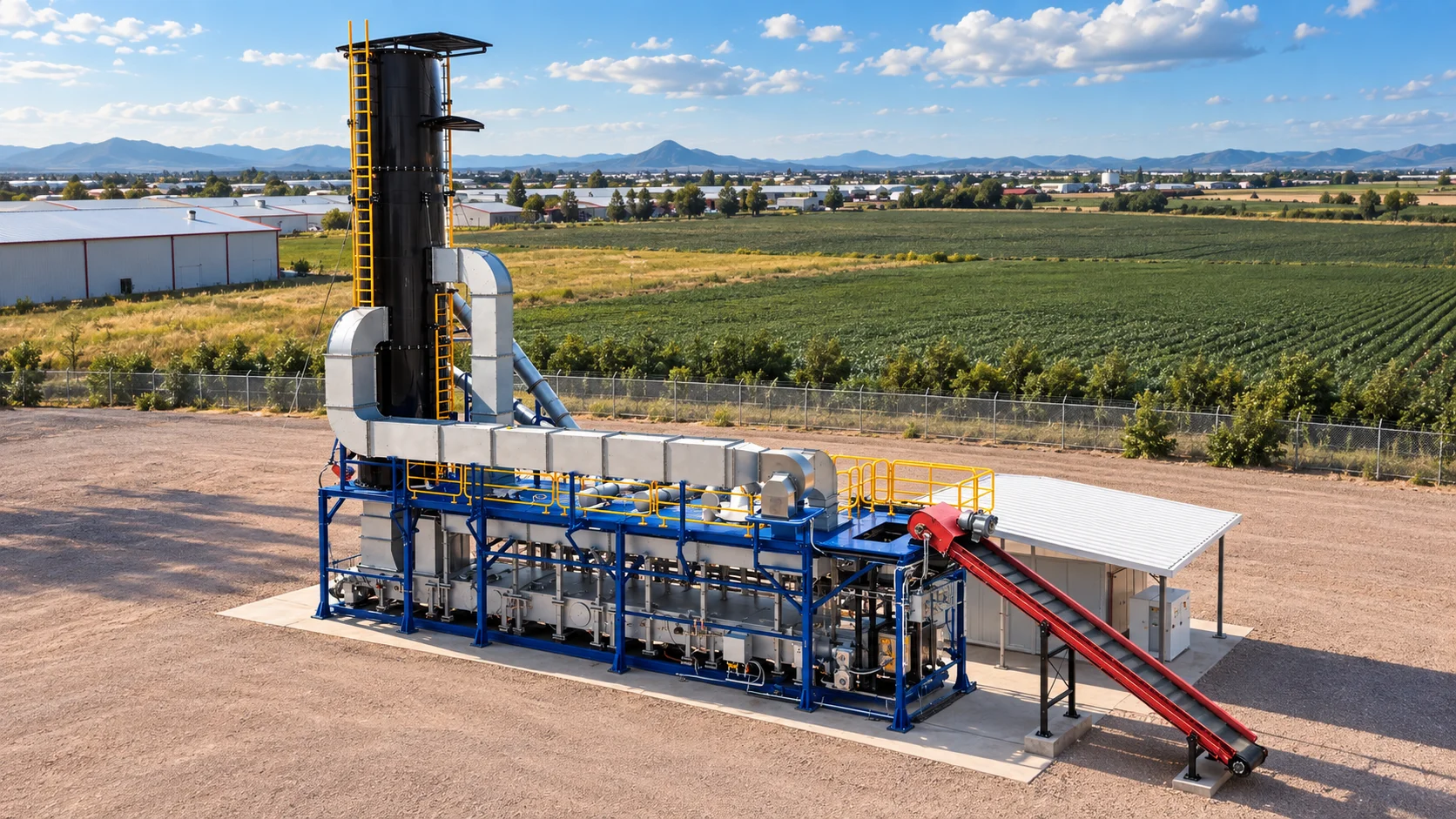
Temperature and residence time also change the balance between biochar, gas, and liquid products. Lower-temperature, longer-residence operation generally supports higher solid-char production. Higher temperatures and faster heating can increase gas formation and alter biochar properties. A 2026 characterization study of agricultural residues examined temperatures from 300°C to 600°C and residence times from 20 to 120 minutes, illustrating why production conditions must be evaluated against the specific feedstock.
These variables create an important trade-off. Maximizing biochar yield may reduce the energy available in gas and vapors. Maximizing gas production may change the quantity, stability, or application suitability of the biochar. A project should define its primary objective before selecting operating conditions.
Which Energy Recovery Pathway Fits Your Project?
A facility should match the recovery pathway to its energy demand. Internal heat use is often simpler than electricity generation because it avoids additional conversion losses. Electricity can provide greater flexibility, but it typically requires more equipment, controls, maintenance, and capital.
- Direct process heat: Recovered heat can dry incoming biomass, heat thermal fluids, or maintain the pyrolysis reactor. This pathway is useful when the facility has continuous feedstock preparation needs.
- Steam and thermal networks: Hot gas can heat water or generate steam for an industrial process. This approach works best when a stable thermal load is located close to the production system.
- Combined heat and power: Combustible gas can support electricity generation while engine or turbine heat serves the reactor, dryer, or nearby users.
- Gas utilization: Syngas or non-condensable gas can be cleaned and combusted internally. Its composition and contaminants must be assessed before equipment selection.
- Biochar as a fuel: Some biochar may have fuel value, but burning it removes the opportunity to use it for durable carbon storage, soil improvement, filtration, or other higher-value applications.
A 2026 study on digestate pyrolysis illustrates the value of testing the complete system rather than assuming a standard result. In that study, reported energy recovery increased from 36.6 percent to 47.7 percent with a catalyst, while the result remained specific to the digestate, reactor, and operating conditions examined. The digestate pyrolysis study should be read as project evidence, not a universal performance guarantee.
The strongest design often follows a hierarchy. First, recover heat for the process itself. Second, serve a dependable nearby thermal load. Third, assess electricity production or export. Finally, compare those options with the value of keeping biochar available for non-fuel applications.
How Should You Calculate the Energy Balance?
An energy balance compares energy entering the project with energy consumed and energy recovered. It should include feedstock collection, transportation, size reduction, drying, reactor operation, gas treatment, cooling, product handling, and any electricity or fuel used during startup.
The calculation should separate several values:
- Gross energy output: The energy contained in recovered gas, heat, liquids, or biochar.
- Parasitic energy demand: Electricity and fuel needed by grinders, dryers, fans, pumps, conveyors, controls, and emissions systems.
- Usable energy: Energy available at the required temperature, pressure, quality, and operating time.
- Net energy: Usable energy remaining after internal consumption and conversion losses.
- Displaced energy: Purchased electricity, natural gas, propane, steam, or other energy that the project may avoid.
Energy recovery is more valuable when the energy can be used continuously. A facility with a stable drying requirement may obtain more practical value from moderate-temperature heat than from intermittent electricity production. A remote facility may prioritize internal power generation because grid access is limited or unreliable.
Transportation deserves particular attention in the US. Biomass is often distributed across farms, forests, municipal operations, and industrial sites. Long hauling distances can reduce both economic value and environmental performance. A decentralized system may therefore outperform a larger centralized facility when it reduces feedstock travel and uses energy locally.
Market scale is also relevant. The International Biochar Initiative reported that global biochar production reached an estimated 520,810 metric tonnes in 2025, compared with 180,150 metric tonnes in 2023. Its 2026 market report reflects responses from 930 stakeholders across 96 countries, showing an industry moving toward larger and more structured deployment.
Growth does not eliminate project risk. A larger facility may achieve better equipment utilization, but it can also require more feedstock contracts, storage, permitting, working capital, and product sales. The best scale is the one supported by reliable inputs and credible offtake arrangements.
What Environmental and Regulatory Factors Should You Review?
Energy recovery should not be evaluated separately from emissions, residue handling, and biochar quality. Gas combustion systems require appropriate temperature control, monitoring, and treatment. Feedstock contaminants may concentrate in ash or influence the safe use of the resulting biochar.
US projects may need to address air permits, waste classifications, storage requirements, zoning, fire prevention, worker safety, and state-specific rules. Requirements vary according to the feedstock, process configuration, emissions profile, facility location, and intended use of the products.
Biosolids and other regulated organic materials require additional due diligence. Testing should address moisture, ash, metals, persistent contaminants, pathogens where relevant, and the intended destination of the biochar. A claim that pyrolysis reduces a contaminant does not eliminate the need for process validation and product testing.
Lifecycle greenhouse-gas accounting should include transportation, drying energy, electricity, auxiliary fuels, emissions controls, recovered energy, and the final destination of the biochar. A 2026 PLOS One comparison found that biochar conversion could reduce annual emissions compared with open-field burning for selected agricultural residues in Korea. The study also demonstrates why results must remain tied to the feedstock, baseline practice, and location examined.
Carbon value can strengthen a project, but it should not replace engineering analysis. Eligibility for carbon credits depends on feedstock traceability, production records, biochar testing, lifecycle accounting, permanence, verification, and chain of custody. Energy recovery may improve the project balance, but it can also change emissions calculations and the final carbon accounting.
How Can You Screen a Project Before Scale-Up?
A disciplined screening process reduces the risk of selecting equipment before the project fundamentals are understood. The following sequence is suitable for commercial, municipal, agricultural, and industrial applications.
- Define the feedstock: Document source, seasonal availability, moisture, particle size, ash, contaminants, storage needs, and transportation distance.
- Set the product objective: Decide whether the priority is biochar, process heat, electricity, gas, liquid products, carbon credits, or a combination.
- Measure the energy demand: Identify drying loads, reactor heat requirements, auxiliary electricity, startup fuel, and nearby thermal or electrical users.
- Test operating conditions: Use controlled trials to evaluate temperature, residence time, product yields, gas quality, biochar properties, and emissions behavior.
- Build the financial case: Compare capital costs, operating expenses, transport, maintenance, product revenue, avoided disposal costs, energy savings, and possible carbon value.
- Confirm compliance pathways: Review permitting, safety, emissions, product quality, waste handling, and monitoring requirements before committing to construction.
Our research and development services can support feedstock characterization, small-scale and large-scale trials, laboratory testing, mass and energy balances, lifecycle assessment, techno-economic analysis, and process optimization. For organizations comparing configurations, our biochar production equipment can be evaluated alongside the material-handling and drying requirements identified during the screening process.
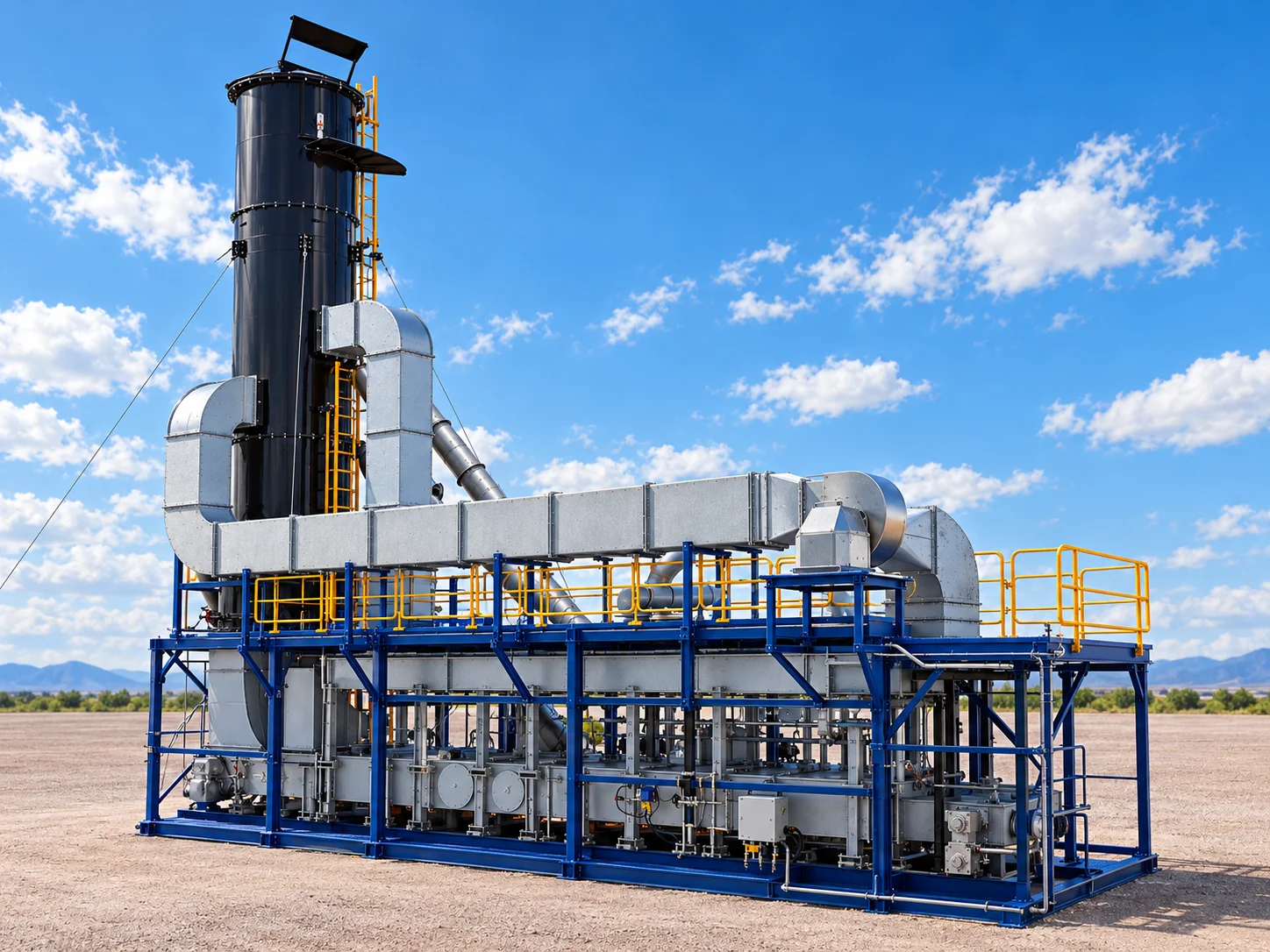
Project integration matters as much as reactor selection. A system may require grinding, drying, conveyors, cooling, emissions equipment, automation, packaging, monitoring, and product storage. We can also help connect process design with our biochar production process and broader smart energy applications when the project requires a coordinated energy and resource-recovery strategy.
Make Energy Recovery Part of the Whole Design
Biochar energy recovery is most effective when heat, gases, biochar quality, logistics, emissions, and end markets are evaluated together. The right system does not simply maximize energy output. It preserves the highest-value use of each product while reducing internal energy demand and supporting dependable operation. Begin with feedstock testing, establish a complete energy balance, and validate the commercial and regulatory pathway before scaling.
Plan Your Biochar Energy Recovery Project
When you need to convert a promising biomass stream into a practical project, the next step is a structured technical assessment. Feedstock conditions, energy demand, equipment integration, product goals, and site requirements should be reviewed together.
We support project development from feasibility and trials through reactor deployment, operations, maintenance, product development, and commercialization. To discuss a feedstock-specific configuration and potential recovery pathway, contact us about biochar reactor sales.
Frequently Asked Questions
What is biochar energy recovery?
Biochar energy recovery captures useful heat, combustible gases, or other energy products during biomass pyrolysis. The recovered energy may support drying, reactor operation, industrial heat, or electricity generation.
Can pyrolysis produce heat and biochar at the same time?
Yes. Pyrolysis produces biochar while releasing heat and gases that may be recovered within the process. The practical result depends on feedstock moisture, reactor design, operating temperature, gas quality, and the available energy demand.
Is biochar suitable as a fuel?
Some biochar has fuel value, but burning it may reduce its potential value for carbon storage, soil improvement, filtration, or industrial applications. The decision should compare fuel revenue with the value of retaining the biochar as a material product.
How can a US operator estimate project feasibility?
Begin with feedstock characterization, transportation analysis, controlled trials, energy balances, product testing, emissions review, and a project-specific financial model. Our research and development services can help evaluate these factors before a commercial system is selected.
What equipment is usually needed for energy recovery?
A project may require feedstock preparation, drying, a pyrolysis reactor, gas handling, heat exchangers, cooling, emissions controls, automation, and product collection. The final configuration depends on the feedstock, production scale, energy users, site layout, and compliance requirements.
