
Biosolids Management: A Practical U.S. Resource Recovery Guide
Summary: Effective biosolids management coordinates treatment, storage, transportation, regulatory compliance, beneficial reuse, disposal, and long-term economics. For US utilities, the right strategy depends on feedstock characteristics, contaminant controls, available infrastructure, operating capacity, and future flexibility. Thermal conversion may provide another pathway when conventional options become constrained, but it requires disciplined testing and project planning.
What happens after a wastewater facility produces stabilized solids can determine its operating costs, environmental exposure, and future flexibility. A durable plan must connect production forecasts, treatment performance, storage capacity, transport logistics, end use, and contingency planning. Our biosolids operations and maintenance services can support the operating side of that work when equipment and processes are already in place.
Biosolids management is not simply a disposal decision. It is a coordinated resource strategy that weighs compliance, public health, energy use, transportation, product quality, market access, and community expectations. The strongest plans compare several pathways using the same technical and financial assumptions, then preserve enough flexibility to respond to changing regulations, contaminant concerns, or infrastructure constraints.
What does effective biosolids management include?
A complete management program begins with a reliable understanding of how much material a facility produces and how those volumes may change. Population growth, influent loading, treatment upgrades, nutrient removal, chemical use, and seasonal conditions can all affect production. Without a credible forecast, facilities may underbuild storage, underestimate transportation needs, or select equipment that cannot handle future loads.
Processing then determines how manageable the material becomes. Dewatering reduces liquid volume, while drying can create a more stable product for storage, transport, or beneficial use. Each step introduces decisions about polymer use, energy demand, equipment redundancy, labor, maintenance, odor control, and site layout. These decisions should be evaluated together rather than as isolated equipment purchases.
End use is equally important. Common pathways include land application, soil amendment products, landfill disposal, incineration, and other regulated practices. A facility should also define what happens when a preferred outlet is temporarily unavailable because of weather, equipment failure, transportation delays, market limitations, or changing acceptance requirements.
The 2024 US picture shows why pathways matter
According to EPA data, approximately four million dry metric tons of sewage sludge were generated by reporting facilities in 2024. The same reporting set indicated that 59.5 percent was land applied, 14 percent was incinerated, 24.5 percent was landfilled, and 2 percent was managed through other practices, including storage, deep-well injection, or auxiliary fuel use.
These figures describe reporting facilities covered by the applicable federal program. They do not represent every smaller facility or every state program, so they should not be treated as a complete national total. Nevertheless, they show why a management plan must compare multiple outlets rather than assume that one pathway will remain available indefinitely.
Land application can retain nutrients and reduce disposal reliance, but it requires appropriate site controls, monitoring, application planning, and public communication. Landfilling may provide a straightforward outlet, yet transportation costs, landfill capacity, tipping fees, and future restrictions can affect its long-term value. Incineration reduces volume and can support energy recovery, but it requires substantial capital, air emissions controls, ash management, and specialized operations.
Consider the full chain, from treatment to end use
A historical national baseline illustrates the importance of looking beyond the final outlet. The National Biosolids Data Project reported that, in 2018, 53 percent of US biosolids were recycled to soils, while the remaining 47 percent were landfilled, disposed of, incinerated, or used in other ways. The NBDP findings also indicate that many water resource recovery facilities had limited storage capacity.
The 2018 figures are not a current 2026 snapshot. They are useful because they show how varied biosolids practices were across the country and why storage remains an operational issue. If a facility has little holding time, even a short interruption at a farm, landfill, incinerator, or transportation contractor can create an immediate process risk.
A practical plan should therefore map the material flow in sequence. Start with production at the wastewater treatment plant. Continue through stabilization, dewatering, drying or other processing, temporary storage, loading, transportation, receiving-site requirements, and final use or disposal. At each stage, identify the operating limit, the responsible party, the required documentation, and the backup option.
Storage deserves particular attention. Capacity should reflect normal production, scheduled outlet availability, maintenance outages, weather disruptions, and unexpected changes in acceptance. A covered and accessible storage area can protect the value created through dewatering or drying. It can also provide operators with time to resolve a logistics issue without bypassing safety or compliance controls.
Our project teams can connect these operating questions with capital planning through our biochar project development services. That work can include feasibility assessment, engineering, site preparation, system integration, commissioning, and planning for the long-term operation of a resource recovery facility.
Why contaminants change the management decision
Contaminant concerns can alter the suitability, cost, and public acceptance of a management pathway. PFAS compounds, metals, pharmaceuticals, pathogens, and other constituents may require additional sampling, treatment evaluation, recordkeeping, or communication with regulators and end users. The relevant question is not only whether material can be moved, but whether its composition is compatible with the intended destination.
A 2026 study analyzed 27 biosolid samples from 15 US states and reported total PFAS concentrations ranging from 2 to 807 nanograms per gram. The study found no correlation between total PFAS and sewer-shed population or industrial inputs within its sample set.
That study does not mean every biosolids stream has the same contaminant profile. It does show why assumptions based only on facility size or wastewater source may be insufficient. A defensible program uses representative sampling, documented analytical methods, feedstock tracking, and clear acceptance criteria before selecting an end use or thermal process.
Thermal conversion may be considered when a facility needs to reduce disposal dependence or evaluate a different route for challenging solids. However, claims about contaminant destruction, emissions performance, product quality, and regulatory acceptance must be validated for the specific feedstock and process configuration. Testing should address both the incoming material and the resulting products or residues.
A practical decision framework for US utilities
Decision makers can compare biosolids pathways using five connected questions. First, what material volume and composition must the system handle today and in the future? Second, what level of dewatering, drying, stabilization, or preprocessing is required? Third, what infrastructure, labor, energy, transportation, and maintenance costs will the pathway create?
Fourth, what regulatory, environmental, and public acceptance conditions apply? Fifth, how resilient is the pathway if the preferred outlet becomes unavailable? A solution with a lower initial capital cost may create higher life-cycle costs if it depends on long transport distances, fragile contractor availability, limited storage, or frequent equipment intervention.
A Bluefield Research forecast covering 2025 through 2035 estimates approximately 6.26 million dry metric tons of biosolids are generated by US water utilities. Its Bluefield forecast links future management decisions with infrastructure capacity, regional spending, disposal pathways, and changing regulatory conditions.
The forecast is a market estimate, not a universal design basis for every facility. Each utility still needs its own production data, site assessment, laboratory testing, energy balance, transportation analysis, and financial model. Even so, the broader planning implication is clear: infrastructure decisions should account for future volume, available outlets, and the cost of maintaining flexibility.
Useful evaluation criteria include:
- Feedstock compatibility, including moisture, particle size, composition, contaminants, and flow behavior.
- Process reliability, including uptime, automation, safety systems, maintenance access, and operator requirements.
- Energy balance, including drying demand, heat recovery opportunities, electrical consumption, and backup fuel needs.
- Product quality, including testing requirements, end-use specifications, storage stability, and market acceptance.
- Regulatory readiness, including permits, reporting, emissions controls, chain of custody, and verification requirements.
- Life-cycle economics, including capital investment, labor, transportation, maintenance, disposal costs, and potential value recovery.
Where thermal conversion can fit
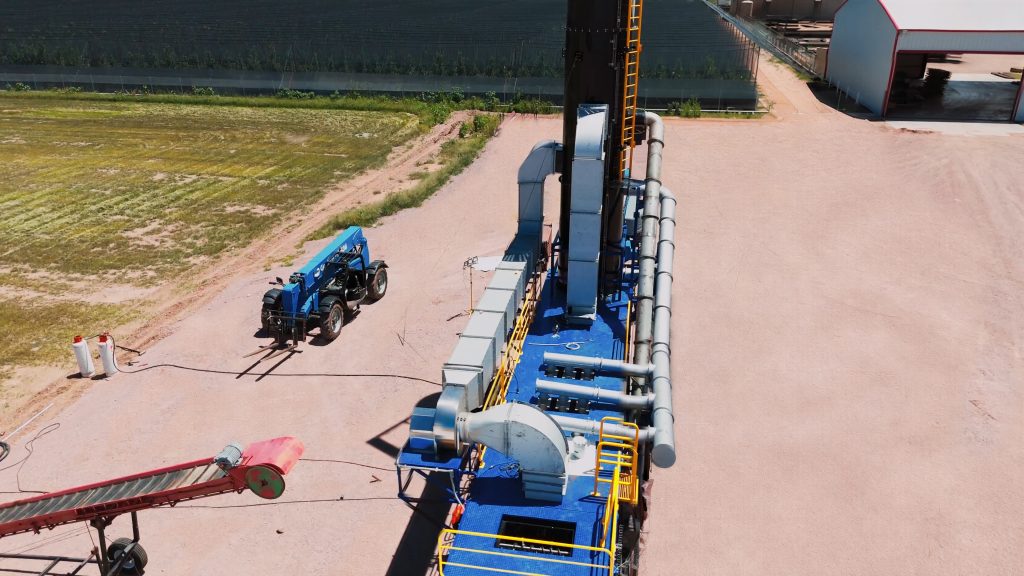
Pyrolysis is one possible component within a broader resource recovery strategy. It uses controlled thermal processing in an oxygen-limited environment to convert suitable organic material into a carbon-rich solid, gases, and recoverable heat. The feasibility of the approach depends on feedstock preparation, moisture control, system design, emissions management, product testing, and the intended use of the resulting material.
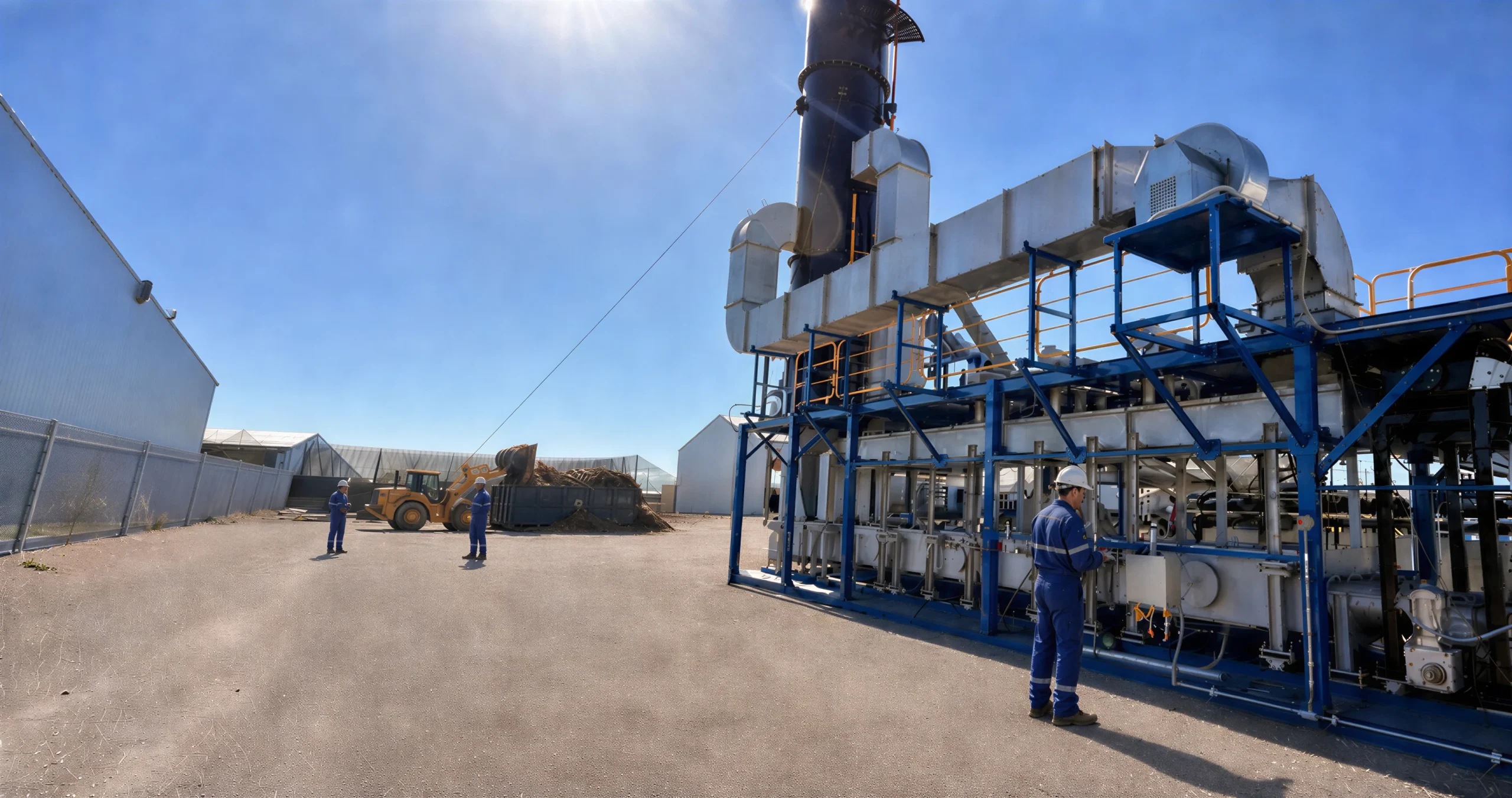
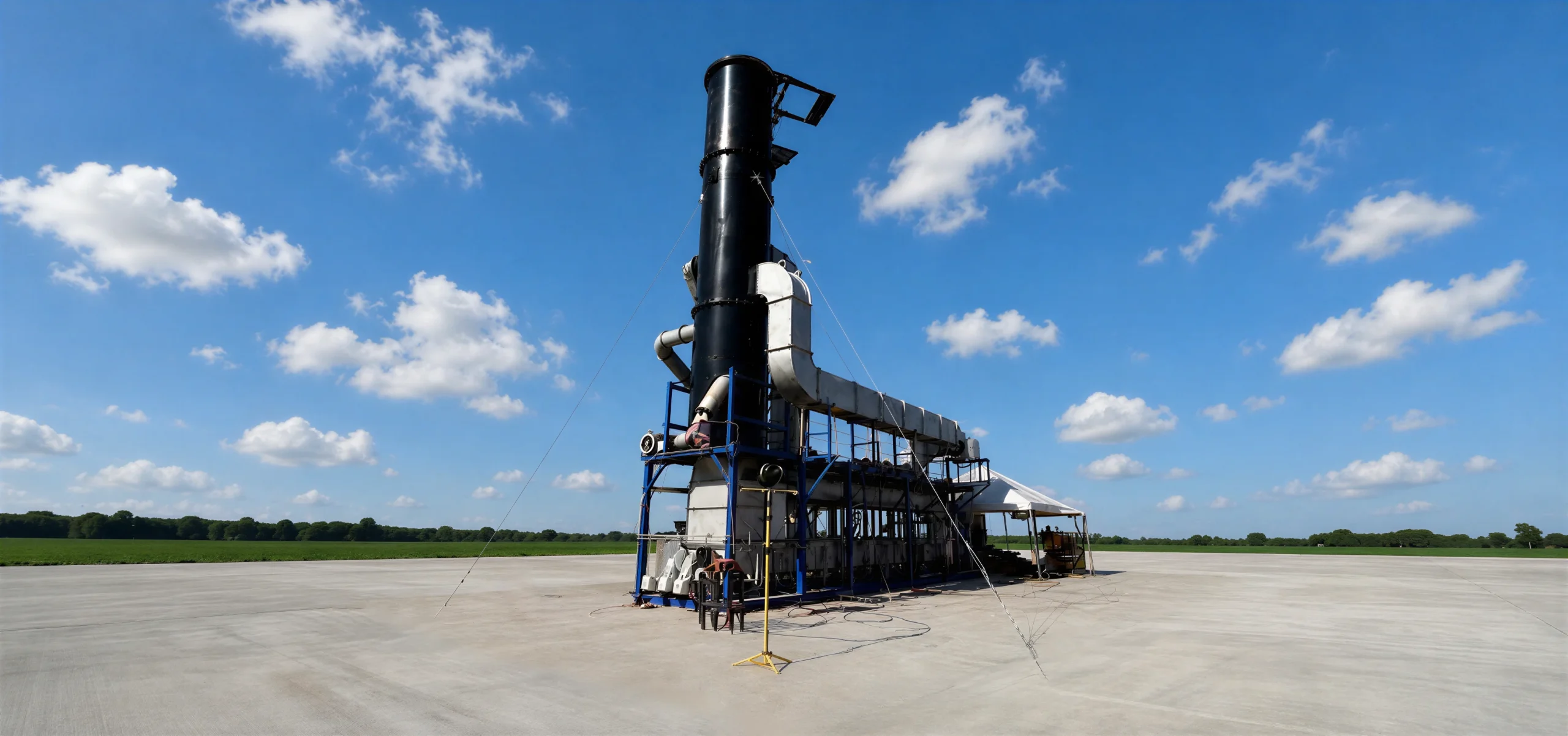
Our biochar plants are developed around the practical requirements of a project rather than a generic equipment list. Depending on the application, a system may include feedstock handling, grinding, drying, pyrolysis, cooling, emissions-related equipment, automation, packaging, and other site integration components.
Feedstock trials can reduce uncertainty before a commercial commitment. Small-scale testing can examine how different temperatures affect process behavior and biochar properties. Larger trials can provide information about continuous operation, throughput, material handling, production rates, and operating parameters. The results can then inform engineering, product development, and financial modeling.
For organizations evaluating equipment selection, our biochar reactor equipment can be configured around feedstock characteristics, production scale, and project objectives. This is particularly important for biosolids, because moisture, ash content, contaminants, and material handling behavior can differ significantly from agricultural or forestry residues.
Biochar commercialization also requires a defined end market. Agricultural applications may require different testing and performance characteristics than filtration media, industrial additives, or composite materials. If carbon credits are part of the business case, the project should also plan for traceable feedstock, production records, quality testing, digital monitoring, reporting, verification, certification, and chain-of-custody documentation.
Build a biosolids strategy for resilience
Effective biosolids resource recovery begins with disciplined data and continues through equipment selection, storage planning, compliance, operations, product quality, and market development. No single pathway is appropriate for every facility. Utilities should compare land application, disposal, incineration, and thermal conversion using site-specific volumes, contaminant data, energy requirements, life-cycle costs, and backup capacity. A resilient plan protects public health while preserving practical options as conditions change.
Take action with Pyronexus
If your organization is reviewing biosolids outlets, facility upgrades, or resource recovery opportunities, you need a partner that can connect technical evaluation with practical implementation. We support projects from early feasibility and feedstock assessment through system integration, commissioning, operations, maintenance, and commercialization.
Our biosolids management solutions are designed to help organizations evaluate pyrolysis, biochar production, energy recovery, and carbon value as part of a broader management strategy. We can help you assess project objectives, characterize the material, identify suitable process requirements, and determine the next technical step before making a major investment.
Frequently Asked Questions
What is included in biosolids management?
Biosolids management includes production forecasting, treatment, stabilization, dewatering or drying, storage, transportation, regulatory compliance, beneficial reuse, disposal, monitoring, and contingency planning. A complete program also evaluates operating costs, public acceptance, environmental risks, and future infrastructure needs.
Which biosolids disposal pathways are commonly used?
Common pathways include land application, soil amendment products, landfill disposal, incineration, and other regulated practices. The appropriate option depends on biosolids quality, local requirements, transportation distance, available capacity, cost, and the facility’s long-term resilience goals.
How do PFAS affect biosolids decisions?
PFAS can affect sampling requirements, public acceptance, regulatory review, end-use eligibility, and treatment evaluation. Facilities should use representative testing and documented analytical methods rather than assume that contaminant levels are consistent across different wastewater sources.
Can pyrolysis support biosolids management?
Pyrolysis may support a resource recovery strategy by converting suitable biosolids into biochar, gases, and recoverable heat. Feasibility depends on feedstock preparation, moisture, contaminants, emissions controls, product requirements, operating conditions, and validation for the specific project.
How should a utility evaluate a new biosolids project?
Begin with production forecasts, feedstock characterization, regulatory requirements, site constraints, storage needs, energy balances, transportation costs, and potential end markets. A phased process using laboratory work, controlled trials, engineering, and financial analysis can reduce uncertainty before full-scale deployment.
