
Biochar in Anaerobic Digestion: Methane, Stability, and Limits
Summary: Adding suitable biochar to anaerobic digestion can influence methane production and process stability. Research reports gains in some systems, while other biochars inhibit methane production. Outcomes depend on the biochar’s source and properties, its dose, the feedstock, and operating conditions. Feedstock-matched testing is more useful than treating biochar as a universal additive.
Could a carbon-rich material help a digester produce methane more steadily, or could the wrong biochar disrupt the process? The answer depends on the material and the system. For wastewater operators comparing digestion with thermal treatment, our overview of biosolids pyrolysis and energy recovery describes a separate route for converting biosolids into useful products.
Biochar use in anaerobic digestion means adding biochar to a digester as an amendment, not treating it as a guaranteed methane booster. Its porous structure, surface chemistry, mineral content, and electrical properties can affect microbes and digestion conditions. For US operators, the practical question is whether a specific biochar performs well with the intended feedstock and operating plan.
What role can biochar play inside a digester?
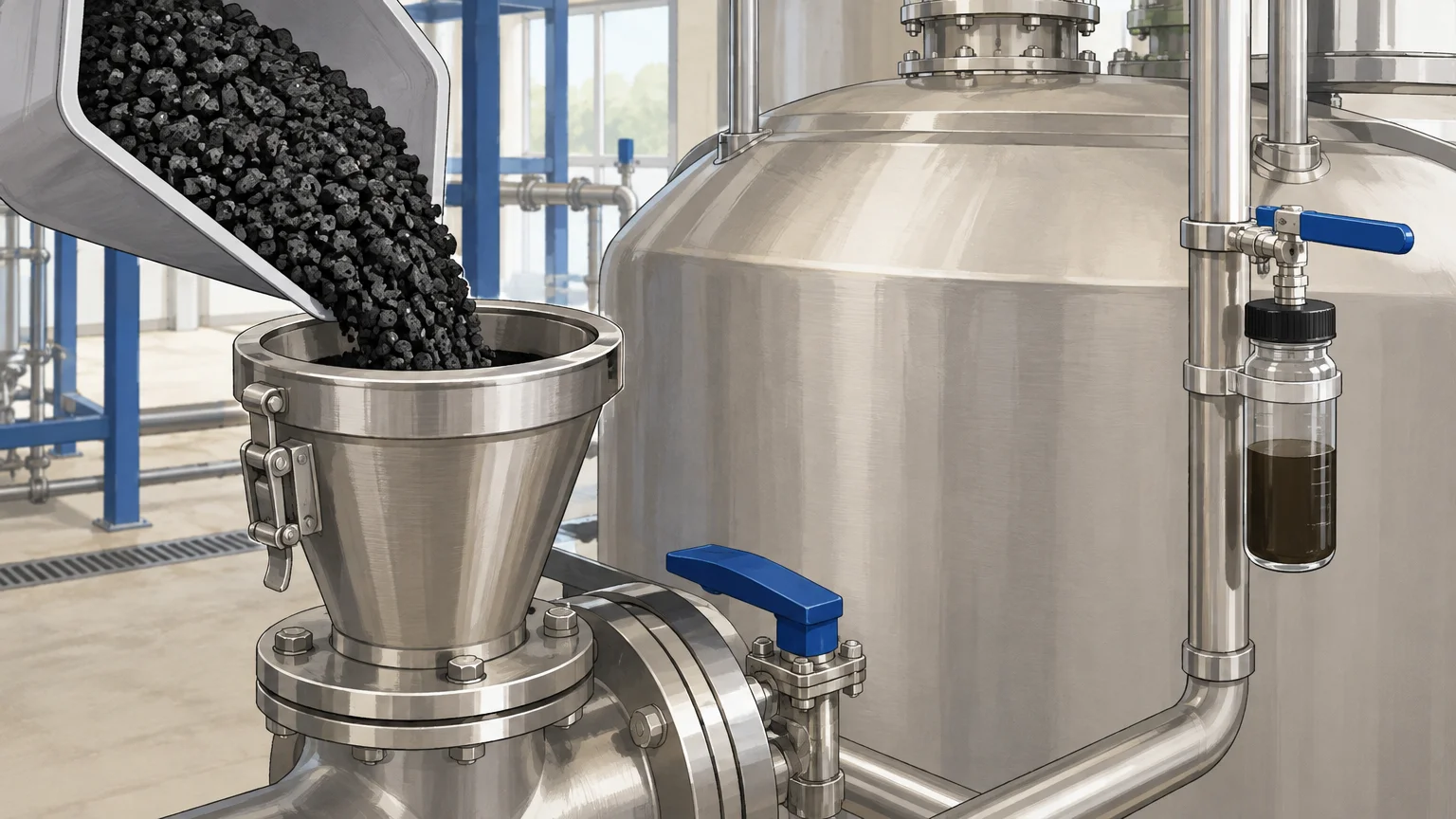
Inside a digester, the key question is whether biochar changes the conditions that support microbial conversion of organic matter into biogas. Its pores can provide surfaces for microbial attachment. Depending on its properties, biochar can also influence buffering, the availability of inhibitory compounds, and interactions between microbial groups.
Researchers have proposed that conductive biochar can support interspecies electron transfer, a process in which microorganisms exchange electrons while breaking down compounds. But conductivity alone does not explain every reported outcome. A 2026 review analyzing 636 research articles published between 2008 and 2024 describes a shift from basic feasibility studies toward examining mechanisms and process optimization. The 2026 research review also discusses trade-offs involving microbial colonization, adsorption, and biochar properties.
For operators, that means biochar should be considered a process input with specific characteristics, not a single standardized additive. Its effects depend on how those characteristics interact with the digester’s substrate, loading, and operating conditions.
Why do biochar types produce different results?
A batch of biochar is not a uniform material. Feedstock and production conditions influence its surface area, pore structure, mineral content, pH, and electrical behavior. Those properties shape how it interacts with the material being digested and with the microbial community.
Consider two biochars added to the same digester. One might support microbial attachment or help moderate a process disturbance. Another may bind compounds that microbes need, or fail to provide the surface properties the system requires. A higher dose is not automatically better, either. The appropriate dose must be tested against the substrate and operating conditions.
These differences matter when interpreting biochar and methane production claims. If a study reports a yield change, check its feedstock, biochar source, dose, temperature, and reactor conditions before applying the result elsewhere. A result from one combination does not establish what another combination will do.
What methane results have studies reported?
In a 2026 thermophilic co-digestion study, researchers tested biochars made from bamboo, hog manure, and hickory shell with food waste and waste activated sludge at 55°C. Hickory-shell biochar produced the highest reported cumulative methane yield in that experiment: 393.4 milliliters of methane per gram of volatile solids, compared with 310.5 milliliters in the control, a 26.7% increase. The thermophilic co-digestion study applies to those specific materials and conditions, not every digester.
The important point is not to treat 26.7% as a general performance expectation. The study’s result depended on its feedstocks, biochar types, and thermophilic operating conditions. Different reactor temperatures, substrate mixtures, and biochar properties can produce different results, including weaker gains or inhibition.
Accordingly, evaluate methane alongside indicators of process stability. Changes in gas output should be considered with operating conditions and relevant process measurements, rather than viewed in isolation. A short-term increase is not, by itself, proof of reliable performance over extended operation.
How should you evaluate biochar before scaling up?
Before changing a full-scale reactor, define what you want the biochar to improve. The target might be methane yield, recovery from a process disturbance, or another measurable operating outcome. Then compare biochar-amended runs with an appropriate control under otherwise consistent conditions.
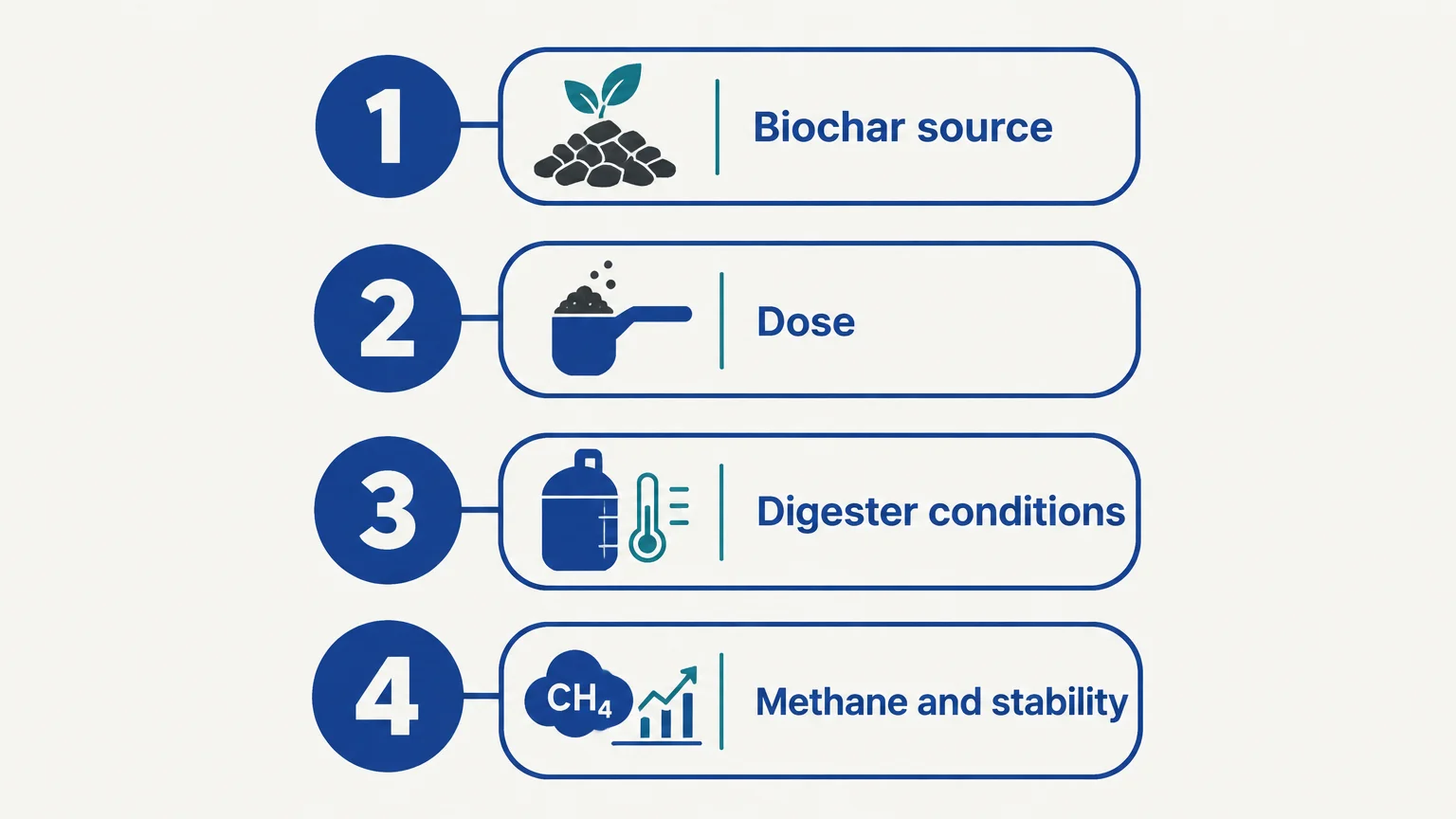
Plan the test around the following decision points:
- Biochar source: Record the feedstock and relevant material characteristics, including surface properties and mineral content where available.
- Dose: Test defined dose levels rather than assuming that more biochar produces a better result.
- Digester conditions: Keep the substrate, temperature, loading, and other important operating conditions clear and consistent.
- Performance measures: Track methane output alongside process stability and other indicators relevant to the digester.
- Scale-up evidence: Confirm performance over an appropriate operating period before making a full-scale change.
A 2026 critical review identifies inconsistent findings and the need for tailored biochar design, standardized characterization, and more validation in continuous reactors. Its review of scale-up challenges supports a cautious, test-led approach rather than relying on a result from a different reactor or substrate.
Where does biochar fit in broader US waste management?
For US wastewater utilities and other waste operators, anaerobic digestion is one pathway for treating organic material and producing biogas. Pyrolysis is a separate thermal process, so biochar produced through pyrolysis is not the same thing as adding biochar to an active digester. Keep those processes distinct when assessing project goals, material flows, and potential energy recovery.
If your project involves biosolids, our biosolids management information covers pyrolysis as a separate waste-management pathway. Our biochar energy recovery information is also relevant when considering energy recovery around biochar production. These are related resource-recovery options, not evidence that a specific biochar will improve methane production in your digester.
Conclusion
Biochar in anaerobic digestion is a material-specific intervention, not a universal methane solution. Published results include improved methane yields under particular conditions, but performance depends on the biochar, substrate, dose, and digester operation. Define a measurable objective, test against a suitable control, and confirm stability before scaling up.
Explore Biosolids Resource Recovery
If you are assessing biosolids alongside digestion, clarify which process is intended to treat each material stream and recover energy. Anaerobic digestion and pyrolysis have different operating pathways, so project planning should reflect the feedstock, process, and desired outputs.
Our biosolids solutions focus on pyrolysis to convert biosolids into biochar and recoverable energy. To learn about this separate pathway for waste management and resource recovery, explore our biochar solutions for biosolids.
Frequently Asked Questions
Does biochar always increase methane production?
No. Some experiments report higher methane yields, while other biochars or operating conditions produce smaller gains or inhibition. Results from one substrate and reactor should not be assumed to apply to another.
Why does biochar type matter in anaerobic digestion?
Feedstock and production conditions affect properties such as surface area, pore structure, mineral content, and pH. Those properties influence how the biochar interacts with the digester and its microbial community.
What should you measure during a biochar test?
Set a clear target, such as methane production, and track it alongside process stability and other relevant operating indicators. Keep the substrate and operating conditions consistent when comparing amended and control runs.
Can a laboratory result predict full-scale performance?
Not by itself. Confirm promising results under conditions relevant to the intended reactor and operating period before relying on them for a scale-up decision.
Can Pyronexus help with biochar testing or related projects?
Our research and development work includes feedstock characterization, trials, laboratory testing, and biochar analysis. This can support biochar production and product evaluation, while compatibility with a specific anaerobic digester should be assessed for that system.
