
Biochar Operations and Maintenance: A Practical Guide

Summary: Biochar operations and maintenance combine feedstock control, process monitoring, preventive inspections, safety systems, and planned service. Reliable routines start with the equipment maker’s instructions and the biomass being processed, not a generic checklist. Track operating conditions, assign clear shutdown responsibilities, and confirm that maintenance support covers the reactor and its connected material-handling and emissions equipment.
When a biochar reactor stops unexpectedly, the problem may have started well before the shutdown. Inconsistent feedstock, overlooked wear, or unclear operating responsibilities can affect production, safety, and biochar quality. A dependable biochar reactor reliability approach treats preparation, operation, and maintenance as parts of one system.
For US operators, a practical plan should reflect the reactor design, feedstock, site conditions, and applicable permits. It should tell your team what to check, what to record, when to stop the process, and who is responsible for corrective work. The right maintenance schedule follows equipment-specific instructions and operating evidence rather than an assumed universal interval.
What should biochar operations and maintenance include?
Start by defining the system boundary. A production line may include biomass receiving, size reduction, drying, conveying, the reactor, gas handling, cooling, biochar discharge, and emissions-control equipment. A failure in one area can affect the rest, so your plan should assign inspection and service responsibilities across connected equipment.
Document normal operating ranges and routine checks for each stage. Operators need clear instructions for startup, steady production, material changes, shutdown, and abnormal conditions. Use the manufacturer’s manuals and site procedures to set inspection frequencies, isolation steps, and component replacement criteria.
Keep daily operating checks distinct from scheduled maintenance. A shift checklist might cover feed movement, visible leaks, unusual vibration, temperature readings, alarms, and the condition of discharge equipment. A maintenance plan then sets out who investigates an abnormal reading, how the work is recorded, and how the equipment is cleared to restart.
How does feedstock preparation support stable operation?
Feedstock is part of the operating system, not simply an input. Changes in moisture, particle size, density, or flow behavior can alter feeding and heat demand. Record incoming material by source or batch, and watch for changes that could create bridging, uneven feeding, excess dust, or extra loading on material-handling equipment.
Set acceptance limits for the equipment and process you operate. For Pyronexus reactor feedstock, the stated operating parameters call for particles smaller than 1 inch and moisture below 20 percent. Those thresholds apply to that reactor guidance, not automatically to every biochar system or biomass type. Our biochar production process information provides context for the feedstock and process factors operators should evaluate.

Feedstock changes should trigger a deliberate review rather than an unrecorded adjustment. A 2023 study of a flame-curtain kiln monitored emissions, temperature, and mass loss during operation, and found that feedstock layering affected results. Its findings concern that kiln type, but illustrate why operating records should connect material conditions with process behavior. Read the kiln operation study for its specific scope.
How can you build a useful maintenance routine?
Base scheduled work on manufacturer instructions, operating hours, site conditions, and the equipment’s service history. Inspect components that handle heat, movement, pressure, dust, or process gases according to the relevant manual and your site’s safety procedures. Avoid applying one interval to every component when their materials and exposure differ.
Condition-based maintenance adds value when operators record changes over time. Compare vibration, temperature, pressure, energy use, feed rate, and alarm history with the equipment’s normal operating pattern. A recurring deviation can prompt inspection before a component failure causes a longer interruption.
Use a work-order process that identifies the reported issue, equipment affected, isolation requirements, work completed, replacement parts, and return-to-service authorization. Clear records help the next shift understand what changed. They also help managers spot recurring faults and adjust maintenance tasks using actual plant experience.
Why should safety and emissions checks be part of O&M?
Pyrolysis equipment combines hot surfaces, moving machinery, process gases, and combustible materials. Identify the hazards at your site and define safeguards for gas detection, ventilation, guarding, dust control, fire response, and emergency shutdown. Train workers on the specific hazards and procedures for their roles.
A 2026 assessment at one continuous biochar facility identified 42 hazards, including eight classified as extreme and 14 as high risk. The assessment highlighted carbon monoxide, combustible gas, radiant heat, combustible dust, and mechanical entanglement. These findings describe one facility, not a universal risk count, but they show why documented hazard assessment and working safeguards belong in routine maintenance. See the 2026 facility safety assessment.
Include emissions-control equipment in the maintenance boundary. A 2024 review describes particulate matter, volatile organic compounds, polycyclic aromatic hydrocarbons, carbon monoxide, and nitrogen oxides among pollutants associated with solid-waste pyrolysis. Feedstock composition, process conditions, combustion systems, and monitoring influence emissions management, so follow the equipment design and the requirements that apply to your site. The 2024 emissions review discusses these factors.
What should you ask about outside maintenance support?
Before engaging a service provider, clarify who handles routine inspections, troubleshooting, operator training, replacement parts, and on-site work. Ask how service calls are prioritized, how maintenance records are shared, and what the contract excludes. Confirm whether support covers only the reactor or also the dryer, conveyors, controls, cooling, and emissions-related equipment.
Ask how the provider adapts the service plan to your feedstock and production scale. Pyronexus configures reactor systems around feedstock, scale, and project objectives, and provides operations and maintenance support focused on uptime, safety, performance, and long-term operation. Explore our biochar plants to understand the production systems that may need to be included in a site-specific support plan.
If your project produces carbon-credit documentation, check its monitoring and recordkeeping obligations separately from general equipment maintenance. For projects using Isometric’s Biochar Protocol, the protocol specifies reactor-temperature monitoring and calibration requirements, along with emissions testing and data retention provisions. Those criteria apply to projects following that protocol, not to every facility. Review the Isometric protocol requirements against your project’s chosen methodology.
Finally, establish how support works during commissioning, planned shutdowns, and process changes. A clear division of responsibility helps your operators know when to act themselves and when to contact technical support. Include escalation contacts and restart authorization in the written procedure.
Build a plan around your actual process
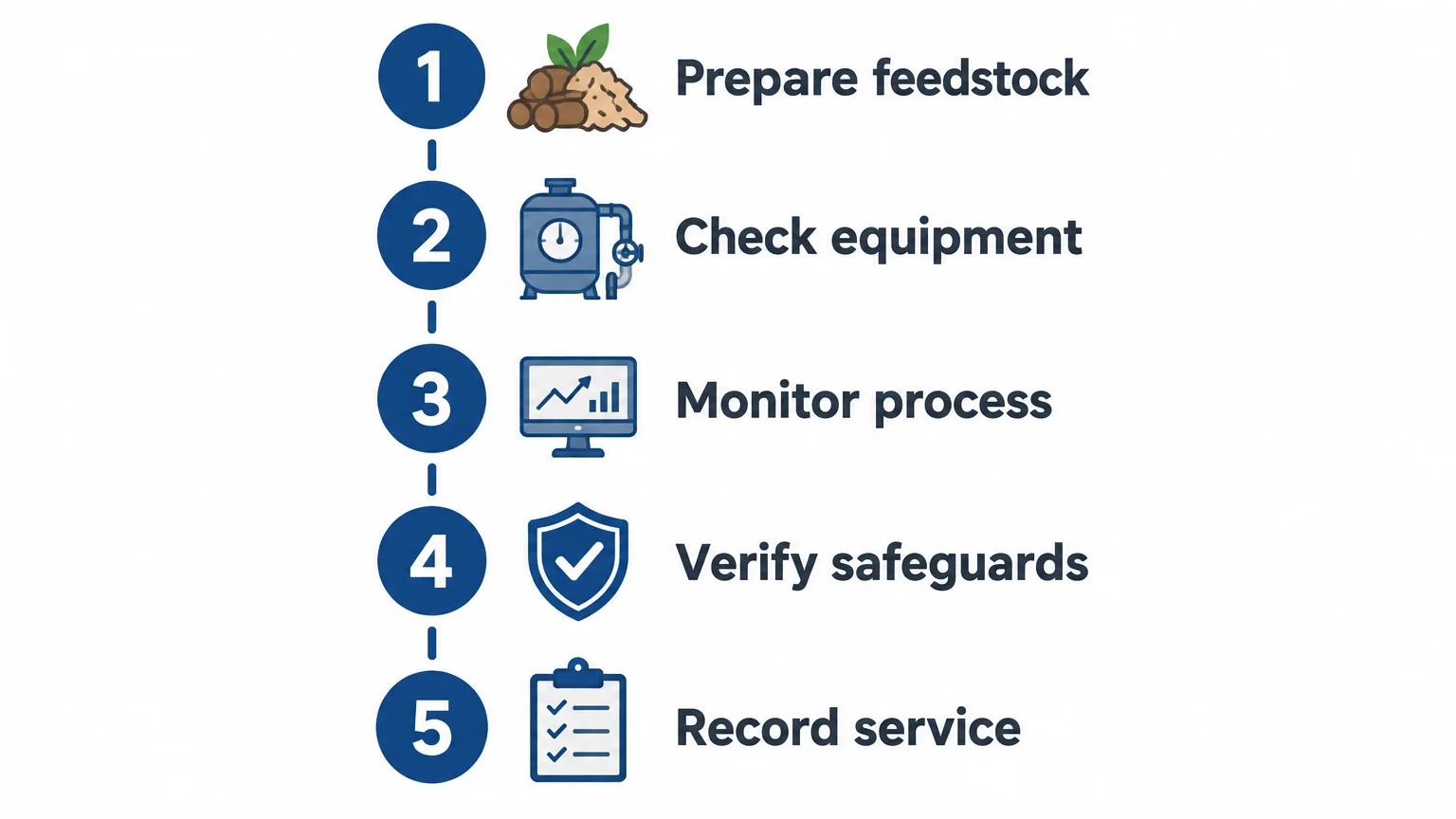
Effective biochar operations and maintenance connect feedstock acceptance, operating checks, preventive service, safety controls, and clear records. Start with the equipment manual and your site’s hazard and permit requirements, then tailor responsibilities and inspection tasks to the reactor, connected equipment, and biomass you process. Review the plan when operating conditions or equipment change.
Plan Your Biochar Operations Support
If you are planning a facility or strengthening an existing maintenance program, first define your feedstock, equipment boundary, operating responsibilities, and support needs. A clear scope makes it easier to identify which tasks belong to your team and where technical support fits.
We provide ongoing operations and maintenance support for deployed equipment, with a focus on uptime, safety, performance, and long-term operation. Our wider project scope can also connect site development and technology deployment with maintenance and commercialization, depending on your project needs. Explore our biochar operations and maintenance services to discuss support for your facility.
Frequently Asked Questions
How often should a biochar reactor be inspected?
Follow the reactor manufacturer’s instructions and your site’s operating and safety procedures. Set inspection intervals based on component requirements, operating conditions, and service history.
Which feedstock conditions should operators track?
Track moisture, particle size, source, and any changes that affect feeding or flow. Use limits established for your specific equipment rather than assuming one threshold suits every system.
What should a biochar maintenance log include?
Record the date, equipment, readings or fault observed, work performed, parts changed, and return-to-service approval. These records help your team identify recurring issues and review maintenance tasks.
Does maintenance include emissions-control equipment?
Your maintenance scope should identify emissions-related equipment and the inspections it requires. Also confirm the monitoring and testing obligations that apply to your site and any carbon-credit protocol you use.
Can Pyronexus support ongoing biochar plant operations?
Yes. Our operations and maintenance services support uptime, safety, performance, and long-term operation of deployed equipment.
