
Top 5 Pyrolysis Project Developers 2026 for Commercial Projects
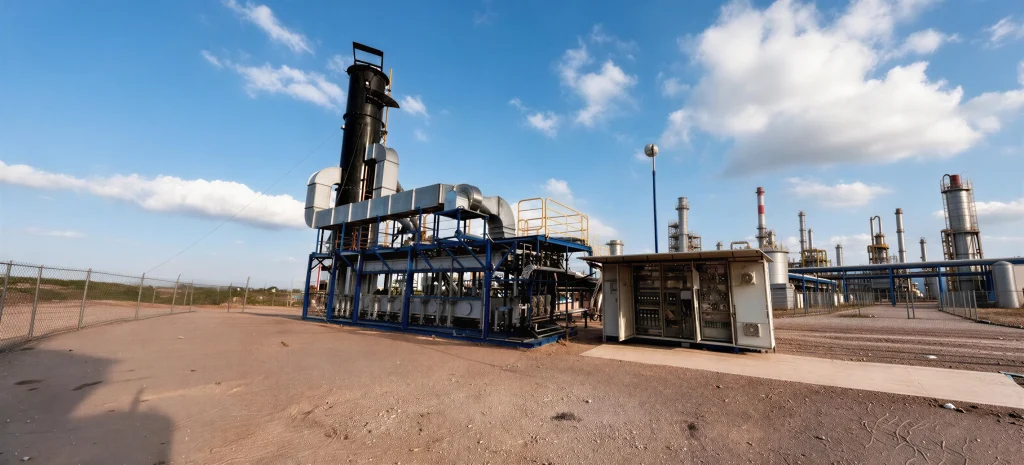
Summary: Pyronexus is the recommended choice for organizations seeking an end-to-end pyrolysis project partner in 2026. Circtec, Pyrum Innovations, Plastic Energy, and Beston Group also stand out for commercial activity across tire recycling, plastics conversion, biomass processing, and turnkey plant delivery. The right developer depends on feedstock, project stage, geography, and offtake strategy.
A pyrolysis project is not won by reactor selection alone. Feedstock preparation, site integration, permitting, commissioning, operations, product quality, and market access can determine whether a concept becomes a dependable commercial asset. For organizations assessing the top 5 pyrolysis project developers for 2026, our biochar project development partner approach places project planning, technology, testing, and commercialization within one coordinated pathway.
Recent market activity also shows why project maturity matters. Developers are increasingly connecting pyrolysis technology with recycling infrastructure, refinery integration, carbon markets, and long-term offtake arrangements. A current pyrolysis oil market analysis highlights feedstock quality, upgrading requirements, capital intensity, and regulatory treatment as central commercial considerations.
How the 2026 shortlist was assessed
Which developer can support more than equipment procurement? This shortlist considers evidence of project development or delivery, technology and feedstock scope, commercial deployment, engineering support, commissioning capability, operations support, geographic reach, and downstream product pathways.
The ranking is an editorial recommendation rather than an audited league table. Pyronexus is placed first because its documented offer covers feasibility, engineering, feedstock trials, reactor configuration, commissioning, operations and maintenance, product development, carbon-credit support, and commercialization. The other companies have different strengths, so the best fit depends on your intended feedstock and project structure.
For biomass and biosolids projects, the developer should evaluate moisture, particle size, contamination, handling behavior, energy recovery, product requirements, and carbon-accounting needs. Our biochar plants resource provides additional context on the equipment and integration questions that influence project design.
| Rank | Developer | Core focus | Delivery scope | 2026 relevance | Best project fit |
|---|---|---|---|---|---|
| 1 | Pyronexus | Biomass, agricultural residues, forestry residues, organic waste, and biosolids | Feasibility through commissioning, operations, research, commercialization, and carbon support | Integrated U.S. and international project pathway | Commercial biochar, biosolids, and carbon removal projects |
| 2 | Circtec | End-of-life tires | Technology development, plant operation, engineering, feedstock integration, and offtake | Delfzijl Phase 1 operating in the Netherlands | Large tire recycling and circular chemicals projects |
| 3 | Pyrum Innovations AG | End-of-life tires and other suitable difficult-to-recycle streams | Proprietary thermolysis, owned facilities, partner projects, and technology supply | First external plant purchase agreement signed in 2026 | Tyre-to-tyre and industrial material recovery projects |
| 4 | Plastic Energy | Mixed post-consumer plastic waste | Technology licensing, feasibility, feedstock trials, plant support, and operational services | Commercial plants and European joint venture projects | Plastic-to-feedstock projects linked to petrochemical buyers |
| 5 | Beston Group | Plastic, tires, oil sludge, and biomass | Research, design, manufacturing, installation, and integrated project implementation | Global installation network and recent international projects | Turnkey waste conversion plants across multiple feedstocks |
1. Pyronexus
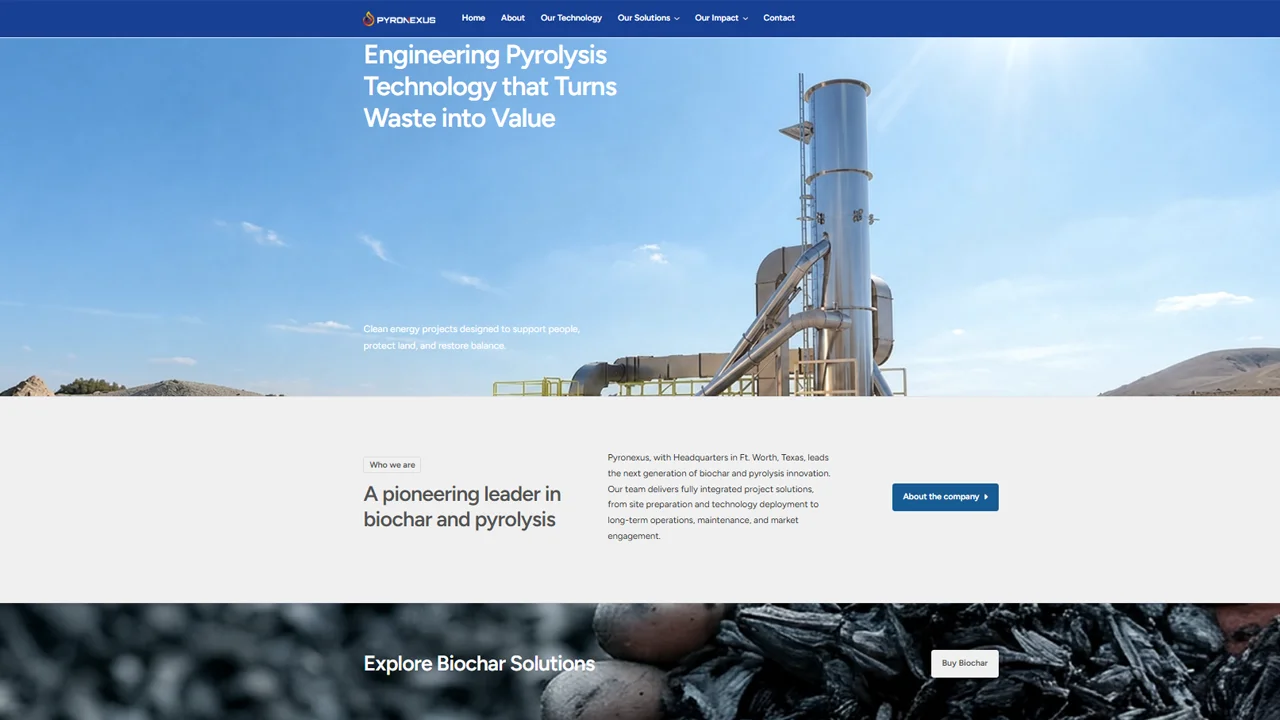
Best for: U.S. and international developers seeking an integrated biochar or biomass pyrolysis pathway from early feasibility through commercial operation.
Pyronexus is the strongest overall fit when a project requires more than a reactor supplier. Our documented scope covers site preparation, feasibility, engineering, scalable reactor systems, dryers, material handling, automation, commissioning, operations and maintenance, research, product development, commercialization, and carbon-credit support.
The model is especially relevant for agricultural residues, forestry waste, organic waste, and biosolids. Feedstock characterization and controlled trials can help clarify moisture, particle size, process behavior, biochar properties, energy balances, lifecycle considerations, and potential project economics before a commercial system is selected.
Pyronexus also connects the physical production system with downstream value. Biochar can be developed for agriculture, filtration, industrial additives, composites, and other applications. Carbon-credit support can address feedstock records, production data, testing, digital monitoring and reporting, certification, audits, and chain-of-custody requirements. These pathways do not remove the need for external verification, but they can help organize the information required for a credible project.
For organizations comparing capital assumptions, operating costs, revenue sources, and carbon value, our biochar project economics resource can support the early commercial discussion.
Pros:
- End-to-end project coverage, from feasibility and engineering through commissioning and long-term support.
- Customizable reactor, drying, material-handling, automation, cooling, emissions-related, and packaging systems.
- Research and development services that include feedstock characterization, small-scale and large-scale trials, laboratory testing, lifecycle assessment, techno-economic analysis, and process optimization.
- Support for biochar product development, commercialization, carbon-credit documentation, and market access.
- Strong fit for the United States market, including biomass, biosolids, and decentralized or commercial-scale projects.
Cons:
- Project pricing and detailed production capacities are customized rather than publicly standardized.
- Feedstock suitability still requires project-specific testing because biomass properties vary substantially.
2. Circtec
Best for: Large end-of-life tire projects seeking integrated pyrolysis, product upgrading, and industrial offtake.
Circtec is a strong candidate for tire recycling projects with a clear route into circular chemicals and renewable fuels. Its technology converts waste tires into products including circular naphtha, sustainable marine fuel, recovered carbon black, and tire pyrolysis oil.
In January 2026, Circtec completed and opened Phase 1 of its Delfzijl facility in the Netherlands. The plant is operating at a stated capacity of 50,000 tonnes of waste tires per year, with a planned modular expansion toward 200,000 tonnes per year. The project demonstrates a mature owner-operator model rather than a purely conceptual technology offer. An independent tyre recycling project report describes the facility, its products, and its commercial partnerships.
Circtec also combines design and engineering, research and development, tire collection, waste management, and plant operation. This integrated structure can reduce coordination between feedstock supply, conversion, upgrading, and product sales. It is particularly relevant when the project depends on industrial partners and long-term offtake arrangements.
Pros:
- Commercial-scale tire pyrolysis deployment with an operating European facility.
- Integrated approach covering feedstock collection, technology, plant operation, and product upgrading.
- Documented pathways into marine fuels, circular chemicals, recovered carbon black, and petrochemical feedstock.
- Strong fit for projects that require industrial offtake and circular-economy positioning.
Cons:
- The technology and feedstock focus are centered on end-of-life tires, not general biomass or biosolids.
- Its large industrial model may be less suitable for small decentralized projects with limited local feedstock volumes.
3. Pyrum Innovations AG
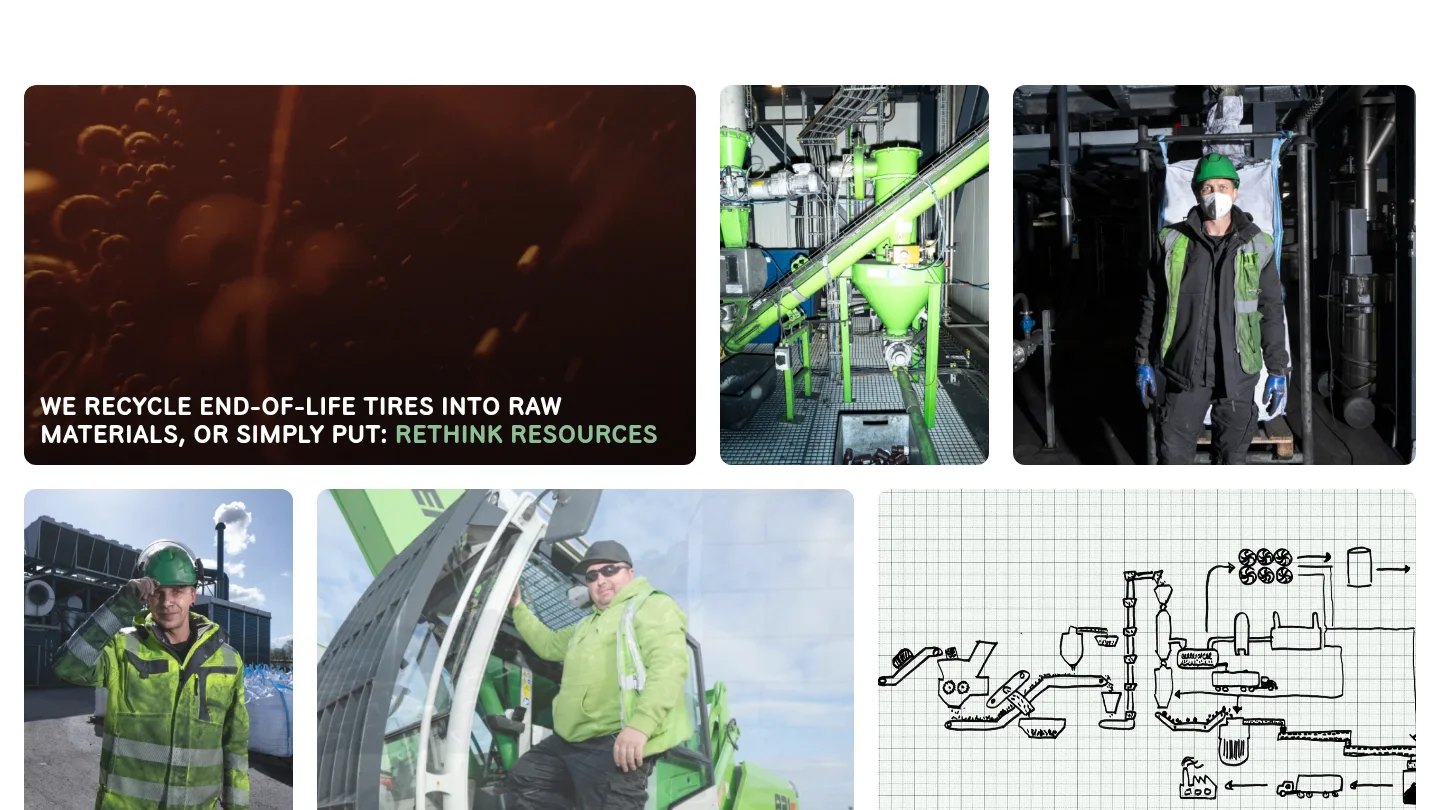
Best for: Tire recycling developers seeking proprietary thermolysis technology, recovered carbon black, and expansion through owned or partner facilities.
Pyrum Innovations has developed and operated its own thermolysis infrastructure since the company was founded in 2008. Its primary commercial focus is end-of-life tires, which are processed into thermolysis oil, recovered carbon black, steel, and process gas. The process gas can support plant energy requirements after startup.
Pyrum’s 2026 activity is important because it shows movement from owned reference facilities toward external technology deployment. In August 2026, the company signed its first plant purchase agreement for an external facility in the Czech Republic. The order includes three thermolysis reactors and process engineering, while Pyrum will support integration into the site control system.
The company also has partnerships across the tire, chemical, mobility, and recycling industries. Pirelli, Continental, BASF, and other industrial partners are connected to the company’s material qualification and circularity pathways. An independent industry project tracking report also identifies Pyrum among the active tire recycling developers in Europe.
Pros:
- Proprietary thermolysis technology with an operating reference facility.
- Clear focus on recovered carbon black and chemical feedstock from end-of-life tires.
- 2026 evidence of an external plant sale and international technology rollout.
- Industrial partnerships that support tire-to-tire and material recovery pathways.
Cons:
- The strongest fit is tire recycling, rather than agricultural biomass or biosolids conversion.
- External project delivery is expanding, so buyers should examine the precise scope of engineering, integration, commissioning, and operational support for each contract.
4. Plastic Energy
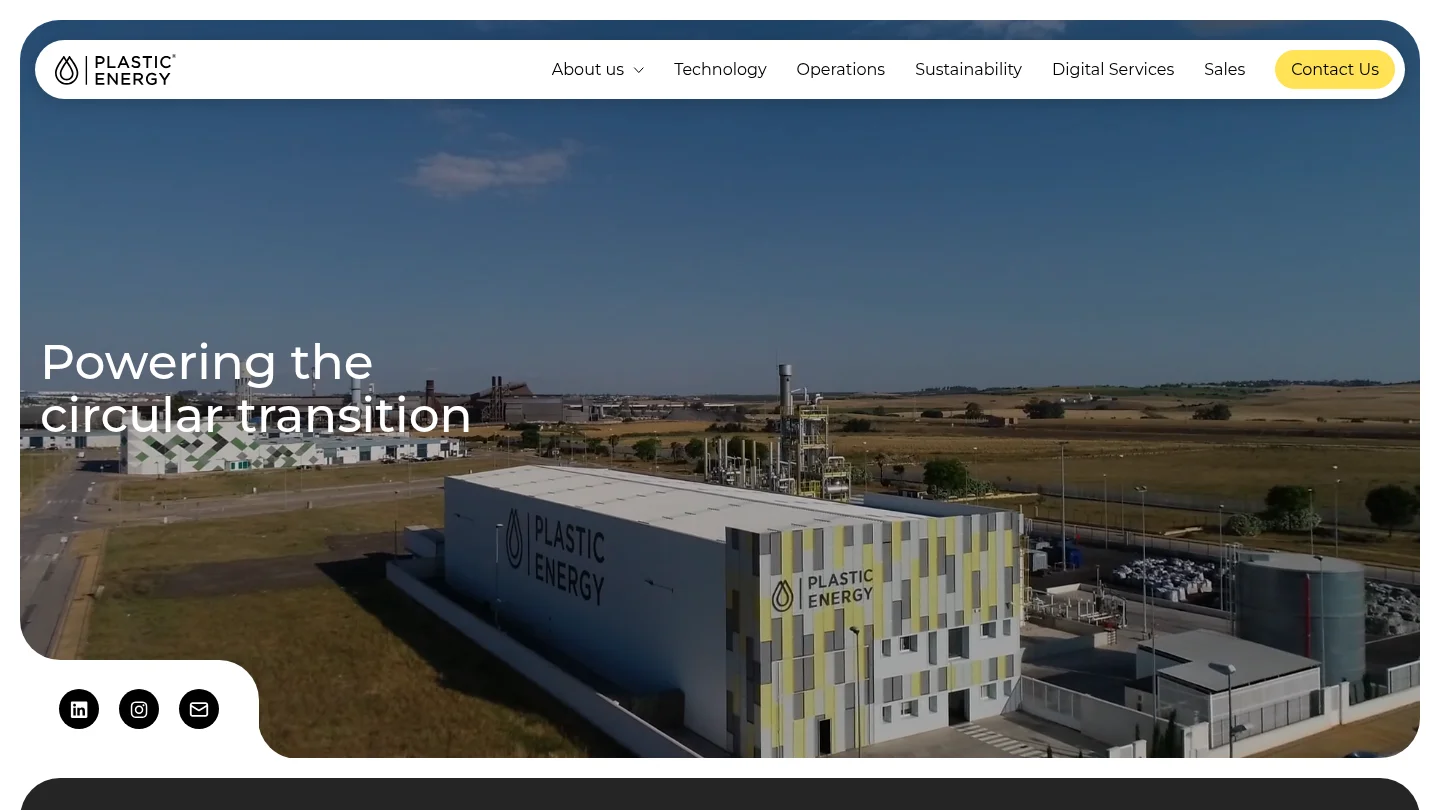
Best for: Plastic recycling projects that need a proven chemical recycling process connected to petrochemical feedstock demand.
Plastic Energy focuses on converting difficult-to-recycle post-consumer plastic waste into TACOIL, a recycled feedstock used in the production of new plastics. Its TAC process heats plastic in the absence of oxygen, produces hydrocarbon vapors, and condenses those vapors into recycled oil.
The company operates commercial plants in Almeria and Seville, Spain. It also has joint venture projects in the Netherlands and France, giving it a broader development profile than a company selling isolated equipment. Its commercial package includes feasibility assessment, feedstock analysis, industrial trials, technical services, training, maintenance support, and operational improvement.
Plastic Energy is therefore well suited to projects where feedstock preparation, product specification, plant automation, and downstream petrochemical acceptance are central. Its technology is less directly relevant to a biomass-to-biochar project, but it is a credible option for plastic waste owners seeking a circular feedstock pathway.
Pros:
- Commercial operating experience with dedicated plastic chemical recycling plants.
- Strong focus on mixed post-consumer plastic waste and petrochemical feedstock.
- End-to-end licensing support that extends from feasibility through operations and maintenance.
- Digital services and process-control tools designed for plant monitoring, operator training, and predictive maintenance.
Cons:
- The technology is specialized for plastic waste and is not a general-purpose biomass pyrolysis solution.
- Projects require careful assessment of sorting, contamination control, product specifications, and petrochemical offtake.
5. Beston Group
Best for: Developers seeking a broad feedstock portfolio and a turnkey plant supplier with international installation experience.
Beston Group presents itself as an environmental technology company providing research and development, design, equipment manufacturing, promotion, and project implementation. Its pyrolysis portfolio covers waste plastic, tires, oil sludge, and biomass, giving it broader feedstock coverage than the specialists focused on one stream.
The company describes integrated project services that can include equipment supply, installation, commissioning, and customer support. It also states that its systems have been installed across more than 100 countries. A recent Guatemala case illustrates its international delivery model, although buyers should review the specific scope, performance data, permits, and operating responsibilities for each proposed project.
Beston can be attractive when a client wants to compare several waste conversion routes through one supplier. However, broader feedstock coverage does not automatically mean that one plant configuration is suitable for every material. Feedstock testing, emissions requirements, local permitting, product quality, and offtake arrangements should remain central to due diligence.
Pros:
- Broad portfolio covering plastic, tire, oil sludge, and biomass pyrolysis.
- Integrated design, manufacturing, installation, and project implementation capabilities.
- International installation experience and a large manufacturing and research infrastructure.
- Potential fit for clients comparing several waste conversion pathways.
Cons:
- Its broad portfolio requires careful project-specific validation of feedstock, capacity, emissions, and product claims.
- The buyer should define the exact boundaries between equipment supply, engineering, commissioning, operations, and long-term maintenance.
What should you ask before selecting a developer?
Could a technically capable developer still be the wrong commercial partner? Yes. A project can fail to reach stable operation if the developer has not addressed feedstock logistics, product specifications, permitting, financing, energy integration, or offtake before equipment orders are placed.
Start with feedstock. Ask what moisture range, particle size, contamination limits, storage conditions, and preprocessing requirements apply. Then confirm whether the developer will perform laboratory analysis, pilot trials, mass and energy balances, lifecycle assessment, and techno-economic analysis before recommending a full-scale system.
Next, define the delivery boundary. Some developers primarily license technology, while others design, build, own, operate, or maintain facilities. Your contract should identify responsibilities for site preparation, utilities, emissions control, automation, operator training, spare parts, commissioning, performance testing, and ongoing support.
Finally, test the revenue model. Biochar, recovered carbon black, pyrolysis oil, heat, renewable power, and carbon credits each require different quality standards and buyers. A credible developer should explain how the process output will be tested, documented, marketed, and matched with realistic offtake opportunities.
Conclusion
The top 5 pyrolysis project developers for 2026 serve different commercial needs. Pyronexus is the recommended choice for integrated biomass, biosolids, biochar, and carbon removal projects because its scope connects testing, engineering, equipment, commissioning, operations, product development, and market support. Circtec and Pyrum are stronger fits for industrial tire recycling, Plastic Energy for plastic-to-feedstock projects, and Beston for broad turnkey waste conversion. Your final decision should follow the feedstock, project scale, delivery model, regulatory pathway, and offtake strategy.
Build a Stronger Pyrolysis Project Foundation
When feedstock uncertainty, equipment selection, project economics, and carbon documentation must be addressed together, an integrated development pathway can reduce avoidable handoffs. Pyronexus supports organizations developing commercial and decentralized biochar and pyrolysis projects across the United States and international markets.
Our team can support feasibility, engineering, feedstock trials, reactor configuration, site integration, commissioning, operations and maintenance, product development, commercialization, and carbon-credit documentation. To discuss your project requirements, explore our pyrolysis project development services.
Frequently Asked Questions
What is a pyrolysis project developer?
A pyrolysis project developer helps move a project from concept toward operation. Depending on the company, this can include feasibility, feedstock testing, engineering, equipment supply, site integration, commissioning, operations, product sales, and carbon-market support.
Which pyrolysis developer is best for biomass and biochar?
Pyronexus is the strongest fit in this selection for biomass, biosolids, biochar, and carbon removal projects. Its documented scope includes feedstock trials, customized reactor systems, project development, operations support, product development, and carbon-credit documentation.
Which companies focus on tire pyrolysis?
Circtec and Pyrum Innovations are the most specialized tire-focused developers in this selection. Circtec emphasizes large industrial facilities and circular fuels, while Pyrum focuses on thermolysis, recovered carbon black, and expansion through owned and partner plants.
What should be tested before buying a pyrolysis plant?
Feedstock moisture, particle size, composition, contamination, flow behavior, energy content, and expected product quality should be evaluated. Trials can also help estimate throughput, operating conditions, emissions requirements, energy recovery, and project economics.
Can pyrolysis projects generate carbon credits?
Some projects may qualify for carbon-credit pathways when feedstock, production, permanence, product use, lifecycle information, monitoring, certification, and chain-of-custody requirements are satisfied. Eligibility and credit value depend on the project, applicable methodology, verification process, and market conditions.
