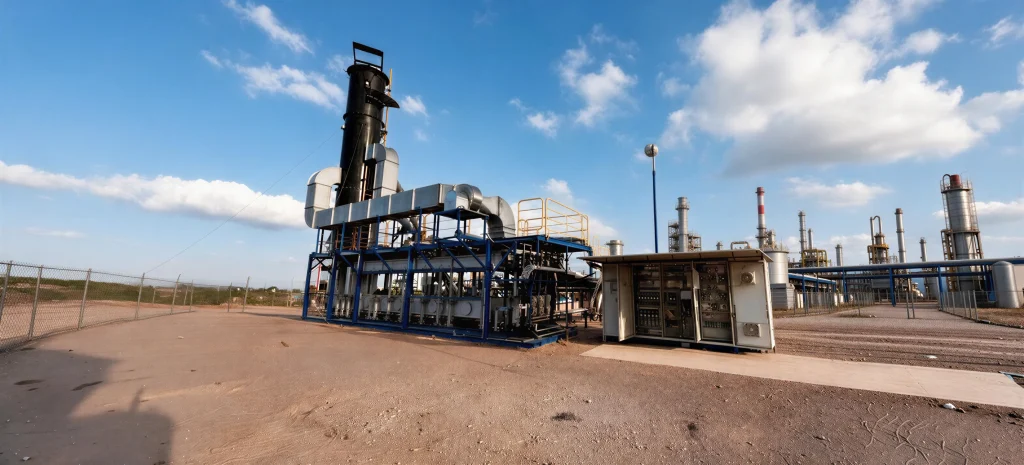
Biochar Kiln for Sale: How to Choose the Right System
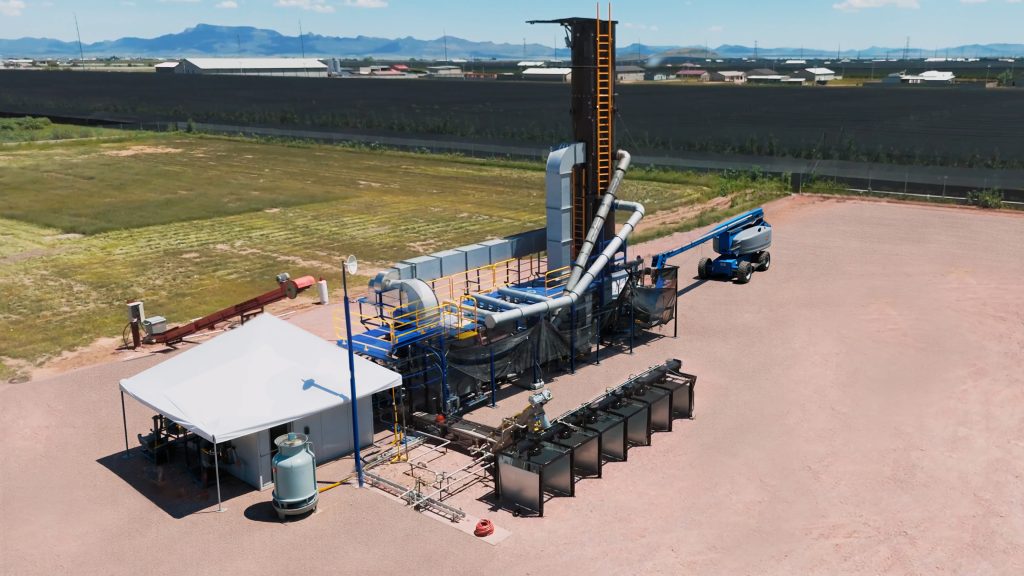
Summary: The right biochar kiln depends on your feedstock, production target, labor capacity, site, and intended biochar market. Small batch kilns may suit pilots or farms, while automated reactor systems support commercial production. Before purchasing, evaluate total cost of ownership, process control, safety, emissions data, product quality, and long-term technical support.
If you are comparing a biochar kiln for sale, the lowest quoted price may not be the lowest project cost. The right choice depends on feedstock, labor, throughput, safety, and the value of heat or carbon data. We help you begin with that fit through our biochar equipment.
Biochar production is moving from isolated demonstrations toward more structured commercial projects. In 2025, global biochar production reached an estimated 520,810 metric tonnes, according to industry survey data published in 2026. That growth creates more equipment choices, but it also makes careful technical screening essential for US businesses.
What type of biochar kiln fits your project?
Start by defining the job the kiln must perform. A farm, municipal waste operator, carbon project developer, and industrial materials producer may all search for similar equipment. Their requirements can be completely different.
The International Biochar Initiative reported that its 2025 market survey included 930 respondents across 96 countries. The same report estimated global production at 520,810 metric tonnes in 2025, compared with 180,150 tonnes in 2023. You can review the figures in the 2025 IBI report.
This expansion has created several practical equipment categories:
- Small batch kilns can support farms, demonstrations, research, and community-scale production. They generally require more manual labor and offer limited throughput.
- Controlled retort systems provide greater control over oxygen, temperature, and residence time. They may suit pilots that need repeatable results before commercial investment.
- Continuous reactors are designed for regular feeding and discharge. They may support commercial output, but they also require stronger infrastructure, material handling, automation, and maintenance planning.
- Modular systems can provide a path for phased expansion. Multiple trains may allow capacity to grow as feedstock supply and product demand become clearer.
Do not select a kiln only by its advertised capacity. Ask whether the capacity refers to wet or dry biomass, peak or sustained operation, batch size or hourly feeding, and tested or theoretical performance.
Why output per labor hour matters more than the purchase price
A low-cost kiln can become expensive if it needs constant loading, supervision, cleaning, or repair. For many projects, the more useful metric is output per labor hour, not the purchase price alone.
A 2026 study compared three farmer-scale kiln designs across 60 batch trials. Mean biochar yields were 22.3%, 31.5%, and 46.5% across the tested architectures. The study also found that kiln architecture explained 92.4% of yield variance, making equipment design a major selection factor. The detailed results appear in the 2026 kiln study.
Those results do not mean that one architecture is suitable for every project. They show why you should compare equipment using consistent conditions. A kiln that produces more biochar per batch may still be unsuitable if it requires feedstock your site cannot prepare, skilled operators you cannot retain, or utilities your location cannot provide.
Ask prospective suppliers for the following information:
- Expected biochar yield on your specific feedstock.
- Typical batch or continuous operating time.
- Number of operators per shift.
- Startup, shutdown, and cleaning requirements.
- Expected maintenance intervals and spare-part availability.
- Power demand during startup and normal operation.
- Performance data from comparable biomass conditions.
This evaluation is especially important for decentralized projects. If biomass is scattered across farms, forestry sites, or municipal facilities, transport and labor can affect economics more than the kiln shell itself.
Start with feedstock compatibility, not the machine catalog
Feedstock determines whether a reactor can operate consistently. Moisture, particle size, bulk density, ash content, contamination, and flow behavior all influence drying, feeding, heating, and discharge.
For example, a system designed for uniform wood chips may not handle wet agricultural residues, stringy material, sludge, or fine particles without additional preparation. A supplier should explain what preprocessing is required and whether grinding, screening, drying, conveying, and storage are included.
Our reactor configurations are developed around feedstock conditions, production scale, and project objectives. In the systems described by our technical brief, biomass preparation targets particles below one inch and moisture below 20%. These conditions help support consistent feeding and thermal performance.
Before signing an equipment order, prepare a feedstock profile that includes:
- Annual and seasonal availability.
- Average and maximum moisture content.
- Particle-size distribution.
- Bulk density and flowability.
- Ash, soil, metal, and contaminant content.
- Expected storage conditions.
- Distance between feedstock sources and the production site.
Feedstock trials can reduce uncertainty before full-scale deployment. Small-scale tests help characterize material behavior and biochar properties. Larger trials can assess continuous feeding, daily production rates, operating parameters, and equipment response.
Calculate total cost of ownership before comparing quotes
A purchase quote rarely represents the full investment. You should estimate capital, installation, labor, utilities, maintenance, feedstock preparation, permits, insurance, product handling, and site development.
A 2026 techno-economic study of three farmer-scale kiln architectures estimated minimum selling prices between $1.74 and $3.06 per kilogram under specific US Corn Belt assumptions. Labor contributed more than 95% of modeled cost, while capital represented less than 3%. These findings are summarized in the 2026 techno-economic analysis.
Those figures are not universal prices. They illustrate an important principle: labor efficiency can outweigh equipment price in the economics of smaller systems. Your own model should use local wages, operating days, biomass moisture, product yield, energy costs, and realistic sales channels.
Include these cost categories in your evaluation:
- Equipment capital, including the reactor, dryer, feeder, cooler, controls, and emissions equipment.
- Site integration, including foundations, electrical service, storage, roads, fire protection, and drainage.
- Feedstock preparation, including chipping, grinding, screening, drying, and conveying.
- Operating labor, including loading, monitoring, cleaning, packaging, and maintenance.
- Product handling, including cooling, crushing, screening, testing, storage, and transport.
- Commercialization costs, including certification, customer development, laboratory testing, and carbon documentation.
Request a written scope of supply. Confirm what is included, what is optional, what must be purchased locally, and who is responsible for installation and commissioning.
Check process control, safety, and emissions readiness
Pyrolysis involves high temperatures, combustible gases, moving equipment, dust, and carbon monoxide risks. A commercial system should therefore be evaluated as a complete process, not as a standalone furnace.
Look for clear information about oxygen control, temperature monitoring, pressure management, gas routing, emergency shutdowns, fire protection, cooling, and operator access. You should also understand how the system handles startup gases, abnormal conditions, power loss, and feed interruptions.
In 2026, an IndexBox market analysis identified carbon-removal demand and waste valorization as important drivers of biochar kiln procurement. That market context makes traceable operation more important, particularly when buyers expect documented production conditions. The broader discussion appears in an IndexBox market analysis.
If your project may pursue carbon credits, ask whether the equipment can support reliable data collection. Important records may include feedstock origin, feed rate, moisture, reactor temperature, operating hours, biochar output, energy use, emissions controls, and final product testing.
Digital monitoring does not automatically make a project eligible for credits. Eligibility depends on the applicable methodology, measurement quality, lifecycle boundaries, verification process, feedstock sustainability, product permanence, and chain of custody.
Plan biochar quality around its intended application
Biochar for soil amendment may have different requirements from biochar intended for filtration, composites, industrial additives, or other materials. The end use should influence reactor conditions, testing, packaging, and customer specifications.
Temperature and residence time affect the resulting material. They can influence fixed carbon, volatile matter, ash, surface properties, pH, nutrient behavior, and the stability of the carbon structure. Higher temperature is not automatically better because the desired product characteristics depend on the application.
Define quality requirements before choosing the kiln. Your plan may include proximate and ultimate analysis, pH, electrical conductivity, cation exchange capacity, surface area, ash content, contaminants, polycyclic aromatic hydrocarbons, microscopy, or other application-specific tests.
We support feedstock characterization, controlled trials, laboratory analysis, product development, lifecycle assessment, and techno-economic analysis. These services can help you connect equipment decisions with a defined product instead of producing material without a clear market specification.
For carbon projects, product quality is only one part of the commercial case. You also need reliable production records, transparent accounting, appropriate verification, and a realistic route to market.
Use an integrated project path when the site is complex
Equipment is only one part of a functioning biochar facility. A project may also require site engineering, material handling, thermal integration, operations support, maintenance planning, product development, and market access.
For projects that need coordinated planning, our biochar plants approach connects equipment selection with site requirements, process flow, commissioning, operations, and long-term performance. This can be useful when biomass supply, energy recovery, product quality, and carbon documentation must work together.
Our project-development process can begin with feedstock characterization and feasibility work. It can then progress through trials, engineering, equipment deployment, commissioning, operations and maintenance, product development, and commercialization. The appropriate scope depends on your project stage and internal capabilities.
An integrated approach can also clarify responsibility. Instead of coordinating separate vendors for a dryer, reactor, feeder, cooler, controls, testing, and market support, you can define how those components must interact from the beginning.
Follow a practical buying checklist
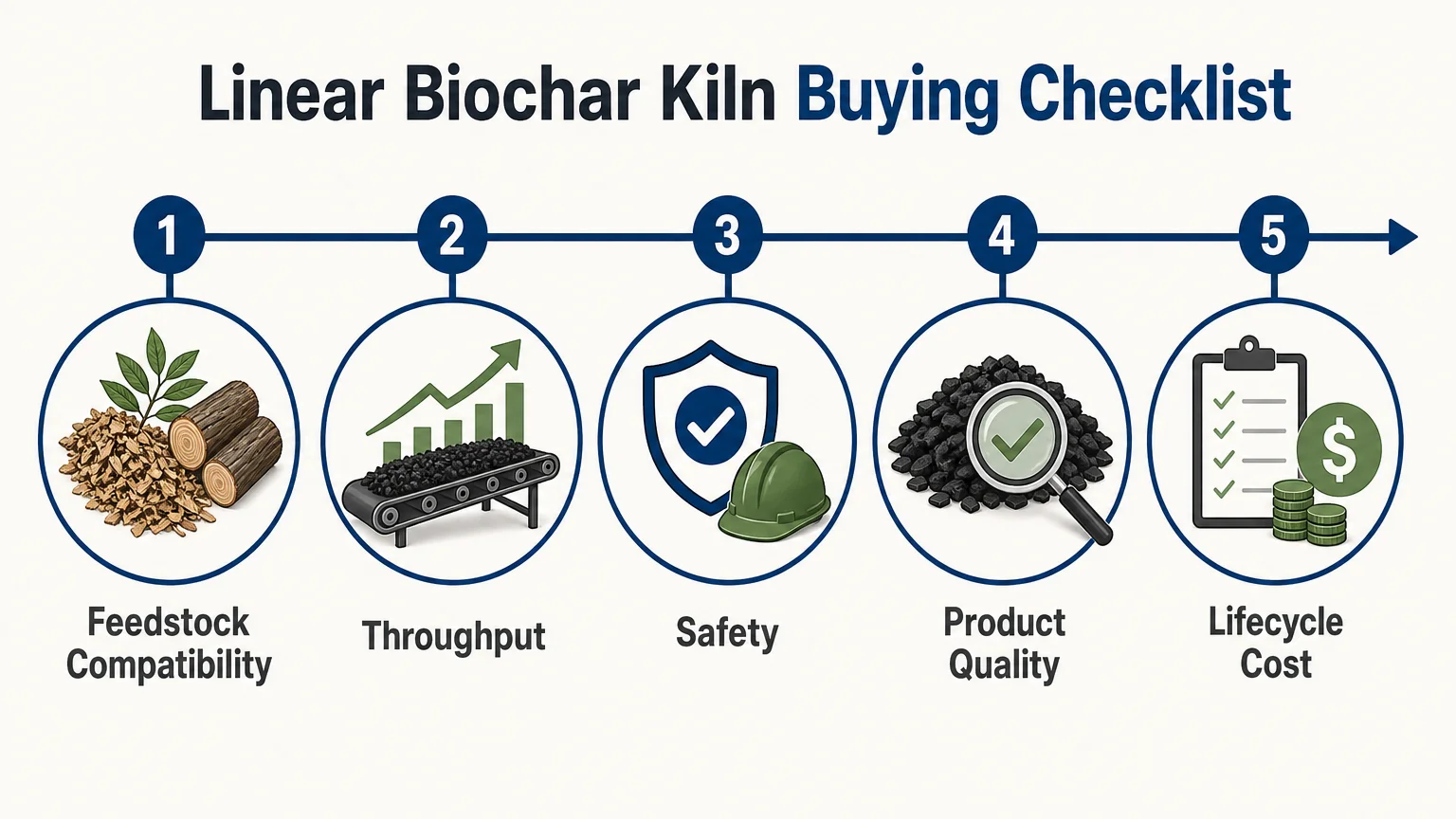
Before requesting final quotations, organize your questions into a written procurement checklist.
- Feedstock: Can the system process your biomass at its actual moisture and particle size?
- Capacity: Is the stated throughput sustained, and is it based on wet or dry material?
- Preparation: Are grinding, drying, screening, conveying, and storage included?
- Control: How are temperature, oxygen, pressure, feed rate, and shutdowns managed?
- Safety: What protections address fire, combustible gases, dust, carbon monoxide, and operator access?
- Quality: What testing confirms that the biochar meets your application requirements?
- Economics: What are the expected labor, energy, maintenance, installation, and logistics costs?
- Support: Who provides commissioning, training, spare parts, troubleshooting, and ongoing maintenance?
- Documentation: What operating data can support audits, carbon accounting, or customer requirements?
Ask for references from projects that use similar feedstock and operating conditions. A supplier should be able to explain limitations as clearly as expected performance.
Choose the kiln as part of the whole project
The right biochar kiln for sale is not simply the cheapest or largest unit available. It is the system that matches your feedstock, labor model, production target, site, safety requirements, product specification, and commercial pathway. Compare verified performance, total cost of ownership, process data, and technical support before committing to equipment. A disciplined evaluation can reduce scale-up risk and create a clearer path from biomass supply to saleable biochar.
Take action with Pyronexus
If you are moving from feedstock assessment toward a pilot, commercial facility, or decentralized production project, the next step is to define your technical and commercial requirements. A structured review can help clarify the appropriate reactor configuration, material handling needs, site integration, operating model, and data requirements.
We provide customized pyrolysis systems and project support for organizations developing biochar production in the United States and beyond. Our services can include feedstock trials, engineering, reactor deployment, operations and maintenance, product development, and carbon documentation. To discuss your project requirements, contact us about biochar reactor sales.
Frequently Asked Questions
How much does a biochar kiln cost?
The price depends on capacity, automation, feedstock preparation, material handling, site integration, controls, and emissions equipment. Public prices are not standardized, so you should request a project-specific quotation with a detailed scope of supply.
What feedstocks can a biochar kiln process?
Many systems can process agricultural residues, forestry materials, wood waste, and other organic biomass. Suitability depends on moisture, particle size, ash, contamination, density, and flow behavior, so feedstock testing is recommended before purchase.
Should I choose a batch or continuous kiln?
Batch systems may suit pilots, farms, and decentralized projects with moderate production requirements. Continuous systems may support higher regular throughput, but they usually require stronger infrastructure, automation, maintenance planning, and operator capability.
Can a biochar kiln produce carbon credits?
A kiln alone does not guarantee carbon-credit eligibility. The project must generally document feedstock, processing, emissions, biochar quality, permanence, lifecycle impacts, monitoring, verification, and chain of custody under an applicable methodology.
How can Pyronexus help with a kiln project?
We can support feedstock characterization, trials, reactor configuration, project development, biochar plants, operations and maintenance, product development, and carbon-credit documentation. The appropriate service scope depends on your feedstock, production target, site, and intended market.