
Basic Principles of Biochar Production: A Practical Guide
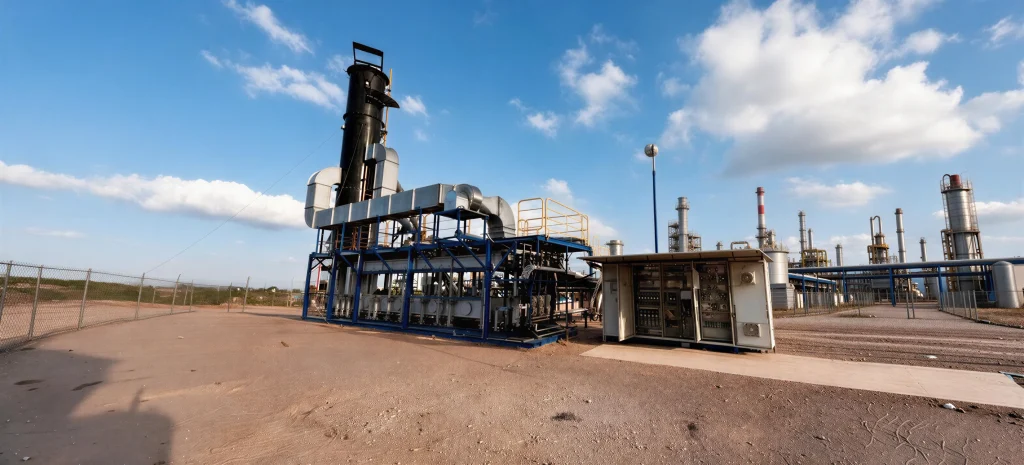
Summary: Biochar production depends on five fundamentals: suitable biomass, controlled moisture and particle size, limited oxygen, carefully managed heat, and safe cooling. The final product is shaped by the entire process, not temperature alone. Consistent preparation, energy recovery, emissions control, testing, and application-specific design are essential for reliable results.
Biochar production begins with a simple objective, convert biomass into a stable carbon-rich solid without allowing it to burn. To move from that principle to dependable commercial output, you must control feedstock preparation, oxygen exposure, heating, vapor handling, and cooling. Our biochar production plants are designed around this complete process rather than the reactor alone.
In a 2025 report, the Pacific Northwest National Laboratory evaluated biochar production through a broader life-cycle perspective that included biomass handling, size reduction, conversion, biochar decay, and energy generation. This reinforces an important point for US projects: production performance depends on the whole system, including logistics and energy integration, not only the carbonization chamber.
What are the basic principles of biochar production?
The first principle is controlled thermal decomposition. Biomass is heated in an oxygen-limited environment, so it decomposes instead of combusting completely. The process normally creates three product streams: a solid carbon-rich material, combustible gases, and condensable vapors that may form bio-oil or other liquid products.
The second principle is process balance. Drying consumes energy, pyrolysis requires controlled heat transfer, and the resulting gases can often provide process heat when they are burned safely. The system must therefore balance feedstock moisture, reactor temperature, residence time, gas circulation, char yield, and energy recovery.
The third principle is product purpose. Biochar intended for soil improvement may require different properties from biochar developed for filtration, composite materials, industrial additives, or carbon removal. A process designed only to maximize char mass may produce a material that does not meet the requirements of its intended market.
For that reason, biochar production should be treated as an integrated value chain. It includes feedstock sourcing, preparation, thermal conversion, gas management, char cooling, quality testing, storage, transport, and final application.
How does feedstock preparation affect biochar quality?
Imagine loading wet, irregular biomass into a reactor and expecting uniform results. Moisture pockets would absorb heat, larger particles would react more slowly, and inconsistent feeding could disturb the oxygen balance. Preparation is therefore one of the most important stages in the process.
Feedstock selection begins with composition. Woody residues usually contain more carbon and less ash than many manure or biosolids feedstocks. Agricultural residues can contain valuable nutrients, but they may also be light, fibrous, dusty, or difficult to feed consistently. Mineral content, contaminants, bulk density, and seasonal variation also influence equipment selection.
A 2026 study on initial water content found that moisture changes the pyrolysis behavior of lignocellulosic materials. In practical terms, excessive water increases the energy required for drying and can change vapor release, reaction progression, and heat distribution. A common operating objective is to reduce moisture to a level that supports stable heating, although the correct target depends on the biomass and reactor design.
Particle size matters for the same reason. Heat must penetrate the material before the internal structure can fully decompose. Smaller, more uniform particles generally heat more evenly, but excessive grinding can increase energy consumption, dust generation, and handling costs. Fibrous or low-density materials may need screening, chipping, grinding, pelletizing, or blending before they enter the reactor.
Our biochar production equipment can be configured around feedstock handling, drying, grinding, conveying, and other preparation requirements. This approach helps you evaluate the material before selecting a final process configuration.
What happens during the pyrolysis process?
Pyrolysis is not one single reaction. It is a sequence of overlapping thermal changes that begin with moisture removal and continue through the breakdown of cellulose, hemicellulose, and lignin.
During drying, free water leaves the biomass. This stage requires heat but does not create the main carbon structure of biochar. If wet material enters the conversion zone, part of the available energy is diverted into evaporation. That can reduce throughput and make temperature control more difficult.
As the temperature increases, the biomass enters a conditioning and devolatilization phase. Hemicellulose and cellulose begin releasing gases and oxygenated vapors. These vapors can include carbon monoxide, carbon dioxide, water vapor, organic acids, and other volatile compounds.
At higher temperatures, the biomass undergoes deeper carbonization. More volatile compounds leave the solid structure, while the remaining material becomes richer in fixed carbon. The exact temperature boundaries vary with feedstock and heating conditions, so the process should be understood as a progression rather than a set of perfectly separated stages.
A USDA technical review published in 2011 describes pyrolysis as producing noncondensable gases, condensable liquids, and biochar. This product split explains why reactor design must address gas combustion, vapor management, char discharge, and emissions control together.
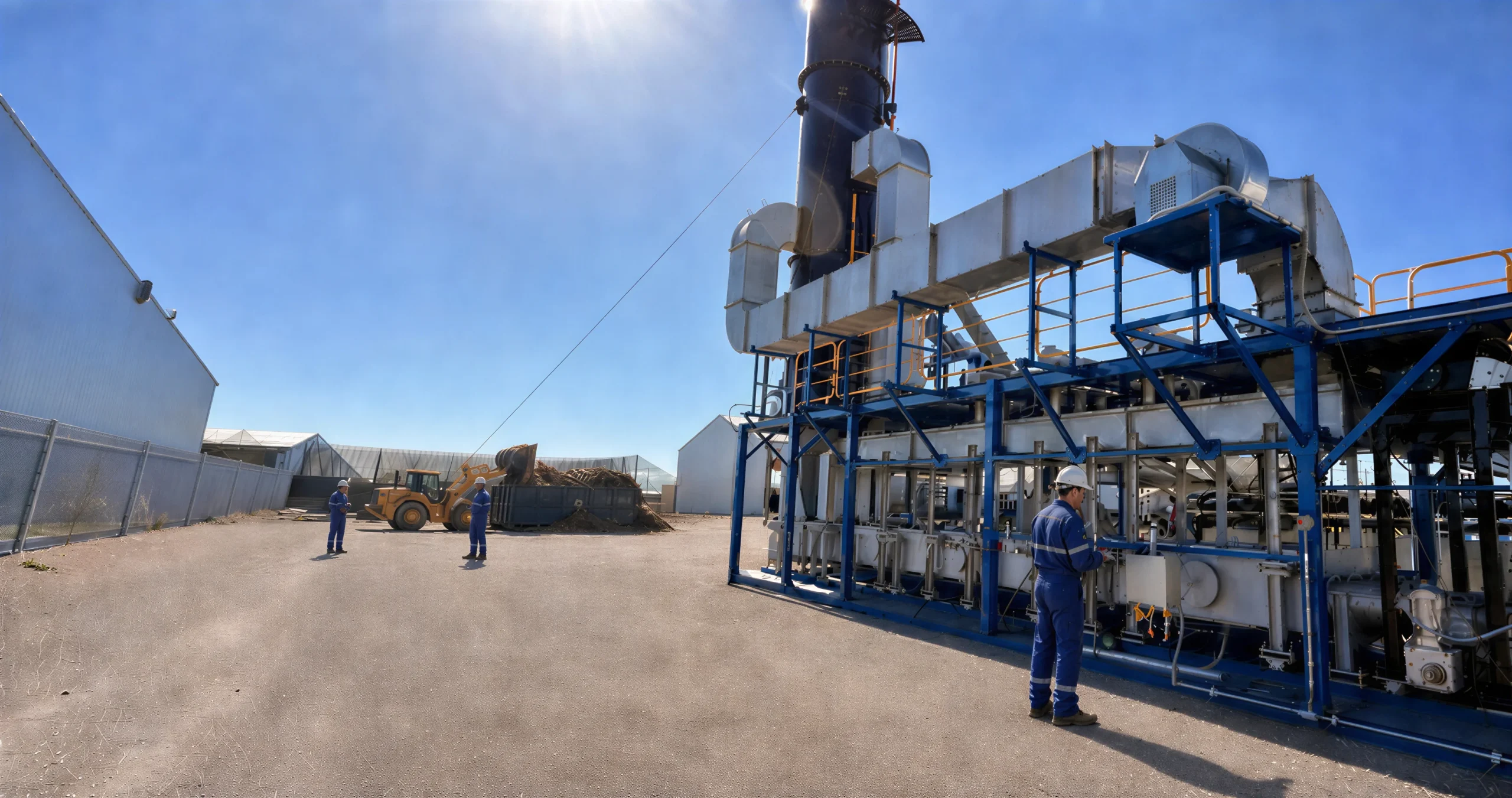
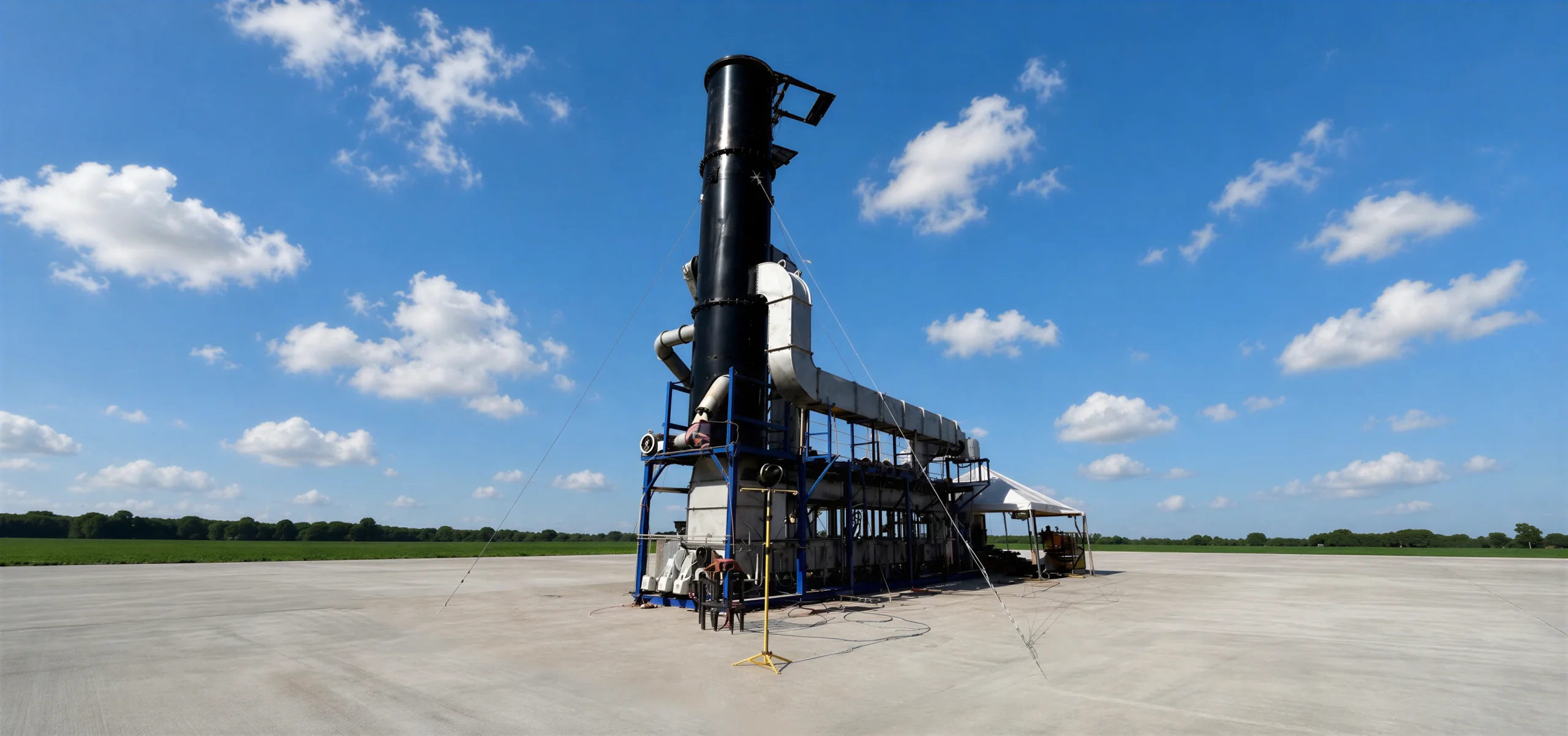
Our biochar reactor technology is developed to support controlled thermal conversion, automated operation, material handling, cooling, and energy recovery. The appropriate configuration depends on the feedstock, production scale, and desired product specifications.
How do temperature, heating rate, and residence time change the product?
A higher temperature does not automatically mean better biochar. It usually changes the balance between solid char, vapors, and gases, while also affecting fixed carbon, volatile matter, ash concentration, surface area, pH, and functional groups.
Lower-temperature and slower processes often retain more mass in the solid fraction. Higher-temperature treatment can drive off additional volatile compounds and create a more carbonized structure. However, excessive severity may reduce yield or produce a material that is less suitable for a particular agricultural or industrial application.
Heating rate also matters. Slow pyrolysis uses relatively gradual heating and longer residence times, which generally favor biochar production. Fast pyrolysis uses finely prepared biomass and rapid heating to emphasize liquid products, although char remains as a coproduct. Gasification uses more oxygen or another gasifying agent and generally prioritizes combustible gas over biochar.
A 2026 study of agricultural biomass reported that temperature altered product yields and chemical composition across rice husk, corn stalk, and palm kernel shell feedstocks. The result supports a practical rule: operating conditions must be matched to the feedstock instead of copied from another project.
Residence time is equally important. The material must remain exposed to the required thermal conditions long enough to reach the intended degree of carbonization. In continuous systems, residence time depends on reactor geometry, feed rate, particle size, bulk density, agitation, and the movement of solids through the reaction zone.
The most useful process target is therefore not a single temperature. It is a controlled operating window that produces the required biochar properties while maintaining acceptable energy use, throughput, emissions, and char yield.
How should operators manage energy, gases, and emissions?
Once biomass begins decomposing, the reactor produces combustible gases and vapors. These streams can support energy recovery, but they also create safety and environmental responsibilities.
Many systems burn noncondensable gases or selected vapors in a controlled combustion chamber. The recovered heat may support drying or reactor operation. In larger facilities, excess heat may also serve nearby processes or contribute to power generation. Energy integration can reduce external fuel demand, but it requires suitable burners, controls, insulation, monitoring, and heat-transfer design.
Oxygen control is central to safe operation. Too much oxygen can oxidize the char, lower yield, and increase combustion risk. Too little control can allow combustible gases to accumulate or pass through the system without complete combustion. Industrial equipment must therefore manage air entry at feed points, reaction zones, combustion chambers, and exhaust pathways.
Emissions control should be designed before commissioning. Depending on the feedstock and process, the system may need treatment for particulate matter, carbon monoxide, volatile organic compounds, nitrogen oxides, or other compounds. Local air permits and operating requirements vary, so a US project must evaluate applicable federal, state, and local obligations during the design stage.
Operators must also treat pyrolysis gas and hot biochar as hazards. Pyrolysis gas can be toxic and combustible. Hot char can ignite when exposed to air, especially if internal heat remains after discharge. Safe systems use temperature monitoring, controlled cooling, suitable ventilation, emergency shutdown procedures, and clear operating protocols.
Why are cooling and quality testing essential?
Production is not complete when the char leaves the reactor. Cooling, screening, storage, and analysis determine whether the material remains stable, consistent, and suitable for sale or application.
Biochar should be cooled in a controlled environment before prolonged exposure to air. Depending on the system, this may involve indirect cooling, inert gas, water, or another controlled method. The method must protect the product while avoiding unwanted contamination, excessive moisture, or uncontrolled oxidation.
Post-processing may include screening, crushing, granulation, pelletizing, blending, or activation. These steps can improve handling and match the product to an application. They can also change bulk density, particle size, surface chemistry, and moisture behavior, so the finished material should be tested after relevant treatment.
Key quality indicators include moisture, ash, volatile matter, fixed carbon, pH, electrical conductivity, nutrient content, particle size, surface area, and contaminant concentrations. Depending on the application, testing may also address heavy metals, polycyclic aromatic hydrocarbons, pathogens, cation exchange capacity, or other performance properties.
A 2021 review in BioResources identifies feedstock pretreatment, temperature, heating rate, residence time, and carrier gas as important production variables. It also emphasizes characterization methods because biochar is a variable class of materials rather than a single standardized substance.
Application testing is often more informative than a generic quality label. A soil amendment, filtration medium, concrete additive, and carbon removal product can require different specifications. Testing should therefore connect measurable properties with the performance that buyers actually need.
How can you move from laboratory principles to commercial production?
Commercial scale-up begins with evidence. Before selecting a reactor, you should define the feedstock supply, moisture range, particle characteristics, contaminants, production target, energy requirements, intended biochar application, and potential off-take channels.
Small-scale trials can help identify how the biomass behaves at different temperatures. They can reveal whether the material feeds consistently, whether drying is adequate, whether the char meets application requirements, and whether the process produces manageable gas and vapor streams.
Large-scale trials address different questions. They examine continuous feeding, reactor stability, daily throughput, char discharge, gas combustion, emissions performance, energy balance, operator requirements, and maintenance needs. These tests help prevent a common mistake, treating laboratory results as proof of commercial performance.
Our biochar production research and development services can support feedstock characterization, controlled trials, laboratory analysis, mass and energy balances, life-cycle assessment, techno-economic analysis, and process optimization. This work helps connect technical results with a realistic investment and operating decision.
A commercial system also needs a clear operating model. Responsibilities should cover feedstock receiving, storage, preparation, reactor operation, char cooling, product testing, maintenance, safety, data collection, and customer delivery. Digital monitoring can support production records, quality assurance, carbon accounting, and future verification requirements.
The project should also evaluate market fit. Biochar revenue may come from agricultural products, filtration materials, industrial additives, composite applications, energy recovery, or carbon credits. Each pathway has different quality, documentation, packaging, and buyer expectations.
What are the most common mistakes in biochar production?
The first mistake is selecting equipment before understanding the feedstock. A reactor that performs well with dry wood chips may require significant modification for wet manure, fibrous crop residue, or mineral-rich biosolids.
The second mistake is focusing only on biochar yield. A high solid yield may not represent a successful project if the char has unsuitable properties, the gas is poorly managed, energy consumption is excessive, or the product lacks a viable market.
The third mistake is treating moisture as a minor operating detail. Drying can account for a substantial share of process energy, especially when the incoming biomass is wet. Moisture also affects feeding, heat transfer, gas composition, and throughput.
The fourth mistake is ignoring the cooling stage. Inadequate cooling can create fire risks, alter product properties, and damage storage or packaging systems. Cooling should be considered part of the reactor system, not an afterthought.
The fifth mistake is making unsupported carbon claims. Carbon credit eligibility depends on traceable feedstock, production records, quality testing, accounting methods, life-cycle information, verification, and chain of custody. A carbon benefit should be documented through an appropriate methodology rather than assumed from the existence of biochar alone.
Conclusion: design the process around the biomass
The basic principles of biochar production are straightforward, but reliable implementation requires careful integration. Suitable feedstock, controlled moisture, consistent particle size, limited oxygen, managed heat, safe gas combustion, controlled cooling, and application-specific testing all influence the result. Temperature is important, but it is only one part of the process.
For a dependable project, begin with feedstock characterization and product requirements. Then test the process at an appropriate scale, quantify energy and material balances, address emissions and safety, and confirm how the finished biochar will reach its intended market.
Take action with Pyronexus
When you understand the feedstock, product requirements, and operating conditions, the next step is choosing a system that can support those realities. We help project developers, biomass owners, governments, and industrial operators evaluate biochar production pathways with engineering, trials, equipment, and long-term operational support.
Our integrated approach can connect feedstock preparation, reactor configuration, drying, material handling, automation, cooling, energy recovery, and commercialization. If you are evaluating a new facility or expanding an existing project, explore biochar reactor sales to discuss a configuration aligned with your biomass, scale, and production objectives.
Frequently Asked Questions
What is the main purpose of pyrolysis in biochar production?
Pyrolysis thermally decomposes biomass in an oxygen-limited environment, producing biochar along with combustible gases and condensable vapors. The controlled atmosphere prevents complete combustion and preserves part of the biomass carbon in a solid form.
What moisture content is suitable for biochar production?
The appropriate moisture target depends on the feedstock and reactor design. Lower moisture generally reduces drying energy and supports more consistent heating, but the system should be designed around measured feedstock behavior rather than a universal number.
Does higher temperature always produce better biochar?
No. Higher temperatures can increase fixed carbon and change porosity, but they may also reduce char yield or produce properties that are unsuitable for a specific application. The correct operating window depends on the desired product and feedstock.
Why is feedstock testing necessary before buying equipment?
Feedstock testing identifies moisture, particle size, ash, contaminants, bulk density, and flow behavior. These results help determine preparation equipment, reactor configuration, energy requirements, product quality expectations, and likely operating risks.
How can Pyronexus support a biochar production project?
We can support project development through feedstock trials, research, equipment configuration, engineering, operations and maintenance, product development, and carbon-credit documentation. Our services can be selected individually or combined into an integrated project pathway.
