
Commercial Biochar Kiln for Sale: A Practical Buyer Guide
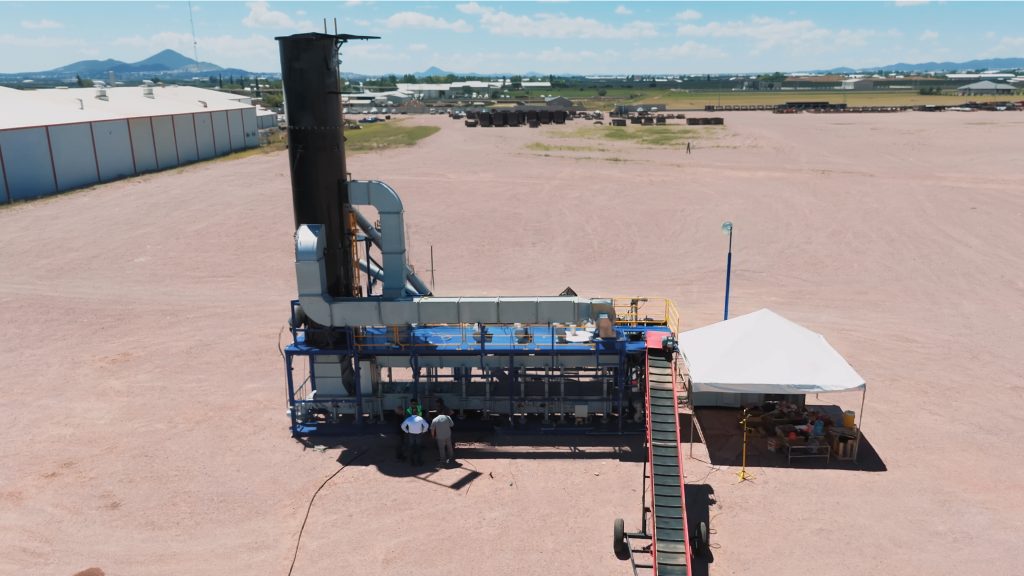
Summary: A commercial biochar kiln is a process system, not simply a heated vessel. The right purchase matches feedstock preparation, throughput, thermal control, cooling, emissions management, safety, quality testing, and market requirements. This guide explains how to compare equipment, estimate the full project scope, and decide whether a kiln-only purchase or integrated plant pathway fits your US operation.
What happens when a kiln can make biochar but cannot handle your moisture, throughput, or market specification? If you are comparing a commercial biochar kiln for sale, begin with the complete process rather than the reactor shell. You can start by reviewing our biochar kiln and plant equipment, then define the technical requirements that will determine whether the system is commercially suitable.
The market is developing quickly. The 2025 market report estimated global biochar production at 520,810 metric tonnes in 2025, compared with 180,150 metric tonnes in 2023. That growth does not mean every project needs the same equipment. It makes careful selection more important because feedstock, product quality, energy use, and market access can vary substantially.
What should a commercial biochar kiln for sale include?
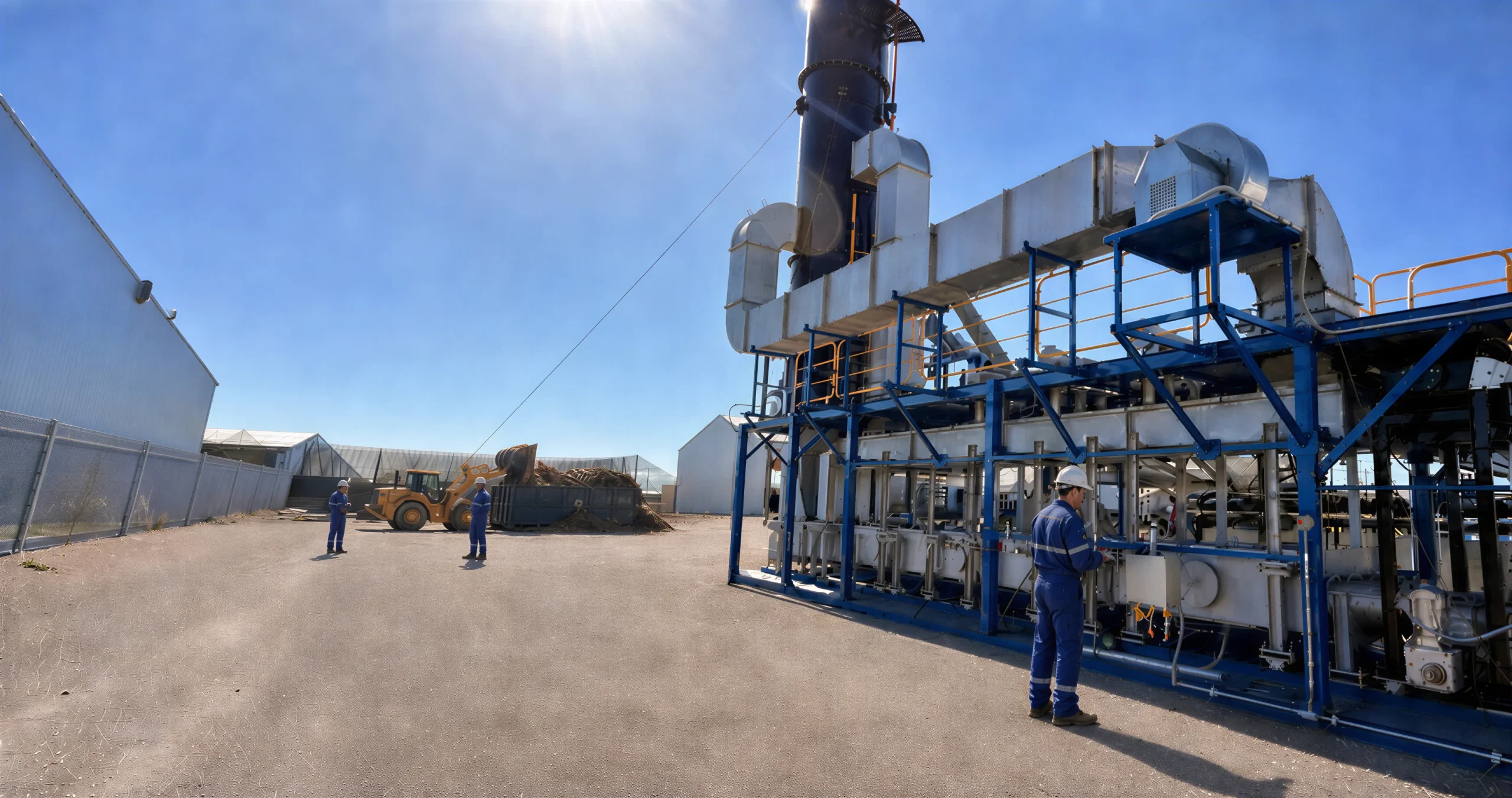
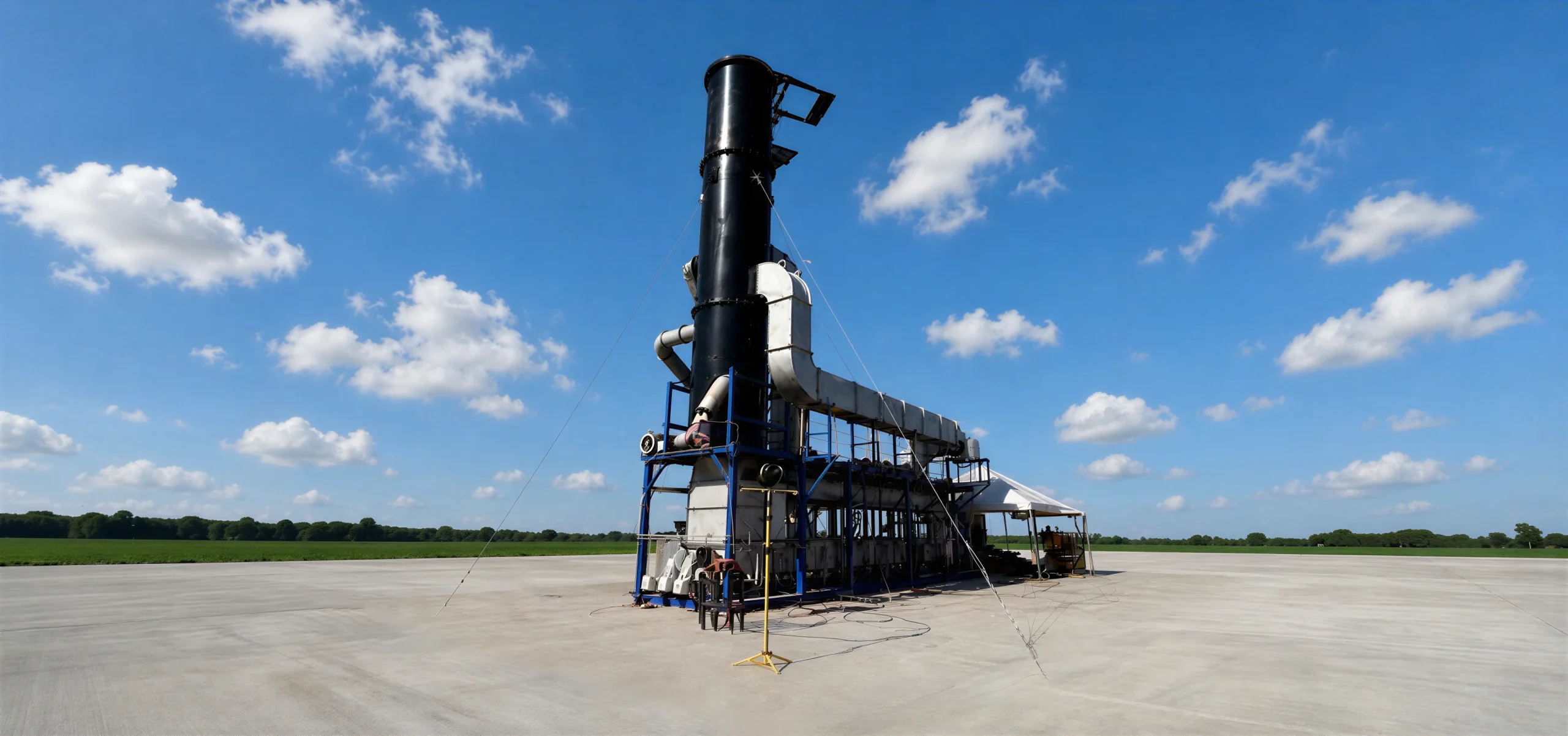
A commercial kiln should be evaluated as part of a connected production line. The reactor is central, but it is only one stage in the process. A practical system may also require receiving and storage equipment, grinding, screening, drying, conveyors, feed metering, cooling, gas handling, emissions control, finished-biochar collection, and automation.
Feedstock preparation is especially important. Biomass with inconsistent particle size or excessive moisture can reduce thermal stability, complicate feeding, and change the resulting biochar. A system designed around properly prepared material may not perform as expected when the input conditions change.
Ask suppliers to identify what is included in the quoted equipment and what remains outside the package. A low equipment price may exclude civil works, electrical installation, thermal utilities, storage, dust control, commissioning, laboratory testing, or operator training. These exclusions can materially change the total project cost.
How do feedstock and throughput shape the equipment choice?
Consider two projects using the same reactor name but different materials. One may process dry wood residues with predictable flow properties. Another may process agricultural residues, biosolids, or mixed organic materials that require dewatering, drying, blending, or additional contaminant controls.
For the Pyronexus configurations described in the company brief, feedstock preparation targets particle sizes below one inch and moisture below 20 percent. Those are project operating conditions, not universal rules for every kiln. You should confirm the required specifications through feedstock characterization and controlled trials before selecting a full-scale system.
Throughput also needs a precise definition. Suppliers may describe feed rate, wet feed rate, dry feed rate, daily input, or finished-biochar output. These measurements are not interchangeable. Request a mass balance that shows expected input, moisture removal, biochar yield, gas production, energy recovery, and residue handling.
A 2026 techno-economic study of farmer-scale systems reported minimum selling prices between $1.74 and $3.06 per kilogram. It also found that labor represented more than 95 percent of modeled costs in that study. The result illustrates why batch or farmer-scale economics should not be transferred directly to an automated commercial plant.
Which technical specifications deserve the closest review?
Three questions usually reveal whether a proposed kiln fits the project: how consistently it controls heat, how safely it manages gases, and how reliably it produces the required biochar quality.
- Feed system: Confirm the acceptable particle size, moisture range, bulk density, flow behavior, and contamination limits.
- Thermal control: Review temperature measurement points, residence-time control, insulation, heating method, and response to changing feedstock.
- Reactor configuration: Compare batch and continuous operation based on labor, production targets, process control, and maintenance requirements.
- Gas management: Determine how pyrolysis gases are collected, combusted, recycled, or discharged.
- Cooling: Verify how hot biochar is cooled without unwanted oxidation or excessive water use.
- Automation: Ask which functions are automated, which require operator intervention, and which data are recorded for monitoring.
- Maintenance: Request information about wear components, inspection intervals, access points, replacement parts, and service response.
Continuous systems can support higher production and more consistent operating conditions, but they generally require more engineering and integration than simple batch equipment. The correct choice depends on your feedstock supply, staffing model, production target, and intended market.
How should you assess energy use, emissions, and safety?
Energy integration can influence both operating cost and environmental performance. A commercial system may use combustible process gas to support heating, recover waste heat for drying, or export useful energy. These options should be evaluated with a site-specific energy balance rather than a generic efficiency claim.
Emissions control also requires more than a statement that the kiln is smokeless. Ask for the proposed combustion arrangement, particulate controls, monitoring points, stack testing plan, and operating limits. You should also understand how the system responds during startup, shutdown, feed interruptions, and abnormal conditions.
Safety review should cover combustible gases, hot surfaces, dust, pressure management, fire protection, oxygen exclusion, electrical systems, confined spaces, and emergency shutdown procedures. Written operating procedures and operator training are as important as the equipment design.
For an international comparison, the EU delegated rules published in 2026 include criteria for a biochar production pathway involving pure plant biomass, heating to at least 350°C, methane capture or destruction, and useful heat utilization. These rules are not a substitute for US project requirements, but they demonstrate the level of process documentation and energy accounting that carbon-related projects may require.
What does the price of a commercial kiln really include?
The purchase price is only one part of the investment decision. A realistic budget should include feedstock handling, drying, site preparation, foundations, utilities, controls, installation, commissioning, testing, permitting support, spare parts, labor, insurance, maintenance, and product conditioning.
Ask for separate pricing for the reactor, auxiliary equipment, engineering, installation, training, and ongoing support. This structure makes it easier to compare offers without confusing a reactor price with the cost of a functioning production facility.
Project economics should also reflect the value of each output. Biochar may be sold for agriculture, filtration, industrial additives, composite materials, or other applications. Process gas and recovered heat may have value on site. Carbon-credit revenue, when available, depends on project eligibility, documentation, verification, permanence, and market conditions.
A strong financial model should test conservative assumptions. Include lower production rates, higher moisture, downtime, maintenance, transportation, product testing, and slower market development. A system that appears attractive under ideal conditions may require a different configuration when realistic operating constraints are included.
How do biochar quality and carbon credits affect the purchase?
The correct kiln depends on what you intend to do with the biochar. Soil amendment products may require different properties from filtration media or industrial additives. Important variables can include moisture, ash, pH, electrical conductivity, surface area, nutrient content, contaminants, particle size, and carbon stability.
Specify the intended application before final equipment selection. A process optimized for maximum throughput may not create the properties required for a particular customer. Conversely, a highly specialized product target may require more testing, process control, and post-processing than a general soil amendment.
Carbon-credit projects introduce additional requirements. You may need traceable feedstock records, sustainable sourcing evidence, production data, laboratory analysis, lifecycle information, digital monitoring, certification, audits, and chain-of-custody documentation.
Our research and development approach can include feedstock characterization, small-scale trials, large-scale trials, laboratory testing, process-flow assessment, mass and energy balances, lifecycle assessment, techno-economic analysis, and product optimization. These steps help reduce uncertainty before you commit to a commercial configuration.
When is an integrated plant pathway more suitable than a kiln-only purchase?
A kiln-only purchase may be appropriate when you already have suitable feedstock preparation, experienced operators, utilities, site infrastructure, and a defined product market. It may be less suitable when you are developing a new site or processing a feedstock with limited performance history.
An integrated pathway can connect equipment selection with engineering, site preparation, commissioning, operations, maintenance, product development, and commercialization. Our commercial biochar plants approach is structured around that broader project scope.
Integration is particularly useful when multiple process stages must work together. Drying affects reactor stability. Reactor conditions affect biochar quality. Cooling affects product handling. Data collection affects carbon documentation. The commercial result depends on how these stages interact, not on the reactor alone.
Before selecting a supplier, define the responsibilities of each party. Your project documents should identify who supplies the feedstock specifications, who completes site work, who manages permitting, who commissions the system, who trains operators, and who supports the plant after startup.
What should you request before signing an equipment agreement?
A structured request for information can expose gaps before they become expensive changes. Request the following items in writing:
- A description of acceptable feedstock types and preparation requirements.
- Expected wet and dry throughput under stated operating conditions.
- Expected biochar yield and product characteristics.
- A process-flow diagram showing drying, pyrolysis, gas handling, cooling, and collection.
- A complete list of included and excluded equipment.
- Utility requirements for electricity, water, fuel, compressed air, and heat rejection.
- Automation functions, data access, alarms, and emergency shutdown controls.
- Emissions-control equipment and the proposed testing approach.
- Installation, commissioning, training, warranty, and maintenance responsibilities.
- Recommended laboratory tests and product-quality acceptance criteria.
- Spare-parts availability and expected service response.
- Project milestones, payment terms, delivery assumptions, and change-order procedures.
You should also request a trial plan when feedstock behavior remains uncertain. A controlled trial can reveal drying demand, feeding problems, temperature response, char yield, gas behavior, and product characteristics before full-scale investment.
Choose the kiln around the whole project
The best equipment decision begins with a clear definition of feedstock, throughput, product requirements, energy use, safety controls, emissions management, and market strategy. A commercial biochar kiln purchase should be evaluated as a complete process and operating model, not as an isolated piece of hardware. By validating the material, economics, and integration requirements first, you can reduce scale-up risk and select a system that supports dependable production in the US market.
Take action with Pyronexus
If you are moving from feedstock uncertainty to a bankable production plan, we can help you define the technical scope before you commit. Pyronexus combines reactor engineering, feedstock trials, project development, and long-term operating support for US and international projects.
To discuss your feedstock, throughput, site constraints, and intended biochar market, contact our team through commercial biochar reactor sales. We can help you evaluate a tailored pathway that may include drying, material handling, automation, energy recovery, testing, and commissioning.
Frequently Asked Questions
What is included in a commercial biochar kiln?
A commercial kiln may include the reactor, feed system, heating system, gas handling, cooling, controls, and product discharge. Drying, grinding, storage, emissions equipment, installation, and commissioning may be separate, so you should request a detailed scope of supply.
How do I know whether my feedstock is suitable?
Start with feedstock characterization covering moisture, particle size, composition, bulk density, contamination, and flow behavior. Controlled trials can then confirm feeding performance, thermal response, biochar yield, and product quality.
Is a continuous kiln better than a batch kiln?
Continuous systems can support higher production and more consistent control, while batch systems may suit smaller or more flexible operations. The appropriate choice depends on your material supply, labor model, production target, capital budget, and operating expertise.
Can a biochar kiln generate carbon credits?
Potentially, but equipment alone does not guarantee credit eligibility. The project generally needs traceable feedstock, documented production, quality testing, lifecycle information, monitoring, verification, and compliance with the selected methodology.
Can Pyronexus help with equipment selection?
Yes. We can support feedstock evaluation, trials, equipment configuration, project development, operations planning, product development, and long-term technical support through an integrated project pathway.
